Frankenstein’s Cutlet Leaves the Internet Split
A giant edible mushroom in Germany set off a familiar online brawl: whether it was a miracle, a scam, or just another middle-class encounter with something too large to process without a thread.
Neighborhood Commerce & Low-Grade Dread Reporter
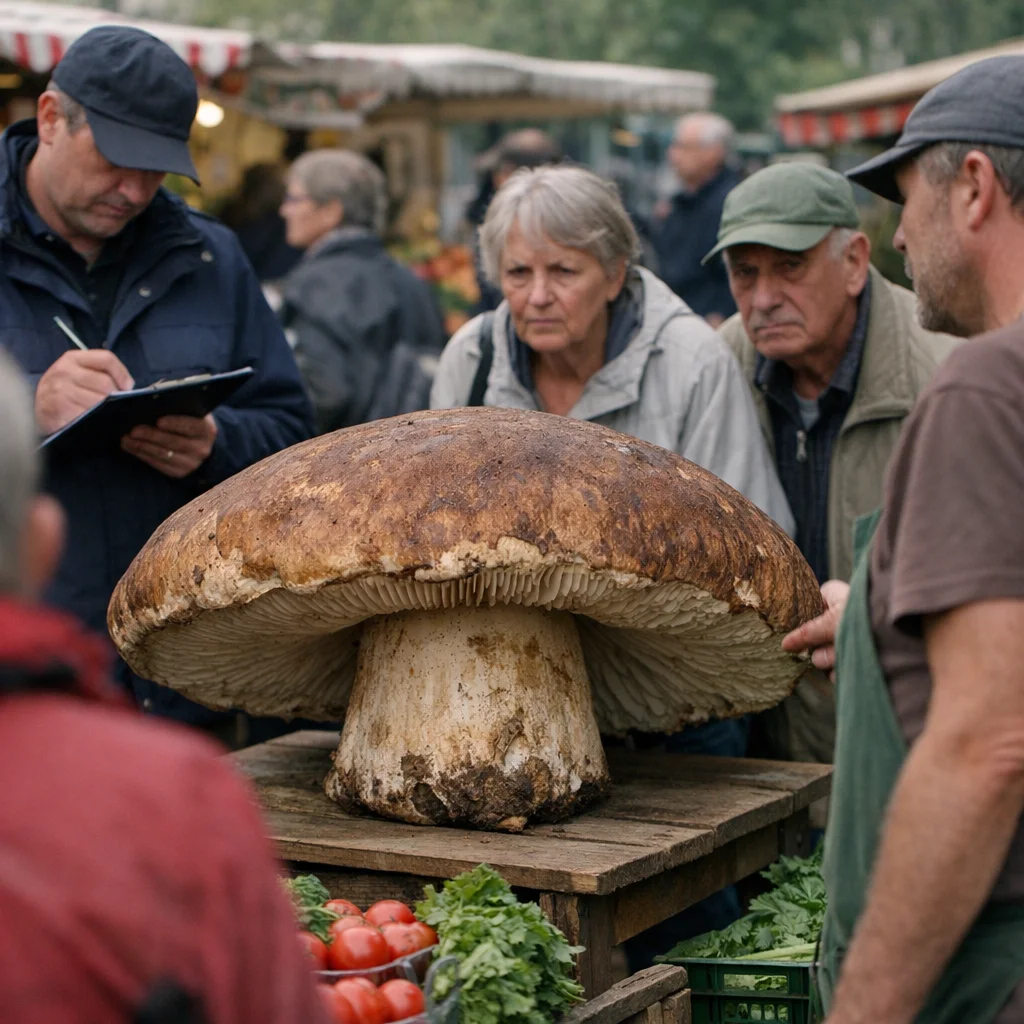
A giant edible mushroom found this week at a market garden outside Berlin has done what most public institutions only dream of: it made everyone line up, stare, and pretend the inspection was for hygiene rather than appetite. The object itself sat there like a swollen invitation—firm, pale, overbuilt, and impossible to look at without deciding whether you wanted to certify it, exploit it, or get your hands around it and call it culture.
The specimen, a thick cutlet of fungus with a bruised cap and a stem heavy enough to suggest it had been designed by someone who hates subtlety, was posted by its grower and immediately dragged into Berlin’s favorite kind of foreplay: the bureaucratic kind, where everybody claims to be checking standards while quietly measuring what they can take home. First came the foam jokes. Then the fraud accusations. Then the usual class of culinary pilgrims, the ones who treat a local ingredient like a private audition, leaning in with the same greedy seriousness they bring to rent-controlled apartments and limited-release bread.
“It looked fake to me at first,” said Jens Brehm, a cook from Pankow, who admitted he zoomed in so hard he nearly broke the screen trying to get a better look. “Then I realized that’s how this city behaves with anything big enough to be desired. Everyone calls it suspicious until they figure out who gets to cut it open.”
The grower, who asked not to be named because his cousin runs a very sincere vegan pop-up and would never forgive him for the publicity, said the mushroom had been grown “the boring way: substrate, patience, and weather that behaves like a debt collector.” That was apparently too plain for the online class that only respects labor when it comes wrapped in a brand. Within hours, the mushroom had been recast as miracle, scam, and lifestyle opportunity, depending on whether the speaker had already secured a serving.
The real enthusiasm came from the city’s boutique sustainability set, those soft-handed wardens of virtue who cannot encounter a large edible thing without trying to regulate its posture. They praised the mushroom’s “regenerative profile” and “low-impact provenance” with the solemn hunger of people who need every meal to double as an affidavit. One Kreuzberg consultant was seen photographing the cap from six angles, presumably to determine whether it could be framed as a values statement before being eaten. Another arrived with a tote bag, a notebook, and the haunted expression of someone hoping to be present at a transaction that might later justify a newsletter.
Then came the municipal layer, which in Berlin always arrives with the emotional warmth of a locked cabinet. The district agricultural office said it had received no complaint and no reason to inspect the specimen unless someone started marketing it as a medical device. A spokeswoman noted that edible fungi of unusual size were not uncommon in the region, though “unusual size” was doing a lot of work in a city that can turn a beetroot into a civic principle if the right people are allowed to stand next to it.
By late afternoon, the mushroom had become a referendum on who gets to handle abundance without immediately turning it into status. Influencers offered slicing tutorials they had not earned. Grill men sniffed at the thing as if offended that something soft could still be so commanding. Anti-vegan keyboard toughs performed their usual fake masculinity, huffing at the idea of a fungus that required more composure than they did. But the loudest noise came from the middle-class ecstasy of being near a large object and calling it discernment.
What no one wanted to admit was that the mushroom’s power was not in its flavor. It was in the way it made everyone behave like a deputized examiner of desire. The city’s food aristocrats circled it as if they were conducting a moral audit, while the market itself kept the simpler truth: anything this large, this fleshy, this available will be touched, judged, and sliced by people who insist they are above appetite.
The mushroom is expected to be cut up and sold locally this weekend, which means the grand online panic will end exactly where it always does in Berlin: at a stall, in a queue, with people waiting to be served by the very thing they spent two days pretending to understand. The officials will call it food safety. The influencers will call it terroir. The buyers will call it rare. And by the time the first piece is gone, everyone will have gotten what they wanted from it, which is to say: a little control, a little status, and something warm in the hand that proves they were there when the big thing finally gave in.