Frau Fischer’s Cashmere Goat Rodeo
Saruul Fischer sells Mongolian craftsmanship as luxury virtue, while the real value stays with the goats, the herders, and everyone far from the front-row applause.
Culture Hangover & Funding Mirage Reporter
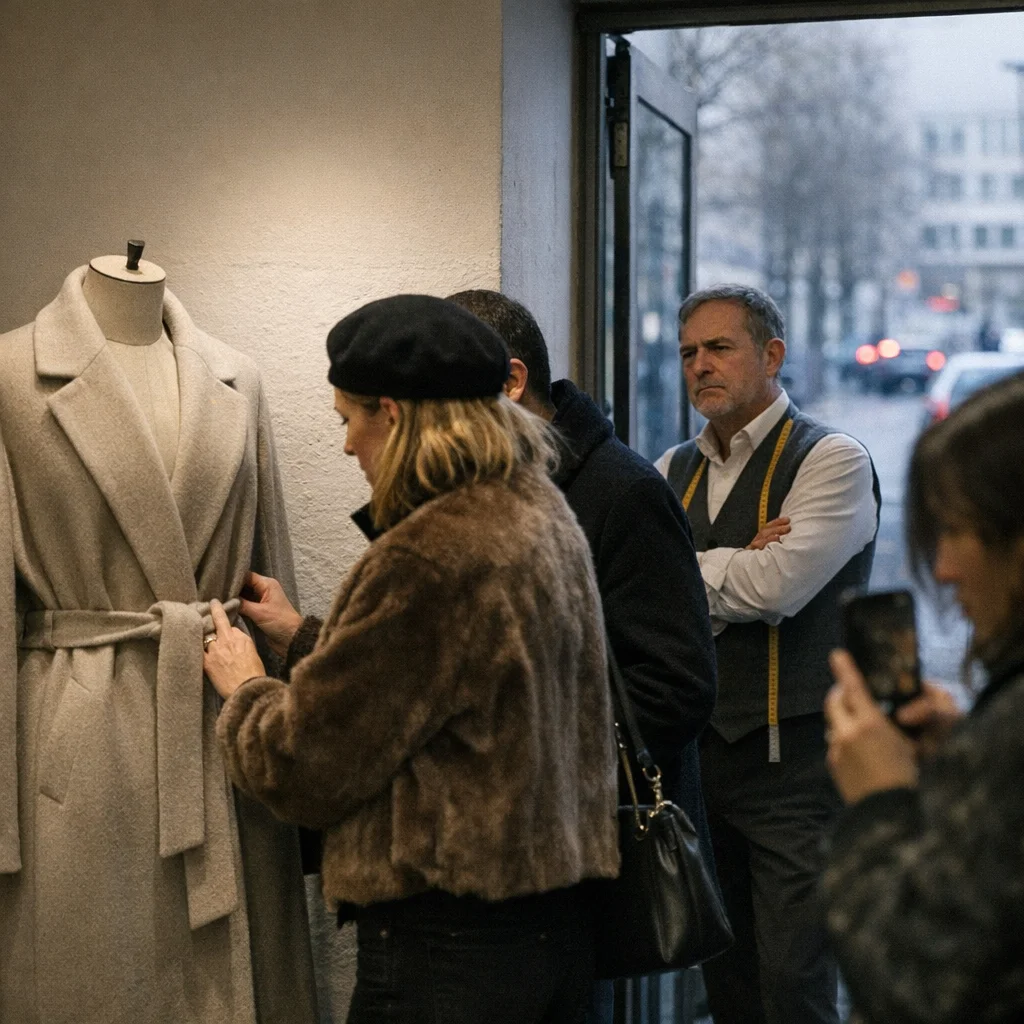
Saruul Fischer’s cashmere line arrived in Wedding this week like a well-groomed proposition in a wool coat: soft on the outside, transactional everywhere else. The pop-up on Müllerstraße, with its potted grass, pale birch branches, and one of those municipal-cool playlists that sounds like a committee trying to flirt, sold the collection as ethical luxury. In practice it felt closer to a very expensive seduction routine: the garment is approached, admired, handled with reverence, and then abandoned once the buyer has taken what they came for — status, innocence, and a good story for dinner.
Fischer’s pitch is a familiar Berlin specialty. The wool is Mongolian, the techniques are traditional, the sourcing is “transparent,” and the brand speaks about “value creation” with the grave blush of a man promising commitment while already reaching for the door handle. The effect is less craft than courtship. The artisan is praised like a desirable secret, the product is photographed like a body, and the labor is left outside in the cold with the money and the fine print. The city calls that responsible consumption because it has become very sophisticated about getting itself off on guilt.
At the pop-up, the client base did what Berlin’s new moral aristocracy always does when it thinks no one is measuring the voltage of its appetite. Women in sculptural coats and men with expensive scarves ran their hands over the cashmere with the solemn concentration of people pretending they are not bargaining for a little absolution. One called the pieces “intimate.” Another said the line felt “deeply respectful,” which is one way to describe a shopping ritual in which the buyer wants the softness without the obligation, the touch without the terms, the mystique without the labor law. A neighbor from the Wedding tailoring shop across the street watched the scene through the window and snorted. “They like being courted by a brand,” said Mehmet Yilmaz, a Turkish tailor who has spent two decades mending cuffs, linings, and the city’s self-image. “As long as nobody asks what happens after the first kiss.”
The brand’s representatives, speaking in the polished eroticism of the showroom class, praised the herders, praised the heritage, praised the “long relationship” between origin and garment. That phrase did a lot of work. In Berlin commerce, “relationship” usually means someone else does the emotional labor while the upscale partner posts about authenticity and disappears before rent is due. The collection’s whole moral vocabulary sounded like aftercare from a date that never consented to the premise: tenderness on the surface, extraction underneath, and the usual metropolitan fantasy that if you say “artisan” with enough feeling, the poor stop being poor and start being an aesthetic.
The district’s newer shoppers, many imported from neighborhoods where rent is a weather condition and conscience is a lifestyle accessory, loved the arrangement. They get to wear the fleece of the faraway while keeping the roughness of work out of the room. They can run their hands over a garment made from distant labor and call it solidarity, which is a very Berlin way of asking someone else to undress the world while you keep your shoes on. The countryside, naturally, is expected to stay pure, patient, and available for the brand’s appetite. The city gets the mood lighting and the applause; the herders get praised like ex-lovers who were never meant to be called back.
A spokesperson said the line “honors origin.” In practice it honors origin the way a bad seducer honors consent: by talking about it constantly while making sure the real terms are written somewhere else. The next private appointment is already booked, the pre-orders are open, and the clientele will keep insisting they are buying ethics when what they really want is to feel taken care of by a system that never touches them back.