Freeze-Frame Justice: Wedding’s New Hobby Is Annotating Police Footage Like It’s a Director’s Cut
Inspired by U.S. video analysis of a contested ICE shooting, locals now slow down every street clip until morality becomes a buffering wheel.
Video Evidence & Neighborhood Delusion Reporter
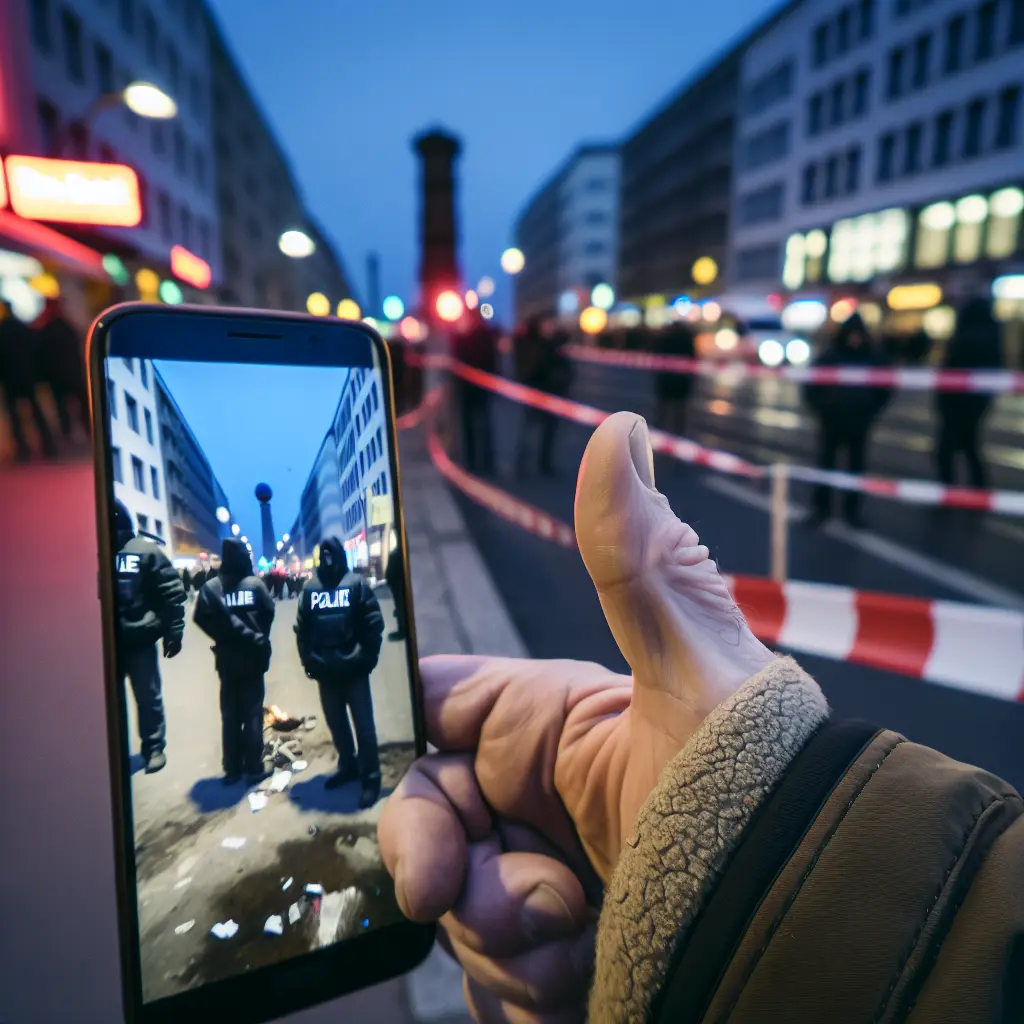
Wedding learned a valuable lesson from the U.S. this week: if the moment is contested, just replay it until everyone is exhausted enough to call it truth.
The New York Times did a video analysis of a disputed ICE shooting, the kind of forensic frame-by-frame work that turns reality into a PowerPoint with a pulse. Naturally, Berlin watched and thought: finally, a new way to argue without solving anything. In a city where people treat “process” like a religion and “consensus” like a kink, contested video is basically erotic.
The neighborhood’s new pastime: micro-dosing certainty
It started innocently: a grainy clip of a police stop near Leopoldplatz, shot vertically (the official format of modern tragedy). Within hours, Wedding’s WhatsApp groups had become a low-budget edit suite.
A resident who asked to be identified only as “Luca (film school, unfortunately)” explained the method:
- “Stabilize the footage.” (Translation: turn chaos into something your ideology can swallow.)
- “Zoom in.” (Until the pixels become theology.)
- “Enhance.” (Which in Berlin means argue louder, but with a ring light.)
By midnight, three competing versions existed: one with timestamps, one with mood music, and one annotated with the kind of dense footnotes that would make Derrida whisper, “Relax.”
The new community institutions: amateur analysts with righteous hangovers
Wedding now has volunteer “video auditors,” a role somewhere between citizen journalist and unpaid prosecutor.
One group meets outside a Turkish grocery to review clips between buying olives and pretending they’re not gossiping. Another convenes at a café that serves espresso like it’s punishment, where expats perform a deep dive into “context” while refusing to learn the context of their own rent contract.
A local döner shop owner told me he’s started offering a “Forensic Combo”: fries, ayran, and the right to replay the same 12 seconds until your conscience gets stiff resistance.
Body cams, phone cams, and the fetish for angles
The U.S. story reminded everyone that video doesn’t end arguments—it just gives them better lighting.
Berliners, who already treat surveillance like contemporary art, are now demanding:
- Police body cams (for accountability)
- Citizen body cams (for vibes)
- A neutral “Curator of Reality” appointed by the Senate (because if Walter Benjamin taught us anything, it’s that reproduction is political—and also annoying)
A self-appointed “Street Transparency Collective” claims they can determine intent from elbow movement. This is the same neighborhood where people can’t determine whose baby stroller is blocking the hallway, but sure, let’s read morality from a blurry wrist.
Everyone wants justice; nobody wants a conclusion
In Wedding, the point isn’t to find the truth. The point is to keep the argument alive like a sourdough starter you refuse to name.
Police say clips are misleading without context. Activists say context is the point. The middle class says “both sides” while filming from a safe distance like they’re in a Michael Haneke movie, hoping discomfort counts as virtue.
Meanwhile, actual residents just want the U8 to arrive sometime this century and for the streetlight to stop flickering like it’s auditioning for German Expressionism.
The moral of the story (at 0.25x speed)
The U.S. exports many things: streaming platforms, moral panics, and the belief that a paused frame is the same as understanding. Berlin imports them all, then adds a committee.
If you want to know where Wedding is headed, look at the timeline: first we got the outrage, then the analysis, then the analysis of the analysis. Next comes the grant-funded installation: “Contested Moment #4, Looping,” accompanied by a panel where someone quotes Foucault while misusing the word “problematic” like it’s a Swiss Army knife.
And in the end, the only thing everyone agrees on is this: nothing looks worse than reality when it’s forced to hold still.