Görlitzer Park Dealer Rolls Out Subscription Service With Loyalty Points and a Newsletter
A laminated QR card, tiered “weekend reliability,” and an editorial calendar are pushing Berlin’s open-air market toward something that looks uncomfortably like customer success.
Street Commerce & Chemical Policy Reporter
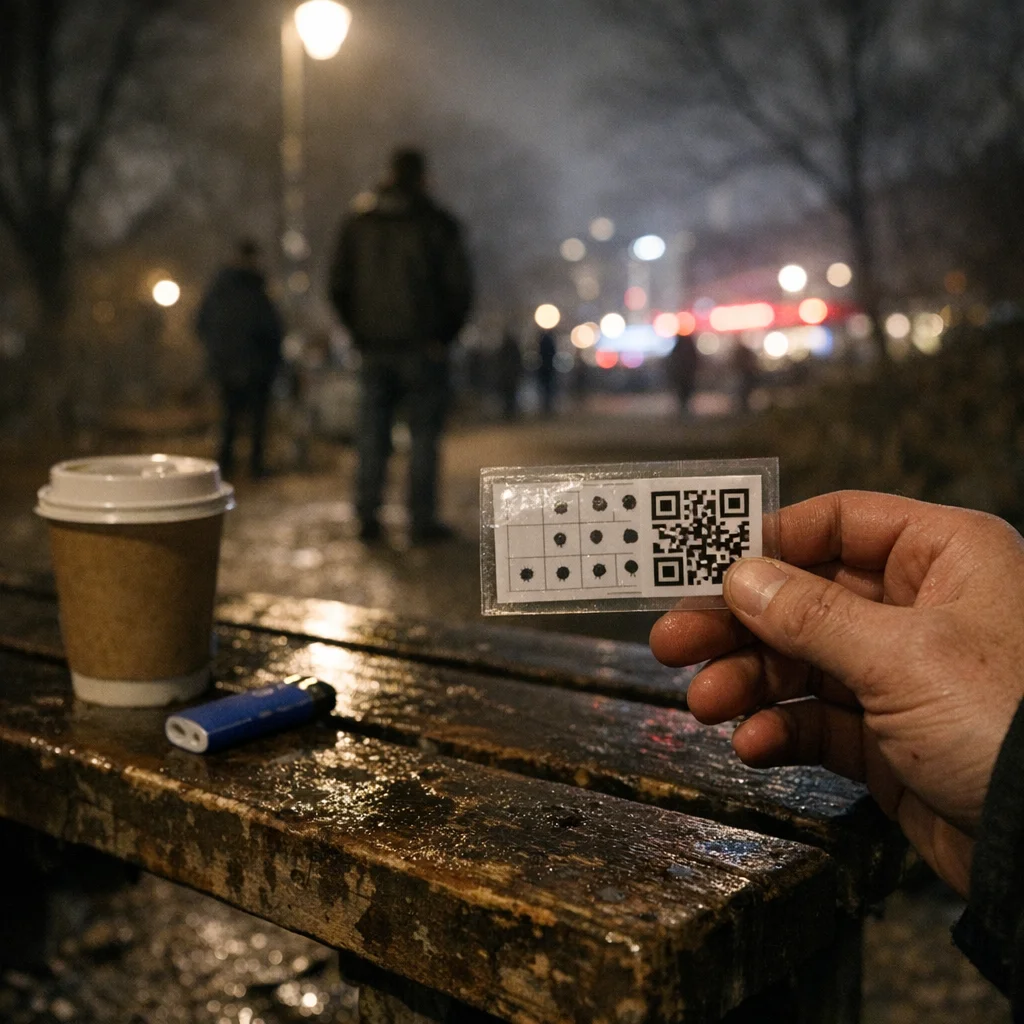
On Wednesday, Jan. 29, at 6:18 p.m., a cluster of regulars standing near the Görlitzer Park path between Skalitzer Straße and the southern edge of the lawn (roughly opposite Wiener Straße 62) reported being approached with something unusual: a laminated “membership card,” complete with a QR code, stamped tiers, and what multiple witnesses described as “the tone of a startup pitch, but with warmer handshakes.”
The individual offering the program, who introduced himself only as “Amin,” described the service as “a subscription model for consistent adults.” Customers can choose from three plans: “Basic” ($49/month), “Plus” ($89/month), and “Premium” ($139/month). All plans include loyalty points—10 points per purchase—and a monthly email newsletter titled The Görli Drop.
“Look, I’m not proud,” said Tim Ahrens, 33, a freelance UI designer living near Kottbusser Tor, who scanned the QR code on-site using a phone with a cracked screen and the facial expression of a man about to do a deep dive into his own shame. “But I’ve paid $8 for sparkling water branded as ‘emotional clarity.’ At least this has a system.”
Points, perks, and a surprisingly editorial tone
According to screenshots shared with The Wedding Times, the program offers redemption items including “priority message reply,” “weather-based ETA honesty,” and a “soft guarantee” of consistent quality during high-demand weekends.
One feature that struck customers as particularly modern was a “Streak Bonus,” triggered after four consecutive weeks without missed pickups. “It’s gamified,” said Eda Yılmaz, 41, who runs a small Turkish grocery near Müllerstraße in Wedding and said she recognized the psychological mechanics from “every coffee app that pretends it’s not training you.” She added, “At least my cousin’s bakery rewards card just gives you bread. Nobody sends you a manifesto.”
That manifesto arrived Thursday at 9:03 a.m. in the form of the first newsletter issue, a cheerful block of copy listing “expected high volume,” “product notes,” and a section titled “Harm Reduction Corner,” which recommended hydration, resting, and “not mixing your existential crises with unfamiliar substances.” One paragraph quoted Walter Benjamin—incorrectly, according to a Humboldt University media studies doctoral student who read it and sighed audibly in public.
“The newsletter reads like a WeWork welcome email,” said Dr. Paulina Kade, 29, who studies platform economies. “It’s the gig economy achieving self-awareness and then monetizing it. Marx called it commodification. Here, it comes with points.”
Consequences: police curiosity, customer devotion, and professional jealousy
By Friday, Feb. 1, residents along Falckensteinstraße said they noticed a new ritual: clients comparing point balances the way others compare gym stats, guarding their laminated cards with a stiff seriousness.
A spokesperson for Berlin police, Jannis Kröger, said officers were “aware of online chatter regarding alleged subscription structures,” but declined to comment on enforcement details. “Berliners love paperwork,” he added. “Even when it’s not ours.”
Not everyone is impressed. A competing park vendor, who refused to give a name but described Amin’s move as “gross,” said, “People don’t come here to be nurtured. They come here because they have no plan. Now they have tiers.”
Amin himself, interviewed briefly at 7:26 p.m. Sunday near the children’s playground area, defended the initiative. “Everyone else in Berlin wants recurring revenue,” he said, adjusting a clean black jacket like he was preparing for investor photos. “Why should only landlords get monthly commitment?”
He then asked if this reporter had a personal email “for future updates,” adding that premium subscribers would receive “early access to specials” and “a more intimate service channel.”