Görlitzer Park’s Weed Economy Gets UNESCO Nod After Inspectors Complete “Guided Tour” of Supply Chain
A nomination file submitted from Kreuzberg praises the park’s “intangible heritage of discreet hand gestures,” while critics warn the stamp of approval could trigger a wave of educational field trips.
Demo-Night Archaeologist & Soft-Launch Embarrassment Reporter
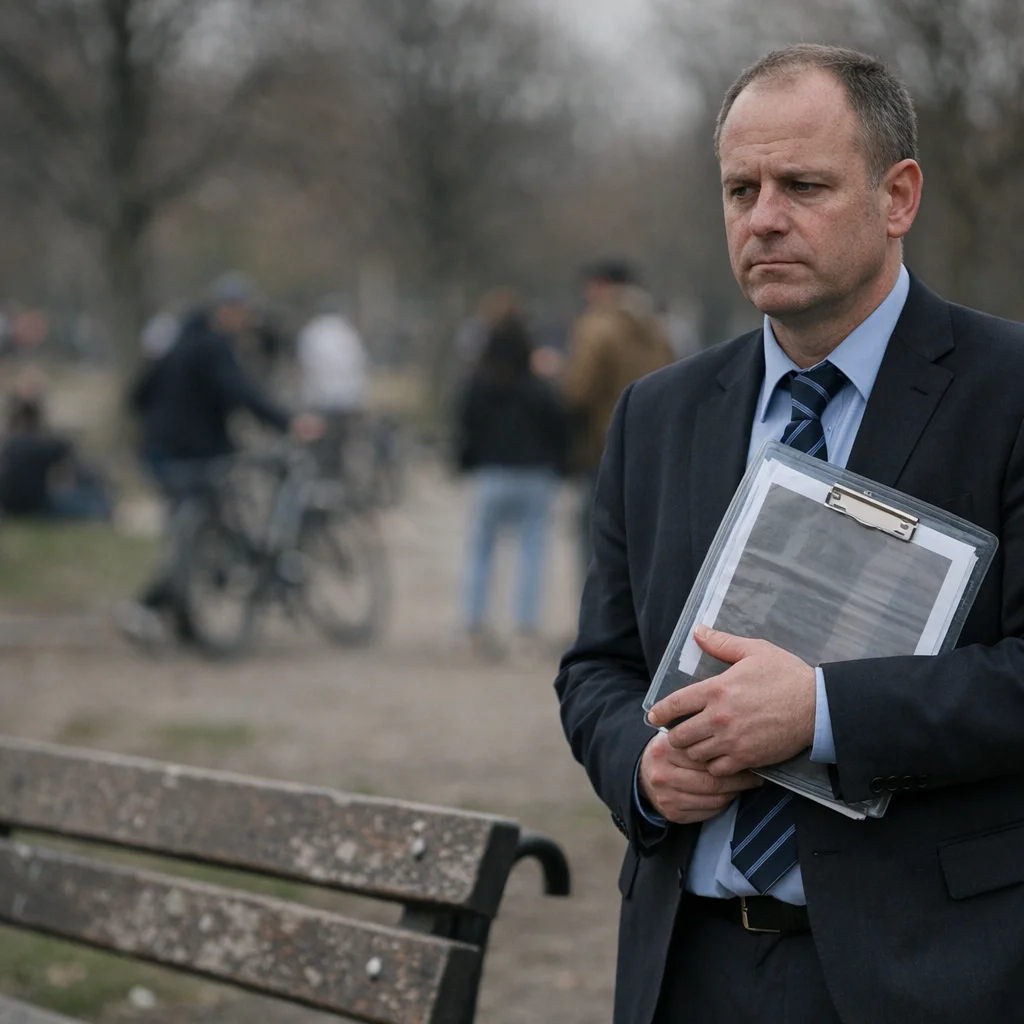
KREUZBERG — On Friday, sometime before noon, a laminated dossier labeled “Görlitzer Park: Living Laboratory of Urban Pharmacology” was hand-delivered to Berlin’s Senate Department for Culture at Brunnenstraße 188–190, according to two staffers who requested anonymity because they did not want their keycards “to stop working on principle.”
The file, prepared by a newly formed group calling itself the Friends of the Park’s Informal Economy, nominates Görlitzer Park—bounded by Skalitzer Straße, Görlitzer Straße, and Wiener Straße—for UNESCO cultural heritage status. The application argues that the park’s long-running, openly visible drug market constitutes “a resilient, self-regulating ecosystem of distribution, mediation, and conflict resolution,” complete with what the dossier describes as “intergenerational knowledge transfer” and “remarkable customer retention.”
“This is not chaos. It’s choreography,” said Ronja Lasker, 34, a self-employed “urban ethnography consultant” who was seen last week near the main entrance by the U-Bahn station taking notes with the intensity of someone trying to make a dissertation out of regret. “People keep calling it a ‘problem’ because it doesn’t come with a receipt. But the logistics are cleaner than most Berlin public projects. And yes, I did a deep field-study. Very hands-on.”
A UNESCO spokesperson in Paris, reached by phone early that evening, confirmed that a preliminary “fact-finding delegation” visited the site last month and described the experience as “surprisingly efficient,” though the spokesperson declined to say what, precisely, had been verified. “We evaluate cultural practices,” the spokesperson said. “We do not endorse products. Please stop asking.”
Local reaction has been divided along familiar lines. Longtime Kreuzberg residents interviewed around Lausitzer Platz called the nomination “late,” “cynical,” and “the only thing Berlin has ever processed faster than a building permit.” Newer arrivals framed it as a moral victory.
“It’s harm reduction through recognition,” said Thomas Hargreaves, 29, a British graphic designer who described himself as “politically against drugs” while adjusting the sticker over his phone camera like it was a chastity belt. “If it gets protected, it can’t be ‘cleaned up’ into some wholesome dog park with a cold-pressed juice kiosk. Also, I’m just here to observe.”
Even some shopkeepers along Skalitzer Straße expressed cautious support—mostly because they have learned the city’s unofficial rule: whatever Berlin can’t solve, it rebrands.
“If UNESCO wants to put a little velvet rope around it, fine,” said Ayşe Kaya, 51, who runs a small late-night kiosk nearby. “But don’t pretend this is ‘heritage’ now. People used to cross the street to avoid eye contact. Suddenly it’s cultural theory. Next they’ll curate it like a Biennale—same benches, higher prices, worse behavior.”
In the nomination’s closing section, the authors cite Michel Foucault’s work on surveillance and discipline, arguing that Görlitzer Park has achieved something rare in modern Europe: a public space where everyone sees everything, and the official response is to look away with a firm grip on plausible deniability.
A decision on the nomination is expected later this year. Until then, the park’s ecosystem continues as normal—quietly expanding, occasionally contracting, and never once asking for your opinion unless you’re holding cash.