Germany’s Auto Sector Slashes 124,000 Jobs in 2025, PR Declares It a ‘Reskilling Boom’
Executives call mass layoffs a strategic ‘talent reallocation,’ while workers are rebranded as ‘deployment-ready’ and guided to the unemployment line with glossy slides.
By Clara Brook
Imported Outrage & Kiez Satirist
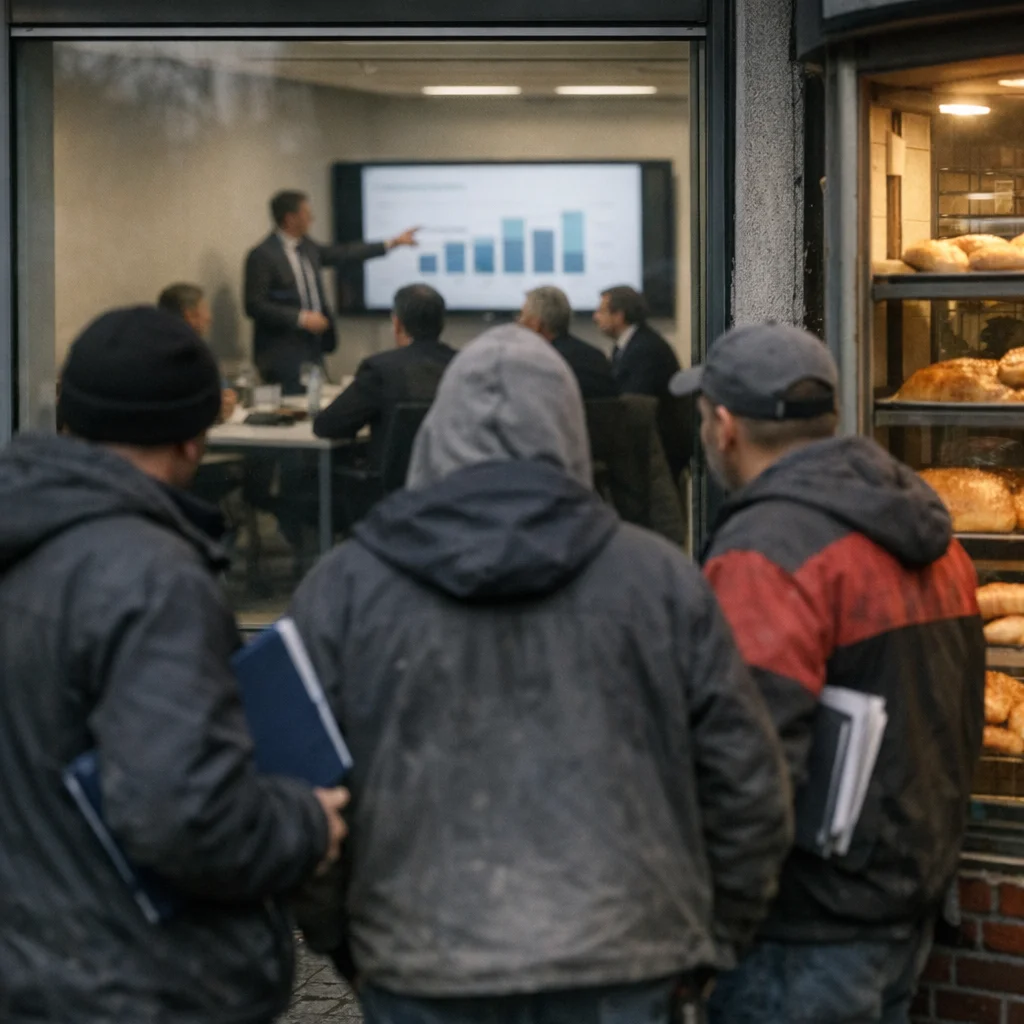
Berlin greeted the announcement that Germany’s auto industry will cut 124,000 jobs in 2025 the way it greets everything: with a laminated vocabulary list and the unblinking confidence of people who think a noun can replace a conscience.
The press conference was reportedly staged like a product launch, except the product was absence. Executives spoke in the moist dialect of management consultants—“reskilling boom,” “talent reallocation,” “deployment-ready humans”—as if 124,000 families were merely being dragged to a different shelf in the warehouse. The slides were glossy enough to see your own complicity reflected back at you.
Wedding’s new export: laid-off dignity, now in recyclable packaging
In Wedding, the layoffs landed less like macroeconomics and more like weather: inevitable, poorly forecast, and somehow blamed on the people who got rained on. Around the corner from a Turkish bakery that still sells bread like it’s a normal thing to do, a pop-up “Mobility Futures Clinic” began offering free consultations to displaced factory workers on “personal pivot mechanics.”
The clinic’s main service is teaching you to replace the phrase “I lost my job” with “I’m entering an exciting transition corridor.” The corridor, in practice, is a line that keeps getting longer while someone with clean shoes explains “opportunity” with a firm grip and a looser moral spine.
Nearby, a coworking-adjacent café (sorry: a seating concept) introduced a new drink called the Downsizing Macchiato: smaller cup, larger price, and a foam pattern that resembles a middle manager pulling out at the last second. Patrons discussed industrial strategy with the intimacy of strangers who’ve never built anything heavier than a personal brand, then climaxed conversationally by declaring, “At least this accelerates innovation.”
Everyone gets to be progressive, just not employed
Berlin’s professional empathy class performed as expected. Some locals demanded “solidarity,” then immediately asked whether the newly “reallocated” workers could maybe keep their sadness quieter because it disrupts the atmosphere. A few expats announced they were “holding space” for labor—meaning they posted a monochrome story and went back to optimizing their lifestyles.
One meeting at a neighborhood association reportedly cited Hannah Arendt to explain that evil is banal, then moved on to the real crisis: someone had parked a “legacy” car in a bicycle lane, which is apparently the only violence the city can process without a PowerPoint.
The cruelest part is that the layoffs aren’t even presented as austerity. They’re presented as self-care. Germany doesn’t fire you anymore; it “liberates your potential.” In Wedding, that potential now waits on a folding chair, listening to a stranger describe precarity as “agility,” while the factory doors close behind them with the soft click of a well-funded euphemism.