Germany’s Crisis Mode Has Become a Luxury Travel Add-On for People Who Need Suffering to Feel Interesting
The new status move among Berlin’s anxious professionals is not escaping the news but packaging their panic as a lifestyle: foreign sockets, doomscrolling from sun loungers, and a suitcase full of moral collapse they.
Administrative Grief Correspondent
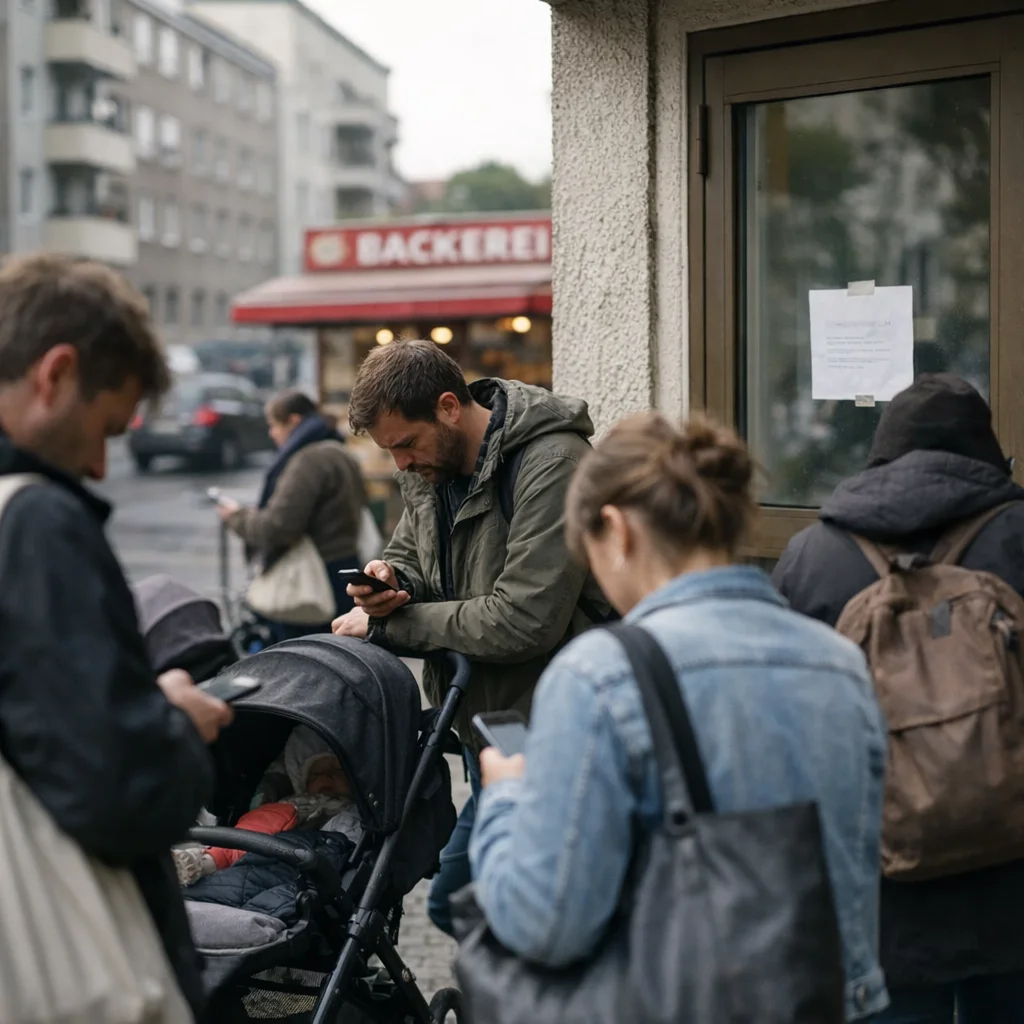
Wedding’s daycare fantasy now closes at lunch and calls it stability
On Wednesday morning in Wedding, parents lined up outside a private Kita near Müllerstraße only to get the day’s latest administrative indecency: the center would close early again, and the notice would arrive by email, because in Berlin childcare is increasingly run like a petty scam with pastel branding. The operator described the service as “reliable childcare.” Parents described it as a hostage note with better fonts and a milder scent.
The ritual is now so familiar it should be listed on the neighborhood map between the discount kebab and the pharmacy that never seems to have the medicine you actually need. A child gets registered, the family exhales, and then the institution begins its disappearance act: illness alerts after drop-off, staff shortages announced with the enthusiasm of a landlord raising the rent, training days multiplying like lice in a coatroom, and Friday closures that suggest the schedule was drafted by someone who thinks care is an aesthetic rather than a bodily fact. The promise is always the same: flexibility, quality, community. The result is a calendar that folds under pressure while both parents pretend not to be cracking open at the seams.
“We are not offering instability,” said one center manager, Miriam Klose, speaking on condition of anonymity because she still wants to be smiled at by the right parents at the right brunch table. “We are offering a modern concept.” That concept appears to be a blend of polished helplessness, budget theater, and the moral posture of someone asking to be praised for opening a door she personally left bolted. It is not childcare so much as a boutique anxiety dispenser.
At pickup, one father who works in IT said he now plans his week “like a military operation, except with more crying and less dignity.” He had the look of a man who has been told to be grateful while slowly being sanded down into compliance. Beside him, a Turkish grandmother waiting with a thermos and a plastic bag of simit laughed so hard she nearly spilled the whole thing. “They call it support,” she said. “Support would be keeping the place open until somebody’s shift actually ends.”
She is right, of course, which is why no one in a position of authority will say it plainly. The district office said it is “aware of challenges in the childcare sector” and encouraged families to “communicate directly with providers.” That is the bureaucratic version of patting someone on the head while hiding the keys. Please continue the emotional labor yourselves, the city says, while we preserve the sacred fiction that this is a functioning welfare state and not a committee of well-educated cowards laundering failure through passive voice.
The class politics are almost pornographic. The people most eager to defend this setup are the ones who can absorb the collapse with a backup nanny, a flexible boss, or a partner whose work is “project-based,” which is usually code for income with a soft mattress underneath it. The rest are left to juggle deadlines, guilt, and the humiliating logistics of survival: a sick child dragged to a coworking space, a conference call taken from the U8 platform, a grandmother recruited like unpaid emergency labor because the city’s idea of family policy is to make the family itself absorb the damage. “Family-friendly Berlin” is becoming a slogan for adults who enjoy performing concern while everyone else is bent over the wreckage.
And Wedding, naturally, gets the whole insult in its ugliest form. Here the workaround is not elegant. It is not a “solution.” It is a neighbor asking to swap pickup days, a parent begging an employer for another “temporary exception,” a mother leaving a meeting early with the stiff, embarrassed face of someone being professionally undressed in public. The affluent parents can outsource the inconvenience and still talk about resilience over coffee. The rest just keep swallowing the shame, which is apparently the city’s most renewable resource.
By Thursday, several parents said they were already searching for alternatives, which in Wedding means a new round of calls, forms, waiting lists, and that special local etiquette of being thanked for your patience while nothing is actually available. The Kita says it will issue next month’s schedule “as soon as staffing is confirmed.” In other words, the children may return once the city stops pretending that childcare can be built out of excuses, bad faith, and the public’s willingness to be fondled by administrative language until it goes numb.