Gesundbrunnen Planners Order One More Thrust Before Green Light
City engineers now require documented proof of deeper soil penetration on every new affordable housing site before they will sign off on the final building permit.
Administrative Grief Correspondent
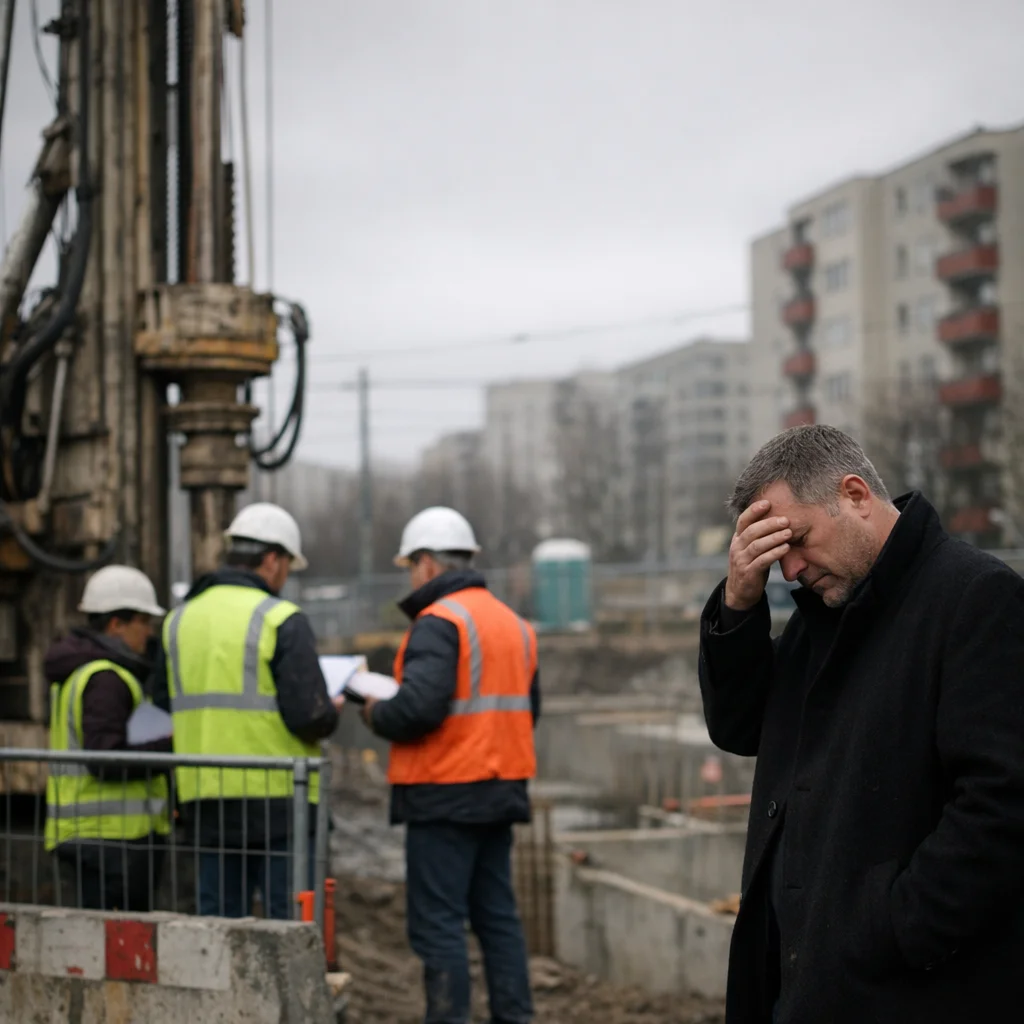
Developers in Gesundbrunnen say the new permit rule now feels less like city planning than a loyalty test administered by a bored mechanic with a measuring tape and a grudge. Before any affordable housing project can receive its final green light, planners require a fresh soil-penetration test, a step officials describe as protection against future subsidence and developers describe, in private, as a tidy way to make rivals wait while better-connected projects are invited straight to the front of the line.
The rule emerged after complaints that new foundations in the district had been rushed through with the spiritual confidence of a man ordering a second cocktail on a credit card he does not fully understand. District engineers insist the additional test is necessary because parts of the area sit on unstable ground and older industrial lots still carry the geological hangover of a century spent digging, dumping, and pretending none of it would matter later. "If you are going to build here, you need to know what the ground is doing under you," said Anja Reuter, a district planning official, who spoke with the exhausted authority of someone forced to defend a form no one loves and a process everyone suspects has a favorite customer.
But the rule is not being applied with equal enthusiasm. One developer with a glossy luxury block near the rail corridor reportedly sailed through the process on the first try, while a competing affordable-housing project a few blocks away was sent back for another round of paperwork, drilling, and cheerful uncertainty. The message, as ever, was delivered with administrative perfume: if your margins are fat enough, the ground is suddenly cooperative; if your rents are meant to be humane, the same ground becomes a moral problem requiring months of extra probing.
"They call it caution when it slows us down and common sense when it helps them," said Karim Yilmaz, who runs a construction consultancy and requested anonymity because he still hopes to get invited to future committee meetings. In practice, that means the office can raise its standards with a straight face when the applicant is trying to build below-market units, then lower its eyelids and its expectations when a luxury block arrives with polished renderings and a development team that knows which phone numbers get answered.
The wording itself has become the district's most honest employee. "Documented proof of deeper soil penetration" sounds less like civic prudence than an admission that the permit office has discovered a new way to say what everyone already knows: some projects are expected to push all the way through, and others are expected to stand in the corridor until the right people decide they are ready.
Local residents, meanwhile, are stuck watching the same old social alchemy. The people who can afford the best lawyers, the best lobbyists, and the prettiest drawings get the cleanest path. The people who are supposed to provide affordable apartments get treated like an inconvenient stain on a white shirt: carefully noticed, aggressively delayed, and discussed by officials who insist the real issue is cleanliness.
By early next week, the district plans to circulate revised guidance spelling out when the extra test is required and who gets waved through first. Until then, several lower-cost projects remain frozen in the city’s favorite pose: upright, expensive, and not getting anywhere while the luxury blocks keep moving as if the whole district were built to accommodate them.