GHB Economy Booms as Clan Families Offer “Full-Service” Neighborhood Protection, Including Coat Check
As police briefings multiply like houseplants, Wedding and Neukölln discover organized crime has the one thing Berlin bureaucracy can’t provide: reliable customer service at 6 a.m.
Night-Queue Economist & Low-Grade Vice Reporter
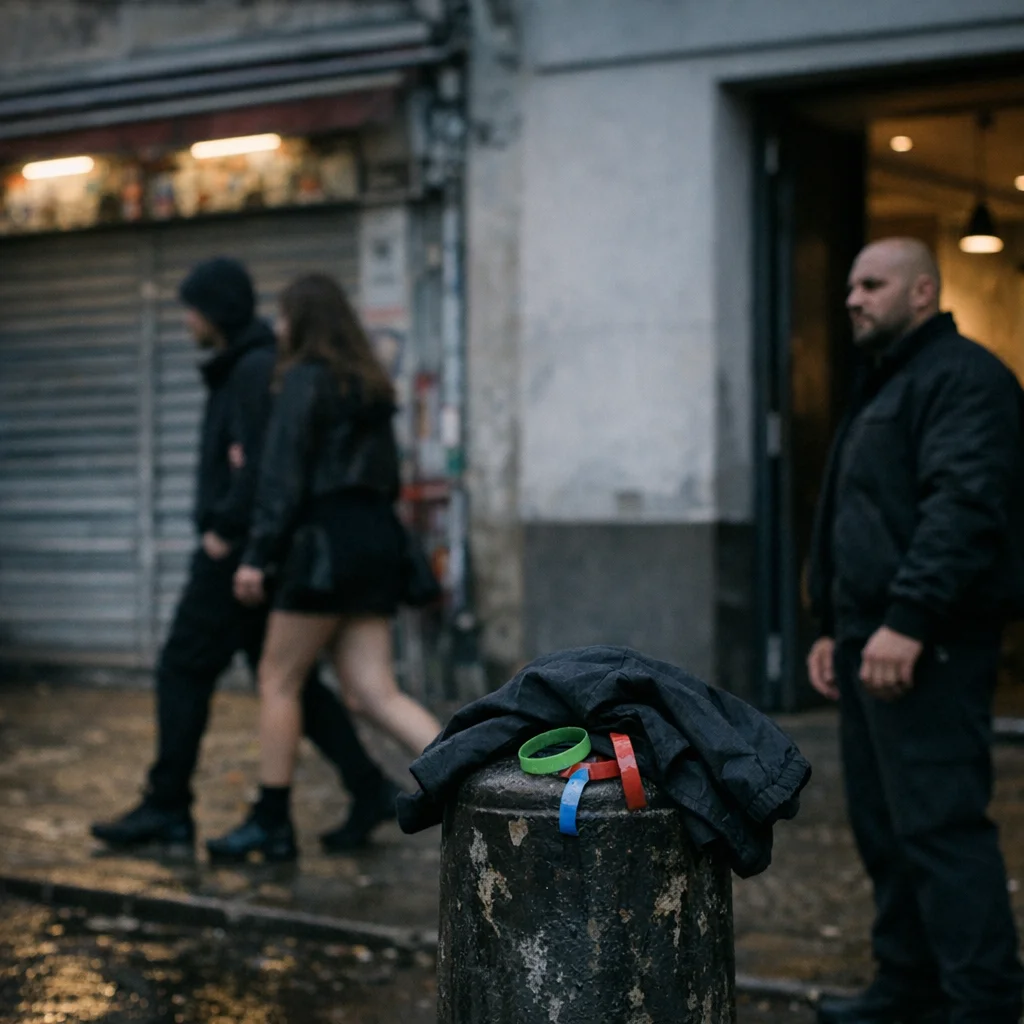
A new kind of security: less badge, more wristband
The latest rumor drifting between Wedding and Neukölln isn’t about a new bakery or an urgent neighborhood meeting that somehow ends in screaming. It’s about “service.” Not the kind you get at the Bürgeramt—where your number is called after your child graduates—but the kind you get when someone with a family name and a short temper decides your block should run smoother.
Local residents describe a quietly expanding system of “protection” that looks suspiciously like hospitality: someone watches the door, someone handles disputes, someone politely suggests you stop filming in the stairwell, and someone else makes sure your phone comes back to you even after you’ve had enough GHB to briefly believe you can forgive your landlord.
If the state is Hobbes’ Leviathan, then Berlin’s version is more of a tired salamander. Organized networks have noticed the gap and, like any entrepreneur with moral flexibility, they’re penetrating the market.
Wedding’s old businesses meet new forms of intimidation
On one corner, a Turkish family-run grocery that used to sell sunflowers and cigarettes now stocks oat milk because the new neighbors are scared of lactose and emotion. On the next corner, a “creative studio” appears—white walls, English signage, and a coffee machine that looks like a medical device.
And floating between them: the informal governance layer.
Longtime shop owners, who used to handle problems with nothing but a raised eyebrow and an uncle on speed-dial, now face a hybrid world:
- Old-school muscle seeking “stability” for local commerce
- Newcomers demanding “safety” but only the aesthetic kind—no sirens, no poverty, definitely no eye contact
- Club-adjacent nightlife spillover where strangers argue at 5 a.m. like it’s a graduate seminar on nihilism
The result is a neighborhood where protection is allegedly sold the way modern Berlin sells everything: as a subscription you didn’t remember agreeing to.
Neukölln exports chaos; Wedding imports it with a side of branding
Neukölln has long been Berlin’s most reliable content farm: if you stand still for three minutes, something will happen near you that your parents shouldn’t hear about. Now, residents say, some of that “expertise” has migrated north—along with the cafés, the coworking refugees, and the people who say they “don’t do labels” while labeling every street as “up-and-coming.”
A nightlife regular told me there’s an emerging service menu that’s basically organized crime doing UX:
- Queue diplomacy: calming the line outside a venue so nobody gets stabbed by vibes or literally stabbed.
- Conflict resolution: separating a drunk finance expat from a furious Turkish uncle whose patience has been gentrified out of existence.
- Asset recovery: you lost your phone, your dignity, and half your weekend; somehow the phone returns.
It’s community policing, but with better posture and worse paperwork.
The club pipeline: from dancefloor to “business model”
It would be dishonest to pretend this is happening in a vacuum. Berlin nightlife is an unofficial ministry, and the clubs are where social hierarchies get tested like lab mice.
A bouncer’s nod is a sacrament; a stamp is a passport; a sticker on your camera is a temporary vow of chastity to evidence.
And yes—drugs are part of the operating system. MDMA makes strangers hug like they’re in a Richard Linklater film. Speed turns a casual chat into a constitutional convention. And GHB—well, GHB makes time do that Salvador Dalí thing where it slides off the table and nobody picks it up.
In that haze, “services” flourish. You pay for water, you pay for a bathroom stall, you pay for your own coat to come back to you. At a certain point, paying someone to make sure your problems stay politely contained is just Berlin’s version of health insurance.
Everyone is against it, everyone benefits, everyone pretends not to notice
Police spokespeople insist they’re investigating. Politicians insist they’re concerned. Landlords insist they’re innocent (and then raise your rent again, just to stay spiritually consistent). Meanwhile, residents admit—quietly, like they’re confessing to having watched a Marvel movie—that the informal system sometimes works.
It’s the dialectic Walter Benjamin warned you about, except instead of art in the age of mechanical reproduction, it’s intimidation in the age of contactless payment.
The newcomers want “order” without the discomfort of seeing how order is made. The longtime residents want to keep their businesses open without becoming a case study. And the clans—allegedly—want what everyone wants in Berlin: steady cashflow, minimal accountability, and a line of people willing to wait for access.
A neighborhood motto, updated
Wedding and Neukölln have always been places where power is negotiated in public: over shop counters, in stairwells, outside late-night kiosks, in the awkward silence after someone says, “I know a guy.”
Now it’s just getting a bit more… organized.
Because when the official state can’t deliver safety, the unofficial one shows up with a firm handshake, a friendly smile, and terms that are surprisingly hard to swallow.