Ghost Permit Bureau Turns Wedding Into a Courting Ground
The district office now requires applicants to obtain a "love clearance" before any shop, bar, or sublease can open, and everyone is pretending this is normal civic order.
Civic Hypocrisy & Neighborhood Compliance Reporter
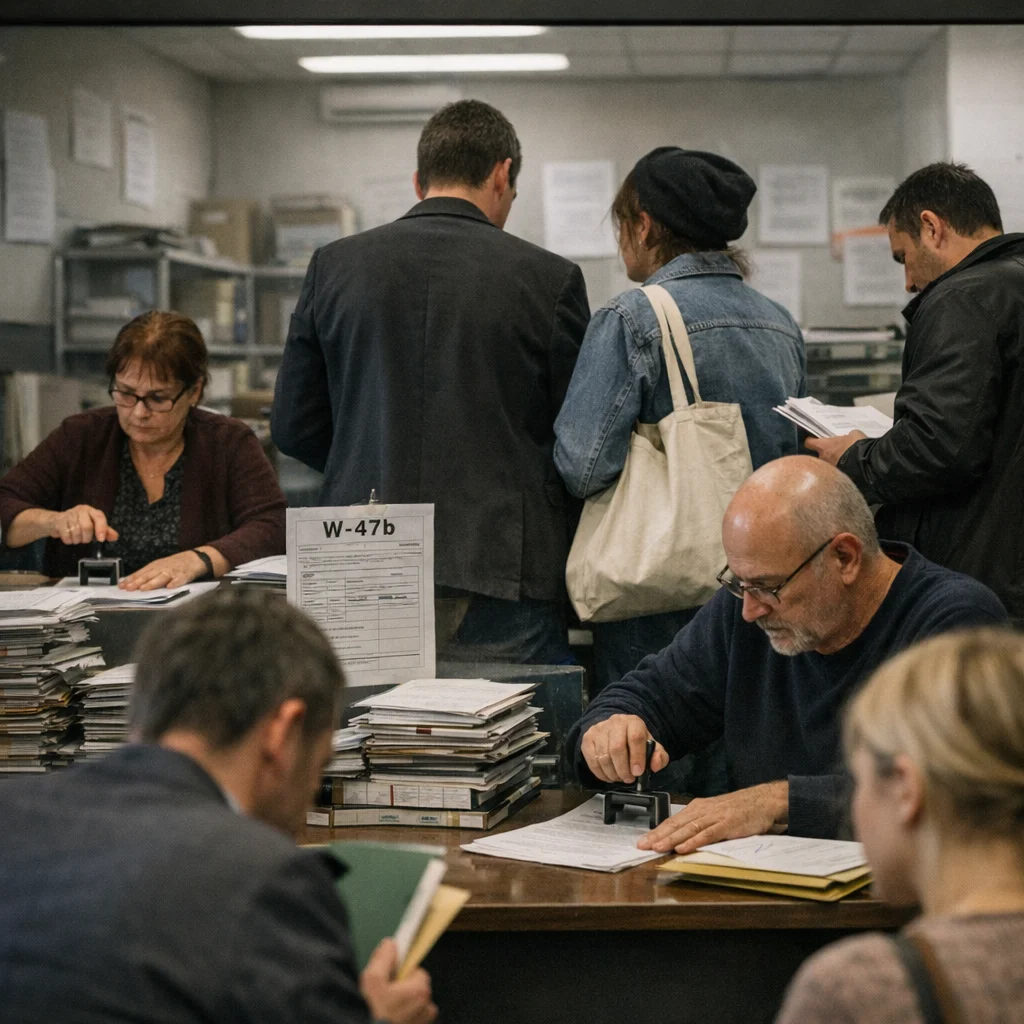
I used to think Berlin bureaucracy was just incompetence with a rubber stamp. Wedding has improved that theory. The district office now treats every permit application like a courtship ritual staged by people who confuse consent with leverage, and the new "love clearance" rule has turned the neighborhood into a waiting room for the administratively thirsty: you submit, you smile, you are inspected for chemistry, and then some clerk with a lanyard decides whether your future gets a room key.
It started, as these things always do, with language designed by a committee that hates nouns but adores control. Applicants for bars, subleases, galleries, cafes, kiosks, and the other allegedly civic organs that keep Wedding from ossifying into a corridor of vacancy must now file Form W-47b, the Community Compatibility Declaration, along with a short statement proving they are not merely opening something but are sufficiently committed to the neighborhood’s emotional ecosystem. The district office calls this "relationship-oriented governance." In practice it means a grown adult has to stand in front of strangers and explain why their espresso machine, their cash register, or their back room deserves a future.
The review sessions have all the grace of a first date arranged by a tax authority. Applicants sit under fluorescent lights while officials ask whether the concept feels "mutual," whether the use is "aligned," whether the storefront is prepared for a long-term bond with the block. A bar operator from Seestraße was told his draft plan had "commitment issues" because he wanted to stay open until 2 a.m. A woman trying to sublease a former phone repair shop on Müllerstraße was asked to describe her "intentions toward the courtyard." The office says it is only trying to prevent "speculative pressure." What it is actually doing is making every serious person audition for permission like they are trying to sleep their way into a municipal favor without admitting the arrangement is transactional.
The bureaucrats enjoy the procedure because it lets them play matchmaker while pretending to be guardians of virtue. One official, speaking on condition of anonymity because she once rejected a record store and still keeps the application in her desk drawer like a lover’s letter, said the clearance process has "restored seriousness to the district." Seriousness, in this case, meaning the state gets to sit at the head of the table and decide who gets touched by the neighborhood’s blessing. The permit desk no longer merely processes papers; it rates longing. If you want to open a shop, you first have to convince the office that your ambition is tasteful, your profit is modest, and your desire for foot traffic does not look too hungry.
Investors arrive in tailored shame, offering green walls, shared tables, and a suspicious number of words like "curated" and "inclusive," as if those were seduction techniques rather than emergency camouflage. Activists arrive with tote bags, anti-displacement slogans, and the smug expression of people who think vetoing a cafe is the same thing as housing justice. Landlords, naturally, float through the whole ritual like parasites wearing neutral colors, hoping the new process will raise the value of the waiting itself. Everyone claims to be protecting Wedding. What they mean is they want to be the one holding the clipboard when the neighborhood is made to kneel and prove it is still interested.
The old residents watch the show with the exhausted, lubricated contempt of people who have seen too many institutions pretend to be protective while quietly enjoying the intimacy of power. The Turkish families who have held corners together through every renovation fantasy know the script by heart: first the office asks for compatibility, then the activists ask for purity, then the investors ask for forgiveness, and somehow the only people ever made to blush are the ones trying to keep the lights on. It is an elegant Berlin arrangement. Everybody dresses up their appetite as principle and leaves the actual work of humiliation to a clerk with a stamp pad.
A district spokesperson insisted the clearance is not exclusionary but "selective in the interests of neighborhood chemistry." That phrase should be recorded and played back in court. It means the office has discovered the oldest trick in civic life: make people present themselves, make them wait, make them answer to a panel of amateurs with inherited certainty, then call the whole thing care. The application becomes a courtship, the review becomes a strip search of intent, and the denial letter lands like a breakup composed by procurement.
If the rule stays in place, the next thing to close in Wedding will not be a bar or a shop. It will be the pretense that permission is a public service instead of the district office’s favorite way to make adults ask pretty for what it already plans to withhold.