Glow‑Palm Gate: How a ‘Medicinal’ Cannabis Clinic in Wedding Prints Nightclub Guestlists on Your Hand
The public line: harm reduction and therapy. The tiny nighttime fact: a fluorescent palm stamp doubles as a scannable VIP pass, and promoters pay for the referrals.
Nightlife Contradictions Reporter
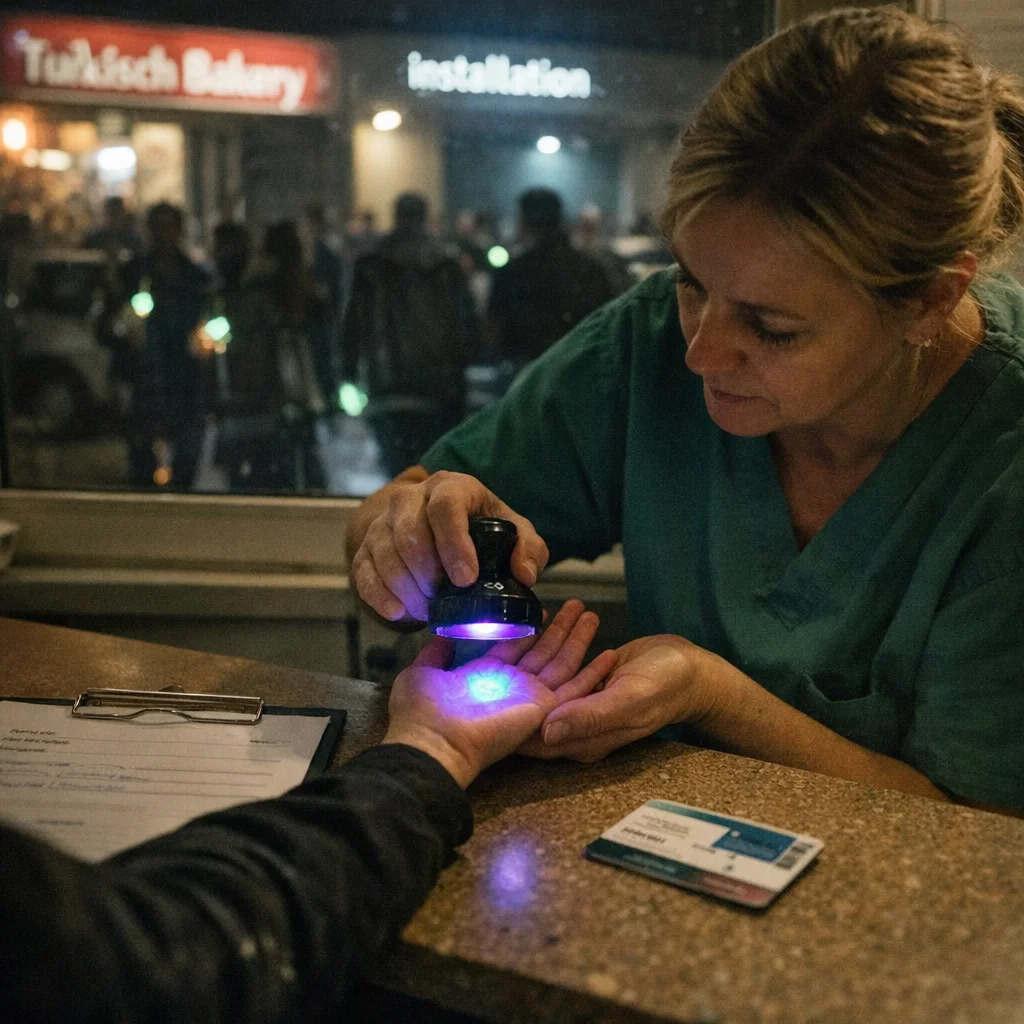
Officials in Wedding present the new "medicinal" cannabis clinic on Müllerstraße as a harm-reduction experiment: therapist-led intake, dosage cards, and a quiet waiting room where you can talk about feelings instead of buying from a man at Görlitzer Park. What no press release admits, neighborhood regulars say, is that the clinic’s fluorescent palm stamp — applied after every consultation — doubles as a scannable VIP pass for after-dark events that advertise themselves as "immersive art installations."
The sequence is tidy: patient registers, receptionist — often asked to use only first names — prints a thin referral slip, and a nurse presses a small, circular stamp on the center of the palm. Under ordinary light it looks like a medical mark; under blacklight it fluoresces with a pattern. "It’s coded to the date and the clinic intake number," admitted Lukas Brenner, a freelance promoter who runs pop-ups in converted warehouses. "We scan it at the door, the system verifies a valid ‘patient,’ and the guestlist clears. We pay the clinic a finder's fee per head. It's less awkward than paying people cash in a bathroom."
Clinic manager Dr. Selma Arslan defended the practice as a convenience: "The stamp helps our patients remember dosing times," she told The Wedding Times. She denied knowledge of any payments to promoters. The district health office said it is "reviewing compliance with medical advertising and patient-data rules," and that any commercial use would be investigated.
Neighbors tell a different chronology. Around midnight, a procession of stamped hands moves from the clinic toward basement spaces that bill themselves as "participatory sculpture" — generous sculptures that, insiders whisper, finish the night in ways Duchamp might have called a provocation and Georges Bataille would have applauded for confusing eroticism with the public sphere. Gallery cashiers now ask to see palms the way club bouncers once asked for ID: a firm grip, a quick look, and inside you go.
The logic is perverse and efficient: medical legitimacy shields participants from police scrutiny, while the stamp becomes a status signal in a neighborhood where being "medicinal" reads like a VIP credential. Turkish bakery owner Ayşe Demir said she watches the procession with equal parts disgust and business sense: "They come in at dawn for simit after their nights here," she said. "They are loud, but they buy coffee."
Civil liberties advocates worry about surveillance and monetized intimacy. "This is medicalization as matchmaking and payment-for-entry dressed up as care," said Maxine Vogel, a privacy campaigner. The immediate consequence: the district office has opened an audit and several promoters report clubs asking for alternate entry methods. For now the stamp still glows, and the after-hours art keeps getting tighter and louder — and a little harder to explain to your aunt when she asks why your hand is fluorescent.