Gorki’s New Prayer Night Looks Radical Until You Notice the Sign-In Sheet
Shermin Langhoff’s call to prayer lands like a moral emergency, but the real ceremony is a theater lobby full of culture-sector people performing concern, networking in hushed tones, and signing up for the kind of.
Gentrification & Moral Performance Correspondent
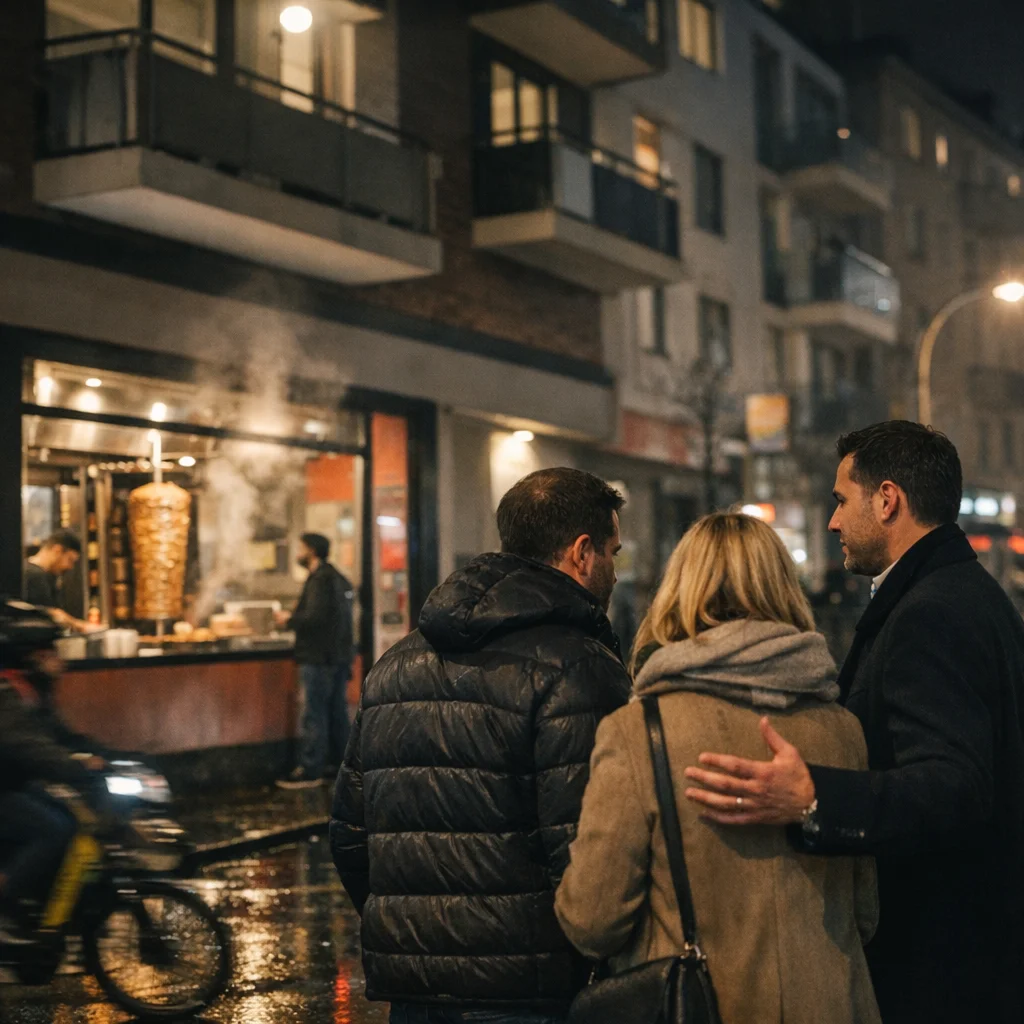
Residents on Müllerstraße say the new premium apartments are going for around €2,000 a month, which is apparently the market price for being able to hear a fryer hiss through a designer window. The pitch is simple: live next to a 24-hour döner shop, inhale the garlic, watch the late-night drift of delivery riders and drunk philosophers, and tell yourself you’ve bought “authenticity” instead of a lease on somebody else’s exhaustion.
The brochures, naturally, call it “lively,” “well connected,” and “urban.” That’s developer dialect for: the place is still dirty enough to feel interesting, but not so dirty that it might reveal the moral condition of the people cashing the checks. The buyers seem ecstatic about this arrangement. They want the bakery, the smoke, the queue, the men outside with their cigarettes and their tired jokes, because nothing flatters a self-image like pretending to be adventurous while paying luxury rent to observe poverty from behind triple glazing.
A realtor in a tailored coat was reportedly heard describing the döner place as “part of the local texture,” which is the kind of sentence that should legally require a shame tax. Two prospective buyers from Prenzlauer Berg nodded along with the glazed devotion of people choosing wallpaper for an apartment they will never deserve. The woman had the pinched look of someone signing up for debt and calling it culture. The man kept saying “authentic” in the tone of a collector handling a bruise with tongs.
By the time they reached the sidewalk, they were standing under the building like penitents who’d wandered into the wrong chapel, staring at the illuminated spit of meat as if it were a sacred object instead of a rotating emblem of labor, grease, and municipal failure. One could almost admire the nerve: they want the heat without the fire, the scent without the stain, the neighborhood’s pulse without ever having to share the arterial blood.
“The funny thing is they call it noise, but they mean evidence,” said Tuncay Demir, who runs the shop and has watched enough waves of “new energy” arrive to know that every one of them arrives with a fresh vocabulary for taking. “They want the smell at dinner and the silence at bedtime. That’s not community. That’s appetite with a spreadsheet.”
The district office, in its usual posture of well-fed helplessness, said it has no authority over what private landlords charge. Municipal translation: yes, the throat is being squeezed, but look how professionally we’ve arranged the paperwork. A spokesperson added that mixed-use streets are “part of a healthy urban fabric,” which in Berlin usually means a consultant gets paid to describe extraction as balance while residents are told to be grateful for the privilege of being managed out of their own postcode.
This is the real civic performance: developers sell “vibrancy,” buyers buy the right to consume it, and the district office launders the whole transaction through phrases like “texture,” “diversity,” and “urban vitality,” as if repeating them often enough might turn theft into stewardship. It’s not mixed-use. It’s mixed morals. The neighborhood does the sweating; the market does the posing.
The döner shop, meanwhile, keeps opening early and closing whenever human need finally gives out. It remains the one honest institution on the block: no white paper, no community workshop, no consultant jargon, no fake tears from people who treat the city like a scented candle with tenants. Upstairs, the flats will likely stay full. Nothing sells quite like a view onto other people’s labor, especially when you can call voyeurism “local character” and charge extra for the privilege.