"Got Any Spare Techno Stamps?"—Wedding’s Wristband Black Market Trades in Sweat, Status, and Ketamine Logic
Once a mark of survival, the humble stamp has become a neighborhood currency: waterproof, fungible, and spiritually louder than your CV.
Nightlife Microeconomy & Daylight Shame Reporter
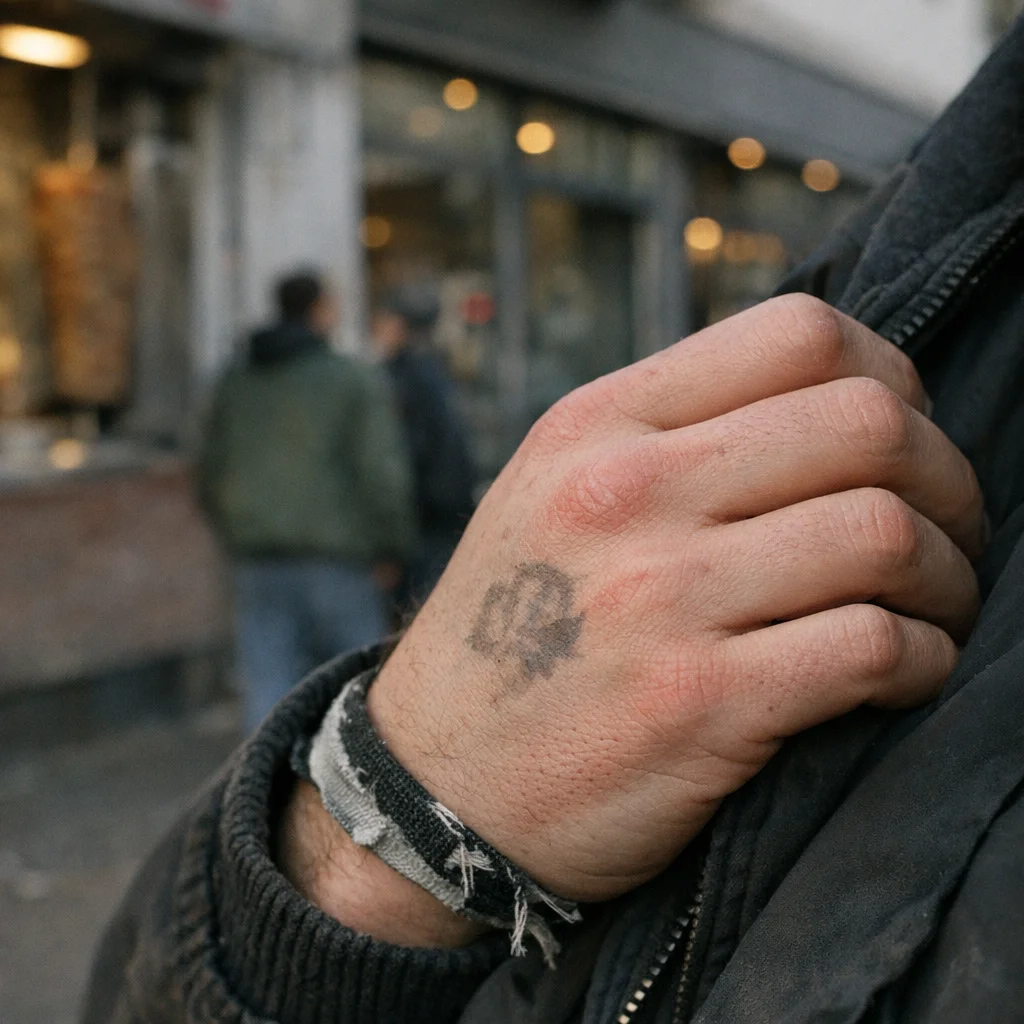
The New Blue-Chip Asset: Dried Ink, Faded Fabric, and Selective Memory
There are two Berlin economies.
The official one pays in euros, direct debit, and moral lectures about cash. The other one—thriving quietly between Müllerstraße and the nearest late-night kiosk—pays in wristbands, hand stamps, and the kind of eye contact that says, don’t ask questions you can’t afford.
In Wedding, the stamp has evolved from “proof you were here” into a compact financial instrument: waterproof enough for tears, showers, and poor decisions; rare enough to create artificial scarcity; and fragile enough that people protect it like it’s a newborn.
You can tell which newcomers are serious because they don’t just cover their phone cameras at the club entrance—they cover their stamp walking home. It’s basically a portable passport, except with more smudging and less dignity.
A Parallel Currency That Smells Like Commitment
Longtime residents still think of stamps as an annoyance—something you accidentally wash off while helping your aunt carry groceries up the stairs.
Newcomers treat stamps like a stock portfolio:
- Fresh stamp: liquid assets, tradable, socially loud.
- Half-rubbed stamp: volatile, like a startup founder’s promises.
- Perfect stamp with no memory of the night: an aristocrat.
Every Sunday, you see it: bodies shuffling into Wedding at lunchtime with a clenched fist held up like they’re carrying a tiny secret. One guy on Seestraße reportedly got on the bus with his hand tucked into his waistband like he was protecting a hard-earned relic, which is a romantic sentence until you remember what he’s actually doing.
At this point, you don’t ask someone in Wedding “How was your weekend?” You ask, “Still got the ink?”
Stamps as Social Proof: Baudrillard But With Deodorant Failure
In Simulation and Simulacra, Jean Baudrillard wrote about signs replacing reality. That sounds abstract until you meet a person at a Wedding café explaining, in fluent English and tragic confidence, that they “basically live” in the techno scene—because they have three stamps on the back of their hand.
They don’t remember the music. They don’t remember the DJ. They barely remember having a body.
But the stamp is real. Or real enough. And like any good religion, it doesn’t require proof—only visible devotion.
This is the new social hierarchy: not based on money, education, or family history, but on how long your stamp lasts through your first kebab, second cigarette, and third philosophical conversation with a stranger who insists they’re "actually not that into drugs." (Translation: they are extremely into drugs.)
Micro-Trades in Wedding: "Two Stamps for a Couch" and Other Urban Myths That Somehow Come True
Over the last month, The Wedding Times spoke to kiosk owners, cloakroom survivors, and one Turkish bakery worker who described the stamp economy like weather: “It’s just… here. Sometimes it gets worse.”
Here are some of the exchanges locals claim they’ve witnessed in Wedding, recounted with the sincerity of people who definitely shouldn’t be trusted:
- A wristband traded for a place to crash after someone "lost their friends" (which is Berlin’s way of saying they changed realities).
- A fresh stamp swapped for priority in a taxi queue—not bribery, just culture.
- A couple negotiating affection with a wristband as collateral, which is also culture, just more… penetrating.
And yes: stamps now show up in roommate selection. The same person who can’t commit to taking out trash can keep a stamp intact for 18 hours. Somehow that’s considered stability.
Inflation Hits: Too Many Stamps, Not Enough Soul
Nothing good survives mass adoption.
Once upon a time, stamps signaled you’d endured fluorescent bathroom politics, sweat condensation diplomacy, and at least one moment where you considered crying to a speaker stack.
Now? The market is flooded with “soft stamps”—quick in-and-out attendees who show up long enough to absorb a few kick drums, take a moodful cigarette outside, and go home before anything weird happens. They bring the stamp back to Wedding like a trophy they didn’t earn, the way some people bring back museum receipts and call it culture.
Meanwhile, the people who used to own the stamp game—regulars who treated Monday morning like a minor obstacle rather than a date on a calendar—are bitter. Not because the city is changing. They love that. They’re bitter because their status symbol has been commodified like everything else in Wedding.
The stamp used to mean something. Now it’s just branding you carry around until it fades, like your political opinions.
Local Solutions Proposed (All Bad)
In response to stamp speculation, several totally reasonable proposals have circulated through Wedding like an uncomfortable rumor:
- Rent control tied to stamp longevity: if the ink survives 24 hours, your landlord legally has to stop calling your studio “loft-like.”
- Stamp authentication pop-ups in cafés that used to be a butcher shop, run by a man named Liam who describes himself as a “trust architect.”
- A stamp buyback program where you exchange your faded wristband for a coupon and the soft feeling that you’re “closing the loop.”
None of this will happen, because Berlin cannot organize anything besides disappointment.
What This Really Means for Wedding
Wedding has always had multiple currencies: reputation, family ties, the ability to find a cheap haircut without booking online, and the quiet authority of Turkish grandmas who can shut down an entire street with one look.
Now it has another: a thin line of ink on skin, paid for with sleep, sobriety, and sometimes something resembling ketamine logic.
The gentrifiers are not just buying apartments; they’re buying experiences and trying to resell them as identity. And nothing proves you’ve “earned” the city like a stamp that says you were admitted into the bass temple and came out the other side—still damp, still arrogant, still ready for brunch.
If Marx were alive, he’d call it commodity fetishism. If Freud were alive, he’d call it a coping mechanism. If you’re alive in Wedding, you call it what it is:
A tiny piece of ink that makes grown adults feel chosen—until they wash their hands and remember they’re still just tenants.