Green Days, Hot Stalls, and Fake Farm Face
Erfurt’s trade fair is dressing itself up as a barnyard for three days, and the people selling “regional” food are hoping no one asks how much of the country is actually happening on imported flooring.
Gentrification Symptoms & Pretend-Creative Economy Reporter
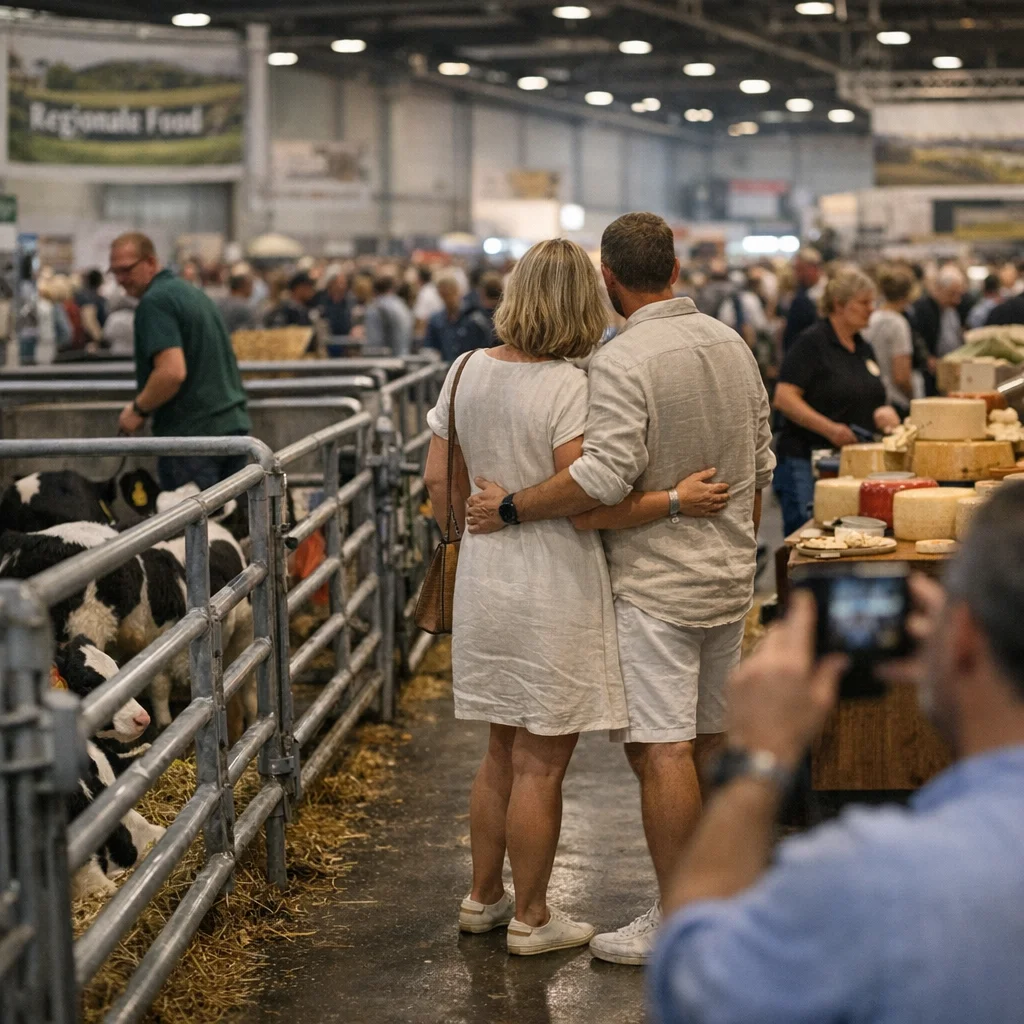
At the Green Days fair in Erfurt, the country arrives like a well-rehearsed seduction: pressed calves, brushed straw, and “regional” labels laid out like clean sheets over a dirty arrangement. Messe Erfurt gives everyone a place to pretend they are being invited into the countryside, when what is really being sold is access — who gets to slip inside the farm without earning a bruise, a smell, or a bill.
The opening day at Messe Erfurt had the usual officials and usual appetite. The Thuringian Agriculture Ministry sent its polished faces to stand beside livestock and pretend this was public service rather than a handsy little conference of power, packaging, and mutual flattery. The booths were arranged with the modesty of a hotel room after a bad apology: everything neatly made, nothing honest about how many hands had touched it.
Berlin brought its own escorts for the fantasy. Wedding food entrepreneurs drifted through the halls with the grave expressions of people hoping to be admitted into the nation’s underside, while a pair of organic-espresso operators and one market manager from a Turkish bakery chain circled the cattle pens like men trying to convince the room they had come for principle rather than the chance to be seen near virtue. Their badges swung against their chests with the same impatience as a club wristband someone keeps hoping will get them through another door.
A booth from a Berlin co-op advertised “farm-to-city transparency” on a recycled chalkboard, then handed out samples sealed in plastic so immaculate it looked less like packaging than a discreet invitation to be handled. Every stall seemed to be offering the same service under different names: provenance with soft lighting, intimacy without consequence, the countryside with the work edited out. The fair’s official language was all “dialogue,” “added value,” and “trust,” which is what institutions say when they want to reach under the table and keep their public hands folded.
“People want dirt until it stains,” said Jörg Mertens, a dairy producer from Thuringia, who asked not to be named because his teenage daughter already thinks trade fairs are where middle-aged men go to audition for relevance. “They like the idea of the farmer, not the invoices. They like getting close as long as they don’t have to do anything with their hands afterward.”
That was the tone all day: cheeks warm, elbows out, and a full parade of office-born agriculture admirers trying to look fertile in public. A district official posed beside a piglet with the fixed grin of a man convinced that proximity to a living thing counts as competence. Two staffers from the Thuringian Farmers’ Association hovered nearby like bouncers for authenticity, policing who could say “regional” with enough seriousness to pass inspection. They were selling access the way bad men sell attention: as if a little lingering near the source should be enough to earn the right to call it love.
By early afternoon, the Berlin contingent had identified the fair’s true export: innocence with a markup. The city’s self-appointed food radicals praised local production while drinking oat drinks imported from half of Europe, and three startup men from Neukölln stood in front of a tractor with the slack, grateful look of people being shown the machinery after promising they only wanted the story. A Brandenburg cheese seller watched them the way exhausted hosts watch guests who keep calling the bedroom a “space for connection.”
Even the signage had the posture of a pickup artist in municipal drag. “Rooted,” “honest,” “close to the land” — all the old courtship phrases were there, only now they came with QR codes and a price list. The fair’s regional branding worked like a bad seduction script: first the flattering language, then the sample, then the bill, and in between a lot of men in blazers pretending they had not come here to be let in.
The Messe has promised three days of hands-on agriculture, and that promise is doing almost all the work. By Sunday, the only thing likely to be truly local is the fatigue, shared by exhibitors who had to keep opening the door to authenticity and by visitors who came to be penetrated by the idea of the countryside without once having to surrender their shoes to it. When the stalls close, the last thing left on the floor will be the same glossy residue the fair spent three days denying: proof that everyone wanted inside, and nobody wanted to admit who was doing the letting in.