Guard Your Coke, Bring a Tote Bag
Wedding’s club economy has discovered that the cleanest way to sell danger is to repackage it as lifestyle compliance: reusable cups, wristband tiers, and a smug new class of patrons who want the filth of techno without.
Nightlife Incident & Outfit Forensics Reporter
“Community-Led” Means Nobody Gets Paid
The new Berlin club patron wants four things from a night out in Wedding: a line that tastes expensive, a reusable cup, a moral framework, and no visible need. That is the whole creed now. Not pleasure, not risk, not even the old honest vulgarity of wanting to be ruined. Just the polished humiliation of looking informed while somebody empties your pockets in the coatroom.
By early morning, that elegant fraud was hanging by the coat rack at a basement party off Müllerstraße, where promoters, freelancers, grant-fluent scene managers, and brand-conscious ravers discovered that the city’s cleanest-looking nightlife still runs on the oldest municipal technology: theft, vanity, and the bureaucratic romance of making other people do the work for free.
The party was billed as a “low-impact cultural gathering,” which is how the little managerial class now describes a room full of black clothes, Bluetooth speakers, and social climbing in a minor key. The bar served water in compostable cups. The flyer promised “care.” The guest list was curated like a small-batch narcissism project. The venue operator—one of those permanently amber-lit men who can say “community” without choking—stood by the door explaining to a journalist that the project was “about access,” which in Berlin usually means access to an unpaid shift and a copy of the photo policy.
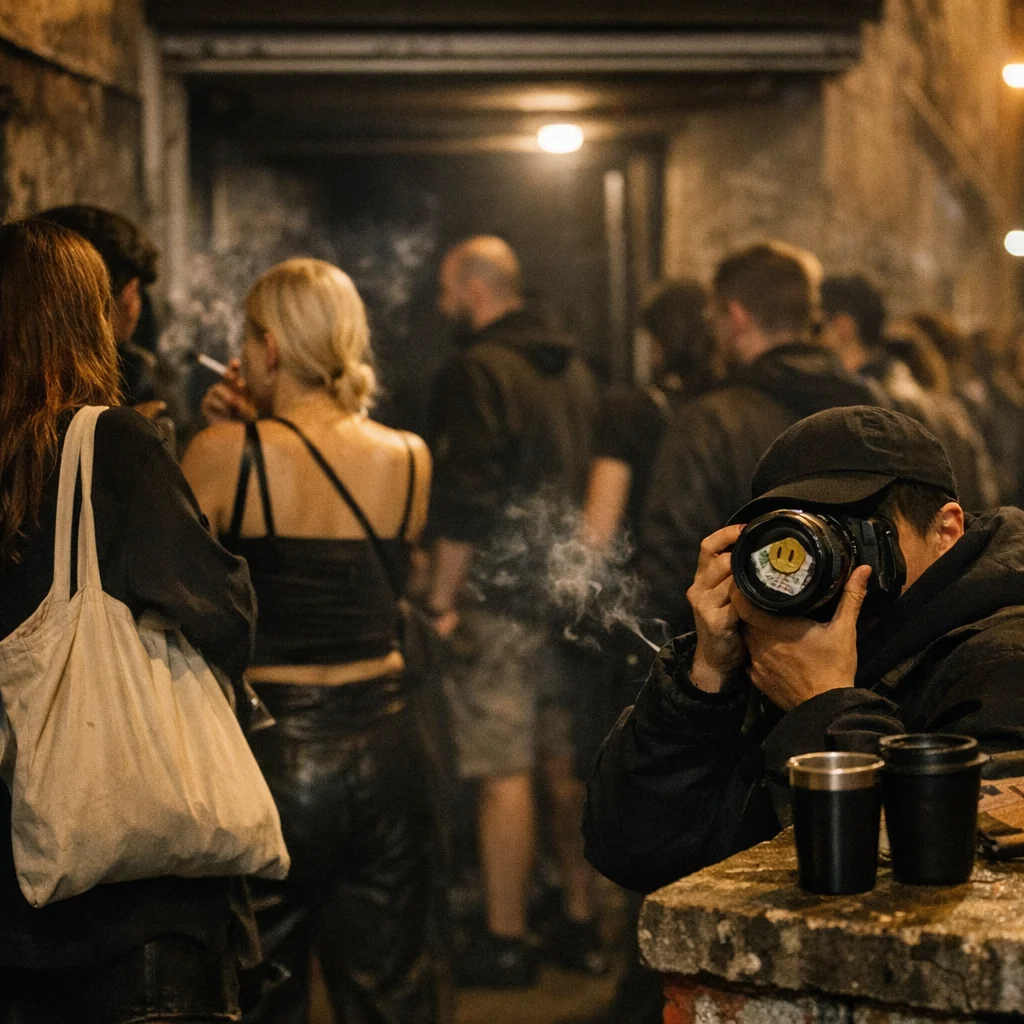
Then someone took a tote bag from the cloakroom table, another person vanished with a half-finished drink, and a third person spent twenty minutes performing outrage over a missing lighter as if he had been robbed of a kidney. This, more than the techno, is the true nightlife culture: a roomful of adults playing aristocracy with warehouse furniture and borrowed ethics, each one convinced their anxiety is politically sophisticated because it has a tote bag attached.
“It’s not the drugs, it’s the manners,” said Nora S., a visual producer who requested anonymity because she had already borrowed two phone chargers and did not want her own character examined in public. “Everyone talks like they’re in a Judith Butler seminar, but the second you turn your back, they’re in a procurement meeting with worse lighting and better cheekbones.”
By around midnight, the room had split into its usual classes: the ones guarding their bag with a grip like a mortgage, the ones pretending not to notice, and the ones explaining that late capitalism is the problem while checking whether somebody left a scarf worth stealing. The promoters stood near the door wearing the exhausted smile of priests who also sell merch. One announced the event was “community-led,” which in Berlin usually means nobody is getting paid and everyone is somehow supposed to feel morally elevated about that arrangement.
And that is the real district policy in Wedding: permit the scene, brand it as culture, let the operators stage a little righteousness in exchange for keeping the noise complaints tidy, then congratulate yourself for “supporting diversity” while the rent climbs, the work disappears into internships, and the only people who profit are the ones who can turn precarity into a mood board. Cultural funding enters like a kind aunt and leaves like a debt collector with better taste.
Wedding’s club economy has perfected the art of selling danger as etiquette. Bring your own cup, respect the rules, keep your camera covered, hydrate like a monk, and try not to look like you need companionship or you’ll be judged by people who came here to be seen not needing it. The whole thing is a Panopticon with a queue, a velvet rope for the conscience, and a private humiliation ritual for anyone who still confuses being “careful” with being decent.
A spokesperson for the district office said it had no comment on “private cultural programming,” though it confirmed complaints had been received about noise, intoxication, and “unattended personal items creating avoidable tension.” Charming phrase. In government language, that means the borough has discovered nightlife only when it can be reduced to an insurance category. The club, meanwhile, said it was “reviewing internal processes,” which in venue language means a long cigarette break, a passive-aggressive note to staff, and a new sign near the bar pretending discipline is a form of liberation.
By sunrise, the tote bags were still missing, the cups were still compostable, and half the room was still acting like the moral high ground was a dress code. A few people left with their shoes in hand and their principles somewhere on the dance floor. The rest queued for the first Späti coffee of the morning, already building the next version of themselves: leaner, kinder, more curated, and just self-absorbed enough to call it politics.