Gucci’s Public Screening, Maximum Social Climax
Berlin’s first fashion watch party turned runway worship into a civic humiliation ritual, with hundreds cheering expensive clothes they could never touch.
Gentrification Symptoms & Pretend-Creative Economy Reporter
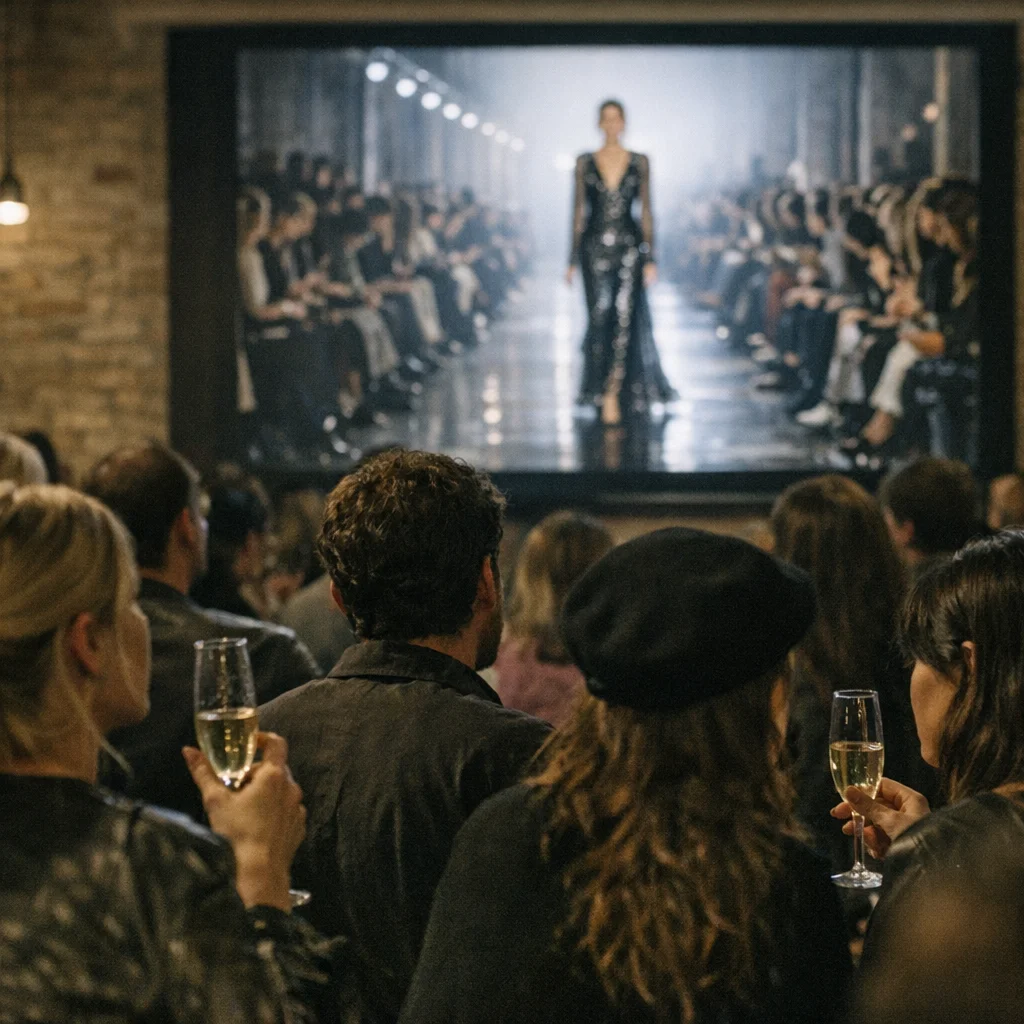
Gucci’s first public runway screening in Berlin drew a crowd on Friday night to a converted event space in Mitte, where hundreds gathered to watch a livestream of the Italian brand’s latest show as if it were a civic hearing and their own appetite had arrived with a guest list. The room filled early with fashion interns, startup strays, exhausted journalists, and the usual professional admirers of access—people who can say “atelier” with the same practiced hunger they use for “community.” By the time the first model appeared on screen, the audience was already arranged like it had come to be assessed, selected, and possibly taken behind the curtain if it behaved.
Outside, several attendees admitted they came less for the clothes than for the social arithmetic. Inside, the screening worked like a public audition with better lighting. Heads tilted. Glasses were lifted. Nobody wanted to look eager, which only made the room look more lubricated by desire. A man in a spotless blazer near the back called the event “democratic,” then immediately checked whether anyone important had heard him say it. That is Berlin’s favorite scam: calling the velvet rope a public service while everyone lines up to be felt up by the gatekeepers and told it was culture.
The screening also offered a painfully honest lesson in class lust. Gucci items on the screen were treated like holy relics; in the room, people wearing secondhand coats and borrowed confidence reacted as though expensive tailoring were a right that had been denied them by an incompetent state. The brand’s livestream became a kind of sanctioned seduction: the audience sat there, upright and obedient, waiting for the screen to choose them, even though the only thing being distributed was longing. One guest, Lina Mertens, a freelance stylist who asked to be identified by her real name because she wanted credit for her suffering, said the crowd was “half sermon, half mating ritual, half waiting room.” She added, “Everyone pretends they hate luxury until a logo makes them sit up like they’re hoping to be invited to the front and pinned there.”
A spokesperson for the venue said the watch party was meant to make fashion “more accessible” and “less intimidating.” That line landed with the tenderness of a tax notice and the sincerity of a tenant’s notice to vacate. Accessibility, in this city, usually means paying admission to watch other people get undressed by status while you stand there practicing a face that says you are not desperate, merely discerning. The brands want the crowd close enough to worship, but not so close that anyone mistakes the room for equality. The venue wants the optics. The handlers want the press. The public wants the thrill of being noticed by a machine that only recognizes credit cards and proximity.
By the end of the screening, nobody had become more cultured; they had only become more legible to the people selling them belonging. People exchanged Instagrams like phone numbers after a disappointing date, each one trying to leave with proof that they had been seen near the good body of the city. A few lingered afterward, hoping to be mistaken for someone with a seat in the front row, or at least someone whose face had been approved by it. The organizers said the format could return. It probably will. Berlin loves any event that lets people pay to be screened, rejected, and still call it a night out.