Gus on the Auction Block, Museums Start Whining
The old museum line is that fossils belong to the public imagination. The auction house line is that imagination does not pay storage, insurance, or staff who can lift a tyrannosaur without calling someone.
Moral Contradictions & Night-After Reporting
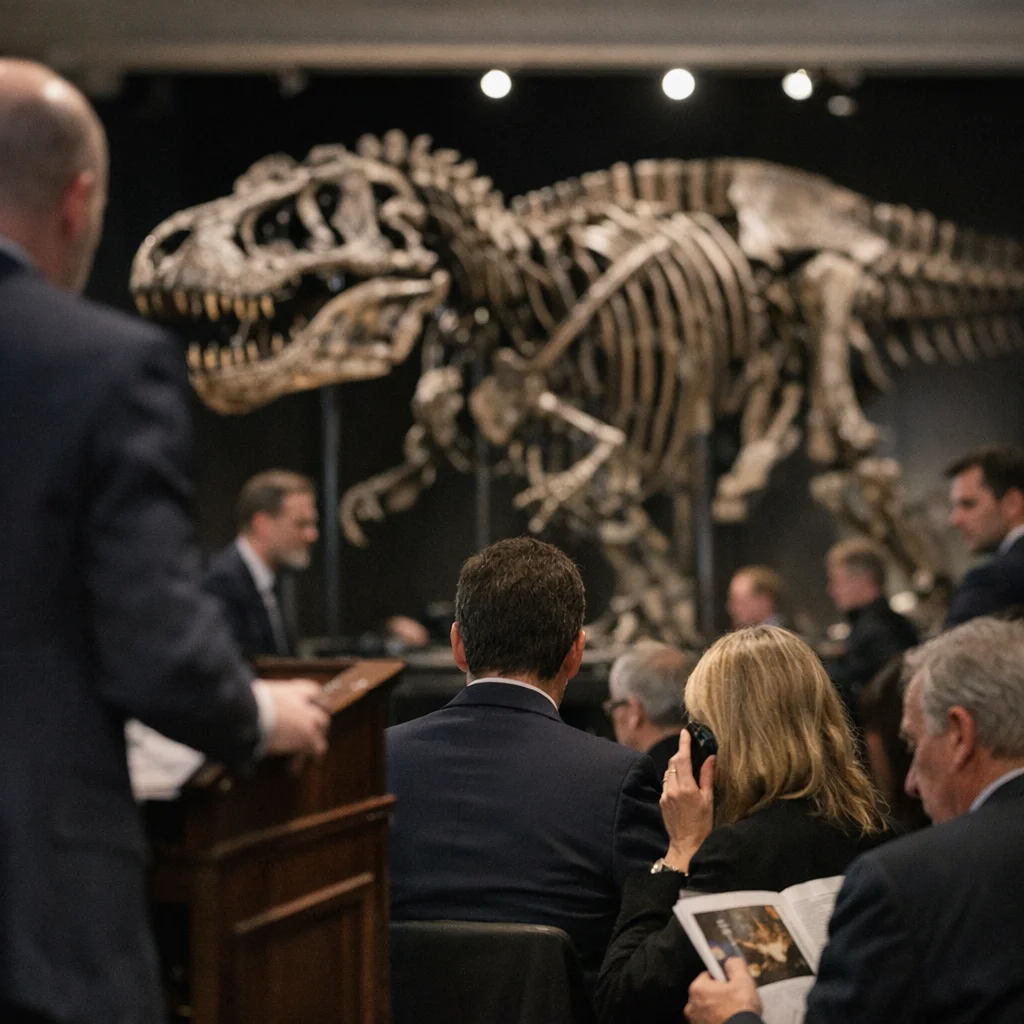
Museums across Europe spent Friday doing what institutions do best when caught with their trousers around their ankles: inventing principles in the glare of a camera. The auction of the Tyrannosaurus rex skeleton known as “Gus” has sent directors, trustees, and donor-chasing PR consultants into a ceremonial frenzy of outrage, the kind that arrives only after the catalog copy is printed and the private phone calls have already begun.
The real scandal is not science. It is the sticky little business of who gets to own the dead thing, polish the dead thing, and then lecture everyone else about civic duty while a billionaire’s assistant is still on hold. Museums insist fossils belong to the public imagination, which is a lovely phrase from people who need a public subsidy and a private patron in the same breath. They talk about stewardship like priests with rent problems. They talk about heritage like it isn’t a body already being auctioned by men in cufflinks who smell opportunity the way dogs smell blood.
The auction house, naturally, wears the moral expression of a casino with a law degree. Its staff speak in the grave, lubricated tones of people who can say “cultural significance” while quietly hoping two bored heirs and a petrochemical widow start bidding against each other over a skeleton large enough to crush a boardroom. The whole room is a little sexier than it should be and a lot emptier, full of people pretending they are rescuing civilization when what they really want is a tasteful bone to display near the bar.
A curator from Hamburg, speaking with the careful bitterness of someone who has watched three directors and one minister all chase the same donor, said the institutions are addicted to the prestige of rescue without wanting the actual labor. “Everyone wants to be the one who saves Gus,” she said. “Nobody wants to be the one writing the check, calling the conservator at midnight, or explaining to a trustee that yes, the crane does cost money and no, the fossil will not magically levitate into the gallery on moral authority.”
That is the museum class in a nutshell: immaculate rhetoric, flimsy stomach. Trustees love heritage right up until they need to pass the hat to the same wealthy animals who attend their galas for the canapés, the networking, and the chance to feel historically indispensable while standing under a fossil they can barely name. Directors will denounce commodification in the morning and then spend the afternoon begging a collector with a private jet and a soft voice to “consider partnership.” The language gets more reverent as the desperation gets wetter.
And the bidding ecosystem is its own little chapel of humiliation. Auction previews fill with men performing calm while checking their phones every twelve seconds, assistants whispering into earpieces, foundation reps pretending to take notes, and donors calling from tax havens to ask whether there is a naming opportunity in extinction. Everyone wants to be seen as the guardian of the public good, which in practice means being the first person in the room whose money can buy absolution with a fossil attached.
The local reality is simpler and uglier than the polished speeches. A museum trustee in a tailored suit decides what counts as “public” after lunch with a sponsor. A heritage minister will praise accessibility in the morning and then spend the afternoon trying to keep a headline from becoming a funding request. The public gets to admire the spectacle from the outside, while the actual decisions are made by people who confuse access with ownership and civic duty with access to a better table.
By week’s end, several institutions were said to be exploring a joint bid, which is museum language for a threesome of financial shame. It may save Gus, or it may simply produce a larger congregation of embarrassed elites trying to split the cost of legitimacy. Either way, the bone will be handled by people who would like history to bless them back for the privilege.