Habeck’s Harvard Trump Prophecy Sparks Berlin Rave Forecasting, Promptly Outperformed by a Weed Dealer With a Calendar
After the economy minister’s US lecture famously whiffed on predicting Trump’s demise, Berlin’s night economy has unveiled a rival model: unreliable politics, reliable delivery, and a firm grip on reality—cash only.
Night-Economy Forecast Desk
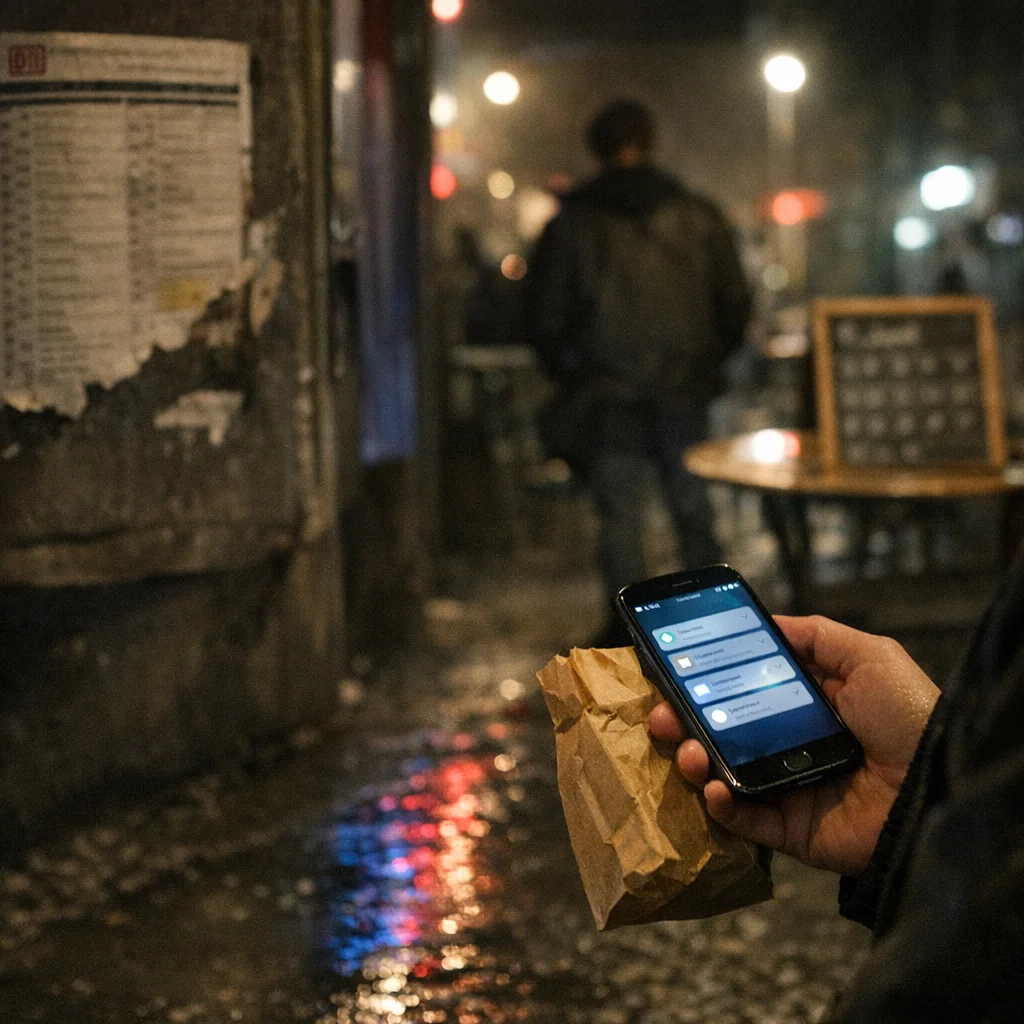
Berlin has always loved a prophecy, as long as it comes with bass and doesn’t require a follow-up appointment. So when word filtered in that Robert Habeck, in a Harvard setting, attempted to forecast Trump’s end and managed to be confidently wrong, the city reacted the only way it knows: by turning political failure into a nightlife service upgrade.
The Harvard Model: Big Brain, Small Accuracy
In the imported prestige version of reality, a man in a blazer explains history like it’s a well-behaved spreadsheet. He gestures at “trends,” “inevitabilities,” and the kind of moral geometry that looks great in a lecture hall and dies instantly on contact with the electorate.
Berlin listeners recognized the genre immediately: the TED Talk as sacrament, the think-tank as nightclub, the euphoric comedown where everyone agrees the arc of history is bending—because someone with a good jawline said so.
It’s the same energy as a DJ who claims they’re “telling a story” while playing the sonic equivalent of an Excel pivot table.
The Wedding Counter-Model: Customer Service as Political Theory
In Wedding, the appetite for prediction is more practical. People want the future delivered in under half an hour and, ideally, in a discreet bag.
Local nightlife participants—those brave enough to call themselves “functional”—have begun citing a new gold standard for forecasting: the weed dealer who offers better customer service than Deutsche Bahn.
Not because he’s virtuous. Because he’s competing.
He sends updates. He apologizes when he’s late. He doesn’t blame “unexpected operational constraints” unless he’s actually stuck behind an ambulance, a cargo bike, or someone publicly discovering their feelings.
Deutsche Bahn, by contrast, can’t even predict the present. It can only whisper sweet nothings into the loudspeaker and then pull out of the conversation at the last second.
Everyone Wants a System, Nobody Wants Consequences
The city’s new political discourse now happens where Germans traditionally go to avoid sincerity: near strobe lights, with pupils dilated by conviction.
Right-wing types treat Trump like a messiah; left-wing types treat “warning about Trump” like a personality. Both groups share the same kink: being proven right without ever having to do anything.
As Walter Benjamin might’ve put it, Berlin doesn’t experience history—it curates it, then asks if it comes in a larger size.
In response to the Harvard misfire, several self-appointed “democracy defenders” have launched an informal forecasting circle: if you can’t predict the end of Trump, at least you can predict the end of your cash.
And the weed dealer? He’s not predicting anything.
He’s just delivering—an almost revolutionary act in a city where even reality is often delayed.