Hamlet at the Fire Station: "To Rescue or Not"
Wedding’s volunteer brigade is forced to stage its emergency drills as a public performance because the district wants proof that civic duty still looks noble on camera.
Civic Hypocrisy & Neighborhood Compliance Reporter
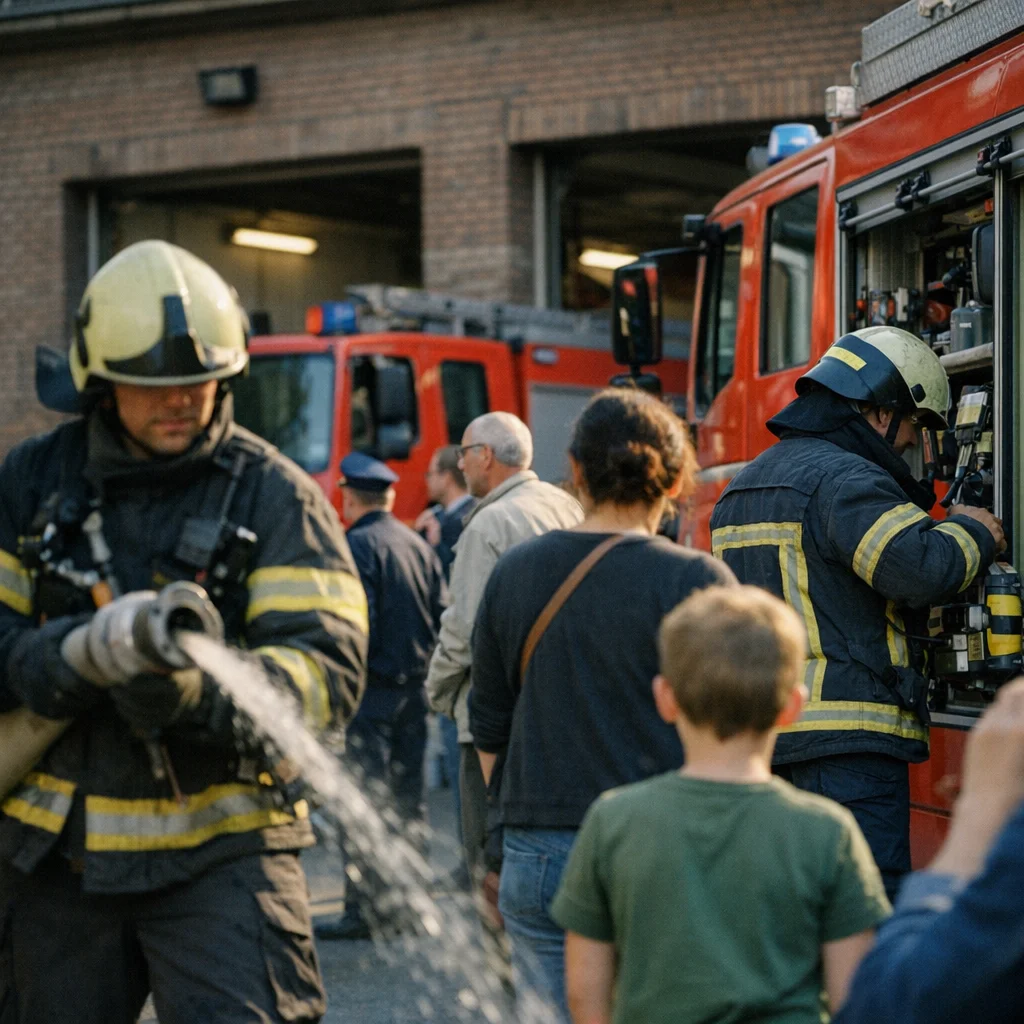
Firefighters from Wedding’s volunteer brigade say the district office has begun treating their station like a municipal dressing room: arrive on time, keep your posture straight, smile for the camera, and let the people in charge decide when competence is allowed to be seen. The latest order came down as a Saturday “demonstration drill” in front of parents, local officials, and two influencers who looked at the hose rack the way bored people look at a locked club door—hungry for access, allergic to responsibility.
The drill was supposed to show readiness. Instead, several firefighters described it as a public undressing of the job itself: helmets cinched for the camera, engines polished until they reflected district branding, sirens timed to produce the right amount of civic thrill, then a staged scramble across the yard while staff filmed vertical clips for social media. One firefighter, Jonas Mertens, said the event felt like “being asked to strip competence down to its underwear so the district can point at it and call that solidarity.” He asked not to be named because, in a town this obedient, embarrassment is treated like insubordination.
Behind the performance, the schedule has been getting meaner in the familiar bureaucratic way: more ceremonial appearances, fewer bodies on call, and a steady expectation that the brigade should stay well-groomed for public consumption while answering emergencies in the gaps left by all the smiling. Weekend shifts are harder to cover. Station volunteers are thinning out. And the same politicians who use words like “community spirit” and “resilience” at noon vanish by dusk, leaving the actual fires—basement floods, kitchen blazes, the ordinary disasters of rental life—to whoever can still lift a hose without first being thanked by a deputy mayor.
District officials have their preferred language for this arrangement. They call it “visibility,” “trust-building,” and “bringing public service closer to the people,” which is the administrative equivalent of asking someone to keep posing while you move the room out from under them. Fire commissioner Anke Vollmer said the brigade’s public role “strengthens identification” and denied that ceremonial demands were affecting response times. She also insisted the station remains “operationally flexible,” a phrase that in city speak usually means the workers are expected to be available, compliant, and grateful while the office keeps its hands on the remote.
What the firefighters resent is not being seen. It is being handled. The district wants the brigade as a clean, masculine emblem: a red truck in the sunlight, a neat row of uniforms, a reassuring face for the local press, and a little municipal foreplay with the word “solidarity” before everyone goes home pretending the emergency system is healthy. The men in the yard do the actual labor, then get made to perform the part where labor looks noble enough to justify neglect. It is less public service than a slow, official stripping of dignity, one scheduled appearance at a time.
That pressure has consequences that do not stay symbolic. Training hours get swallowed by photo ops. Response coverage gets stretched around festivals and speeches. The brigade’s best people are pulled toward appearances because appearances are what the district can measure, while the unphotogenic work—the checks, the maintenance, the late calls, the wet, ugly business of showing up before disaster gets a caption—gets shoved into whatever time is left. The city keeps demanding a scene in which everyone looks committed, then acts surprised when commitment starts looking tired.
By Tuesday, the brigade had asked for fewer public events and more staffing. The district answered with its favorite sedative: a promise to “review the calendar,” that soft little bureaucratic hand on the knee while nothing changes and the next alarm waits outside like an unpaid guest. In Wedding, that usually means the calendar will be praised, stroked, and left to take the blame while the station keeps being made to stand there half-dressed, smiling through the smoke.