Hamlet at the Späti: "Only Cash, No Shame"
A Wedding corner shop has started treating late-night beer, cigarettes, and flirting like a medieval gate with surcharges. The regulars call it convenience; everyone else calls it a public audition for humiliation.
Neighborhood Commerce & Low-Grade Dread Reporter
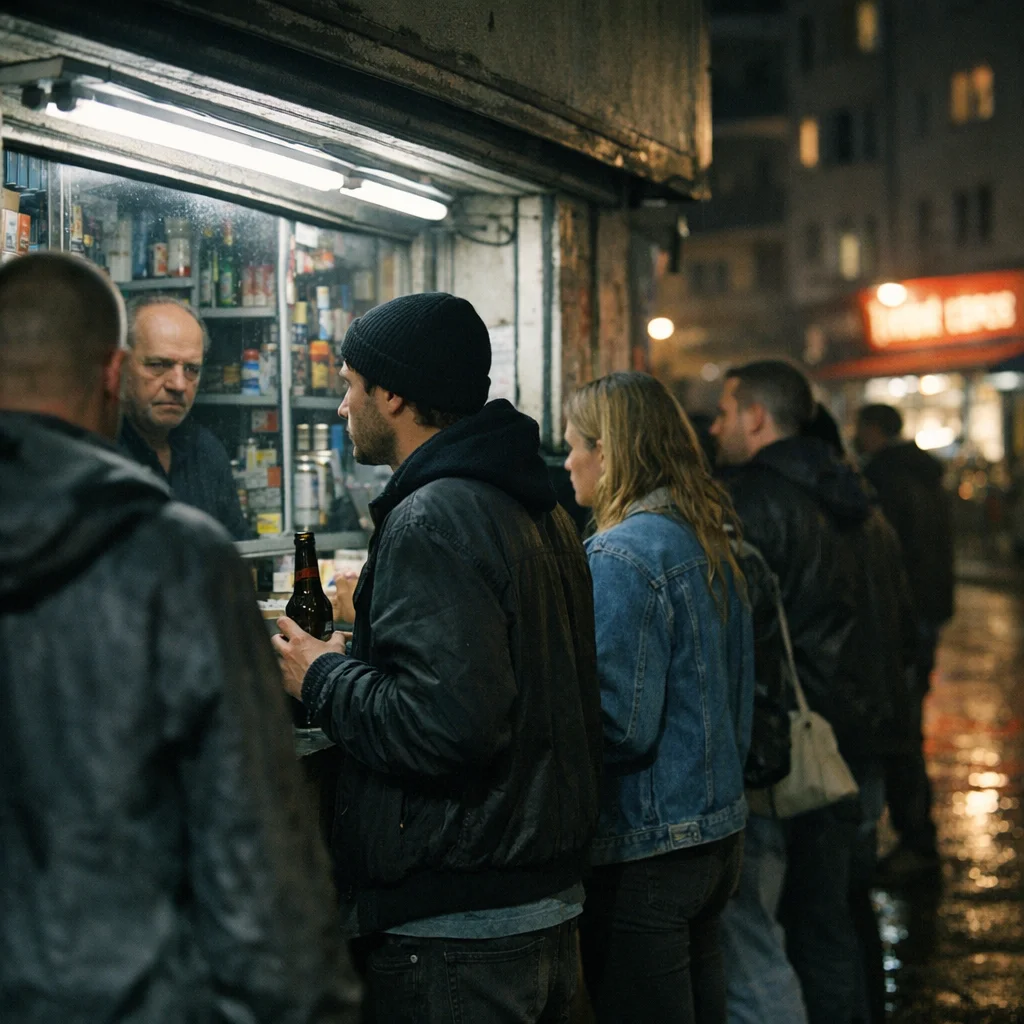
The Späti on the corner near Leopoldplatz began enforcing its new cash-only rule by behaving less like a shop and more like a velvet-rope clinic for male desperation. The counter became the gate, the till became the latch, and every man in line started acting as if a six-pack were not a purchase but a chance to be chosen. Loud ones were let through first if they could produce notes fast enough; the quiet ones, and anyone who tried to pay with the smooth confidence of a civilized parasite, were left standing outside the door of their own little fantasy.
By early evening, the queue had the choreography of a humiliating flirtation gone bureaucratic. Men leaned in too close, shoulders squared as if a carton of cigarettes were a badge of virility, while women in the line kept their faces set in the expression people use when they know a room full of men is about to mistake persistence for charm. Two cyclists in Lycra argued over a six-pack like they were negotiating custody of a minor dignity. Every transaction at the window looked like an inspection: cash first, then beer, then the cashier’s judgment about whether the buyer had the posture of a man or just the appetite.
The owner, a Turkish father of three who asked not to be named because his cousin still owes him thirty euros and his landlord still pretends the rent is a spiritual exercise, said the policy was simple. “Card payments make people behave like they deserve things,” he said. “Cash makes them show their face. Or at least the part they’re not proud of.” At this hour, the shop was not selling convenience. It was selling admission, and only to those willing to sweat a little for it.
That is why the rule lands harder than a normal shortage of change. The shop now runs on a late-night inspection regime where cigarettes, beer, and desire are checked at the same counter. A regular named Deniz, who lives nearby and has watched the street turn from neighborhood to curated disaster, said the line had become “the only place in Wedding where grown men still have to wait to see if they’re allowed to be obvious.” He said this with the weary affection of someone who has seen too many men confuse being noticed with being wanted.
The city’s favorite vice, once again, is performance. The men who complain most loudly about “real Berlin” are the first to panic when the cashier refuses contactless payment, because their whole identity depends on being able to glide through life without touching the part of it that costs something. The self-declared leftists arrive with tote bags, slogans, and the delicate confidence of people who think politics should lubricate the transaction; they immediately wilt when the cashier treats them like any other thirsty customer trying to buy entry with borrowed virtue. The right-wing tough guys prefer the new arrangement because they can mistake being made to wait for a test of manhood, which is almost touching, in the same way a bruise is almost a compliment.
The result is a tiny court of masculine petitioners, each one trying to stand straighter than the last while pretending not to be desperate. The cashier does not need to flirt, threaten, or even raise his voice. He simply asks for cash, gives the briefest look, and lets the room do the rest. In that fluorescent window, every man is reduced to the same question: can you pay, or are you just another loud mouth hoping the door will open because you smiled at it?
No one at the shop is pretending this is customer service. It is a filter, and a filthy one. The owner says people who cannot handle a queue are not ready for the city’s real tests. “If you cannot survive buying beer here,” he said, “you should not be speaking to women after midnight.” He said it like a warning and a business model, which in Wedding are often the same sentence.
The district office said it had received no formal complaint, which in Wedding usually means the situation is either manageable or already part of the local weather. For now, the line keeps growing, the cash drawer keeps clinking, and the same men keep returning with the grim enthusiasm of parishioners who know the altar is fake but still want to kneel at it. Every night the counter opens, the gate lifts, and the neighborhood lines up to see who gets in on cash and who gets left outside talking too big in the cold.