Harvard Gets Ghosted — Wedding’s Prestige Hunters Panic
After a pundit declared the US Defense Department would cut ties with Harvard, Wedding’s micro‑elite scramble for new badges and artisanal syllabi.
By Theo Scherz
Gentrification Satirist & Kiez Correspondent
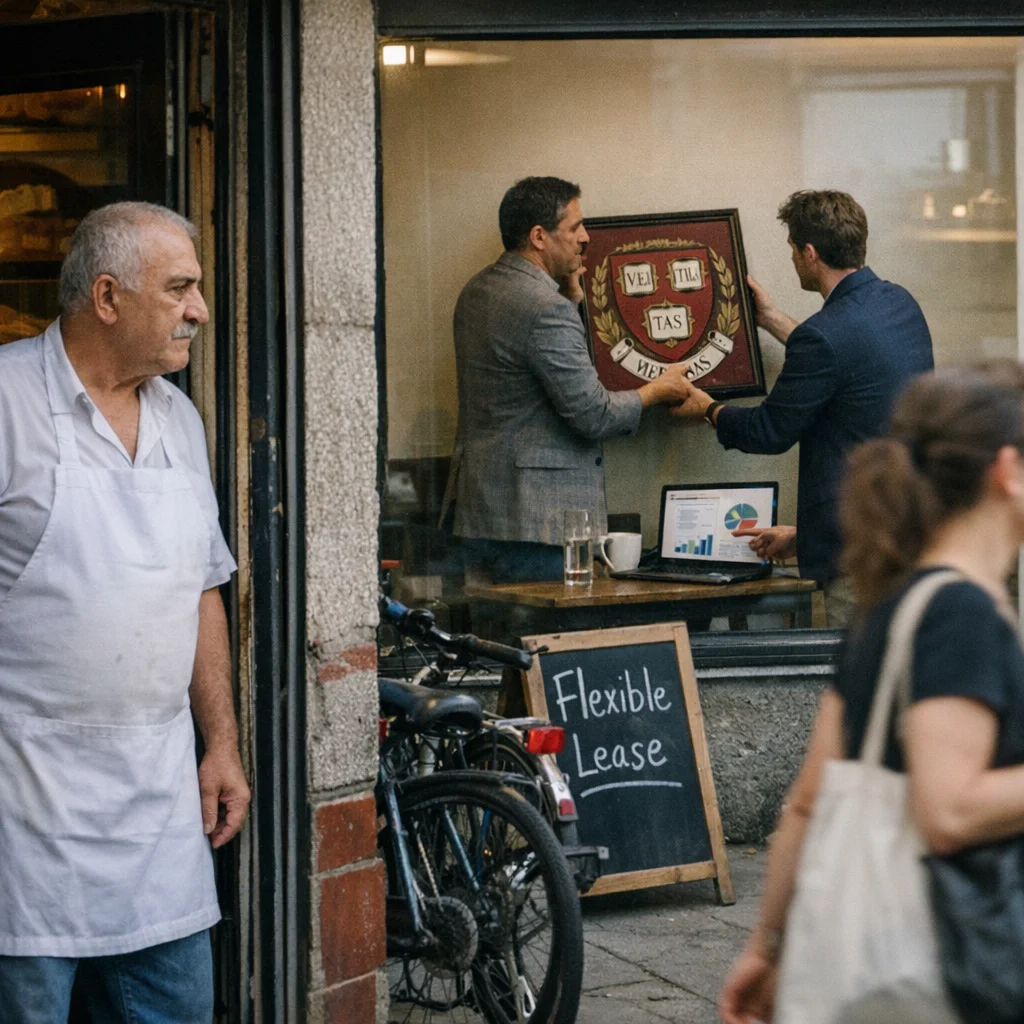
Harvard is less a university than a mood. When a pundit claimed the Defense Department would cut ties, Wedding reacted like a neighborhood that just found out its favorite café removed its free Wi‑Fi: performative grief and immediate reinvention.
The break‑up as performance art
Across Müller-adjacent streets, coats that once hung on "Harvard people" now sag with confusion. Coworking spaces replaced the crest with typography reading: "We Accept Experience." A boutique landlord hung a chalkboard: "No Ivy League? No Problem — Flexible Lease." The new marketing reads like a pitch deck after a breakup: pivot, monetize, and never mention where you were before.
A freelance consultant I met at a bakery — whose owner, a Turkish woman, looked on with amused patience — summed it up: "They're shocked Harvard might lose federal work, as if prestige were renewable. It's just brand milk, they forgot the cow."
Startups scramble for new credentials
Founders who introduced themselves by alma mater are now introducing themselves by the number of co‑founders who can do an honest spreadsheet. "We’re offering Harvard‑adjacent internships," announced one incubator, meaning unpaid research assistantships, a kombucha subscription, and access to a printer that sometimes works. A consultancy rebranded as "Formerly Affiliated With Somewhere That Sounds Like a Think Tank." Investors nodded as if arrangement alone could conjure outcomes.
This is where Baudrillard would smile: the Harvard signifiers remain, even if the signified slips. The crest becomes a simulacrum you can rent by the hour — a Proustian madeleine for careerists who want to taste authority without doing the work. It’s prestige as scent marketing.
Civilian defense, Wedding edition
The local analog to the DoD’s cut played out at the petty scale of Wedding: private security firms that subcontracted academic credibility are now offering "practical ethics seminars" in lieu of research grants; a micro‑think tank announced a "national security bootcamp" involving PowerPoint, three foldable chairs, and a facilitator who once read Foucault on a train.
A tenants' group, usually litigating radiator temperature, considered inviting a history professor for a talk on civic duty. They quickly pivoted to a self‑help workshop: "How to Signal Competence Without a University Crest," complete with icebreakers and name tags. It was Kafkaesque enough that the organizer muttered about deadlines and vanished into an Anmeldung queue.
Who gets punished, who gets to pivot
As usual, the people who actually do the work—cleaners, bakers, teachers—watch this dance without desire to join. The Turkish bakery owner returned to kneading bread while the ex‑Harvard résumé hunters debated whether Humboldt or Freie Universität would be more fashionable to claim. For him, prestige is a side dish: good bread, steady customers, less existential dread. That steadiness has a way of being quietly seductive; Walter Benjamin would have filmed it as an Arcades Project vignette about things that endure while hype collapses.
Investors keep saying "deep dive" and then offering microgrants that are hard to swallow. Founders say they will "penetrate the bureaucracy" of European grant applications with bravado previously reserved for networking events. The language is intimate, oddly carnal — boardrooms promising late‑stage closeness to funding, co‑working spaces promising you’ll "meet your match" — all with the polite ambiguity of a dating app bio.
Final act: Wedding as a lab for replacement rituals
The moral of this panic is simple: when someone on another continent announces a symbolic disconnection, a neighborhood full of people who make identities out of affiliations will invent substitutes quickly. Academic crests are replaced by residency stamps, endorsements from micro‑influencers, by a bakery owner’s recommendation. Berlin keeps choosing the useful over the shiny.
And for those still polishing their Harvard mentions? Good luck finding shelter in a boutique collective. If history has taught us anything about the public sphere, it’s that credibility collapses faster than you can say "open office policy." But the local bakery will be there, indifferent and warm.
"We do not mourn institutions," the baker said, handing me a simit. "We feed people."
It was the best apology for gentrification I’d heard all week.