Haus der Statistik Finally Comes After Decades of Teasing
Mitte district officials who spent years delaying redevelopment now rush the second public consultation while quietly reserving prime units for connected civil servants and their favored nonprofits.
Civic Hypocrisy & Neighborhood Compliance Reporter
Haus der Statistik Finally Comes After Decades of Teasing
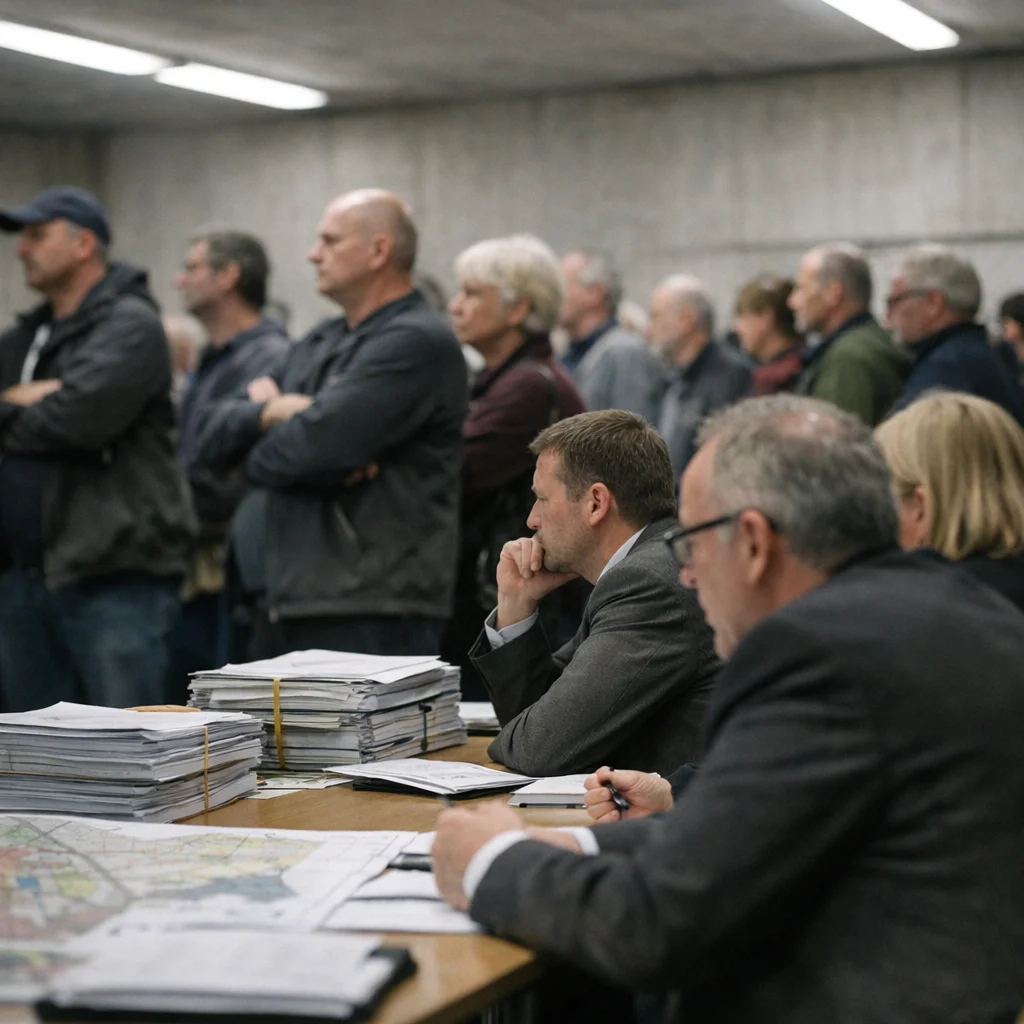
The second public consultation on Haus der Statistik at Alexanderplatz opened with the familiar civic seduction: everyone may speak, and then the people with access cards will finish the job in private. The Mitte district has relaunched the zoning plan for the hulking former DDR complex, which now promises hundreds of apartments, a new town hall, and cultural space. It also promises something less printable: a carefully staged access economy in which the people who spent years slowing the project down are suddenly eager to be first through the door, pants already buttoned, keys already counted.
The first draft was delayed for years, which in Berlin often counts as proof of seriousness. By the time the district returned with the updated version, the language had been smoothed, the rough edges filed off, and the best ground-floor units were already being treated like a disciplinary reward for the people who know how to talk about public benefit while reaching for the lease in the same breath. One planner, speaking anonymously because career survival in this city still depends on appearing useful to the right committees, called the process “participatory” with the sort of grave face usually reserved for tax fraud and funerals.
"They say ‘new town hall’ and people imagine a counter, a queue, maybe somebody helpful," said Denis Eber, a longtime Brunnenviertel resident who came to the consultation and left with a headache, a brochure, and the sense that he had watched a property transfer disguised as a neighborhood blessing. "What they mean is a whole ecosystem of grant managers, program coordinators, and deputy directors who can say ‘community’ with a straight face while reserving the good rooms for themselves and their favorite umbrella nonprofits."
The room, predictably, was full of the sort of people who never seem to run out of access: foundation staff with tote bags from other conferences, cultural intermediaries, architecture devotees, civil servants from the Bezirksamt, and housing-policy professionals who speak about affordability the way perfume ads speak about desire. A representative from one social-impact nonprofit described the plans as “inclusive” and “future-oriented,” which in Berlin usually means the public gets the press release while the insiders get the square meterage.
District officials said the revised plan improves public access, adds housing, and creates a civic center for the neighborhood. These phrases survive every meeting because they are polished enough to sound generous and vague enough to cover a theft with a smile. But tenants, smaller local groups, and people who actually need rooms to work, meet, rehearse, or simply exist without begging permission from a program officer said the real question is who gets inside first: the residents of the district, or the self-appointed guardians of the district’s moral furniture.
Around Alexanderplatz, everyone knows the sequence. First comes the architectural virtue. Then comes the consultation. Then comes the quiet sorting of bodies, budgets, and bedrooms under a banner that says inclusion so loudly it sounds like a booking list.
By the end of the hearing, the plan was still technically open for comment. That is the last clean moment before the paperwork tightens its tie, the language goes soft around the edges, and the people who have been hovering near the building for years start acting as if Haus der Statistik was theirs before anyone else even entered the room.