Heartland Tease: Eight States Decide Who Gets Eurasia
After the Hormuz blockade, Hungary through Mongolia suddenly matter as the place where Washington and Beijing try to buy access, loyalty, and the right to come first.
Global Affairs & Kiez Mischief Correspondent
Heartland Tease: Eight States Decide Who Gets Eurasia
After the Hormuz blockade, the people in Berlin who still mistake access for intimacy have found a new object for their sweating little seminars: Hungary through Mongolia, eight states suddenly cast as the Eurasian hinge where Washington and Beijing are trying to buy the key, the room, and the first touch without ever admitting they came to be handled. In a city full of men who call themselves anti-imperial while invoice-chasing imperial money, the new corridor gospel has settled in like a bad perfume that lingers after the client leaves.
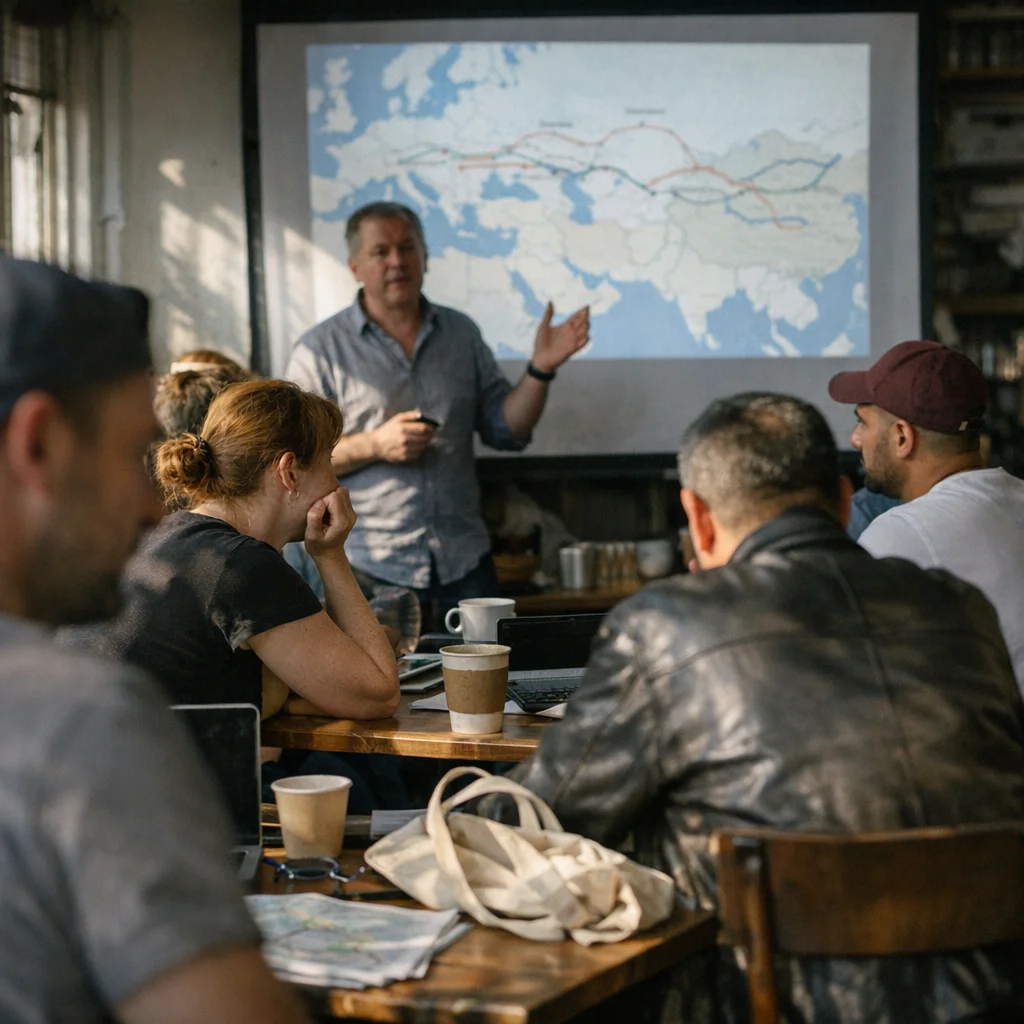
At a panel in a Wedding co-working space near Müllerstraße, a trade consultant with hair too expensive to trust said the rail routes would decide “who gets to shape the continent’s future.” Nobody laughed, which is how you know the line was not a joke anymore but a procurement category. A Turkish grocer from around the corner, who asked not to be named because his nephew runs the Zoom room and would punish him with a week of family ridicule, put it more cleanly: “Everybody wants the route. Everybody wants to be the route. Then they act offended when somebody starts measuring them for the role.”
That is the entire arrangement. Washington shows up promising security, standards, and the kind of careful attention that always comes with a bill and a moral lecture. Beijing shows up with concrete, patience, and the predatory calm of a patron who knows the room will eventually ask to be chosen. The states in the middle are expected to behave like sovereign adults while being worked over like a cheap suit in a fitting room: shoulders pinned, lining checked, pockets turned out, then left on the chair if the fit looks embarrassing.
Berlin loves this script because it is the city’s own little vanity project in foreign policy drag. The activist class, especially the ones who learned geopolitics from podcasts, grant templates, and one too many boyfriends in policy jobs, can denounce empire in the morning and praise “connectivity” by lunch if the logo placement is clean and the travel budget has a little warmth in it. The startup men in orthopedic sneakers hear “corridor” and think “pipeline,” which is the closest they ever get to a confession. Everybody claims to hate leverage until someone offers them a seat close enough to feel the heat.
Inside a nearby café selling oat milk and fatalism, a former logistics analyst from Mitte said the new great-game language sounds like “a threesome where everyone insists they’re only there for the brand partnership.” The line drew nods from a table of NGO staffers who looked relieved, for once, to have their appetite for strategic humiliation professionally validated.
The district office would not comment on whether any Wedding venue had applied for funds tied to Eurasian trade talks, though one staffer said several applications had “an unusually intimate relationship with the word corridor” and a gift for asking to be admitted without ever saying who was doing the admitting. More meetings are expected later this month, with more flags, more procurement jargon, and the same old performance: great powers pretending they are not thirsty, local intermediaries pretending they are not for sale, and the middle states discovering that the only thing worse than being courted is finding out they were never the one doing the choosing.