Heatstroke, Ego, and a Bull on the Front Page
Max Kanter’s stage ride through Wedding’s furnace becomes a moving shrine to male suffering, as broadcasters and bike-brand innocents pretend professional pain is character building.
By Gus Pothole
Sports Cynicism & Civic Collapse Reporter
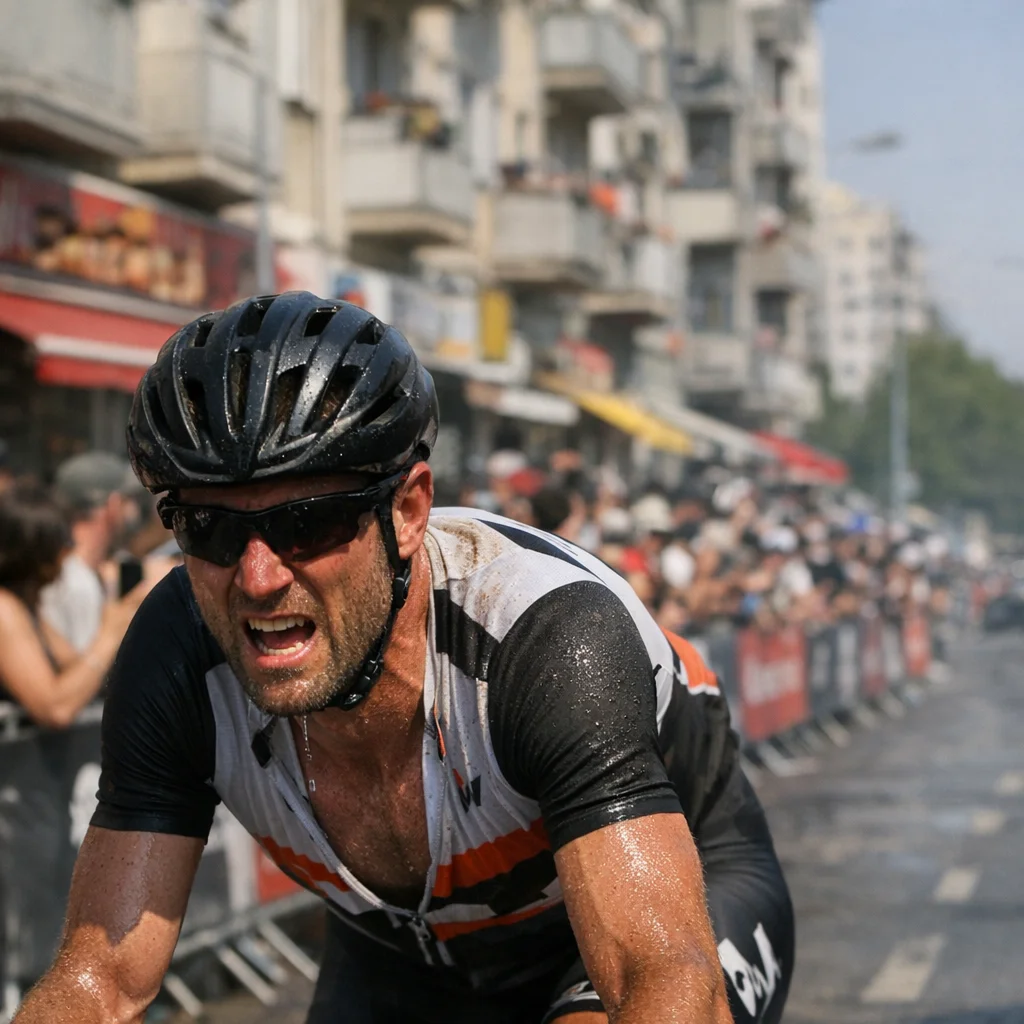
The city’s favorite blood sport
Max Kanter rolled through Wedding like a man trying to outrun his own press release. On a day so hot the asphalt looked ready to confess, the local rider turned the streets into a moving display of male vanity under pressure: locked jaw, glazed eyes, elbows out, and every bottle emptied like some cheap liturgy for people who confuse dehydration with destiny.
Wedding, of course, supplied the perfect audience for this little morality play. The neighborhood has already seen enough men in tight fabric act like hardship is a personality. You could smell the sunscreen, bratwurst grease, and bored ambition hanging over the route. At Leopoldplatz, a few kids watched from the shade while adults in cycling sunglasses pretended they were witnessing history instead of a very expensive cardio tantrum.
A man in a sponsor polo kept repeating “character” with the greasy reverence of someone selling furniture to a grieving widow. His sleeves were too tight, his smile too practiced, and his whole body said he had never suffered a meaningful inconvenience unless it came with mileage points. Nearby, one of those branded-dad types—clipless shoes, expensive calves, and the face of a man who says “discipline” when he means control—nodded along like he had personally discovered the concept of pain by buying the right frame.
The broadcasters in their clean little sin
The broadcasters were worse, because they always are. They sat there in their cool, air-conditioned righteousness, making pain sound artisanal. Their voices turned sweat into virtue and nausea into narrative, like priests of a faith built entirely on other people’s organs. One commentator dragged out “resilience” with the solemnity of a man fingering his own cufflinks. Another kept praising the “grit” of the riders, which is broadcaster language for: look at these men suffer so we can call ourselves deep without moving our bodies.
Municipal boosters were in the mix too, hovering at the edge of the route with the hungry, damp look of people who think a passing race can launder a year of neglected sidewalks, overpriced housing, and public services held together by denial. They posed beside barriers as if proximity to sweat were a policy achievement. One official kept smiling in that fixed, municipal way—the smile of someone who knows the camera loves a harmless lie—and clapped too early every time the pack came through, eager to be seen applauding the city they help squeeze.
Nothing flatters a city like borrowing a laboring body and calling it civic pride. Especially in Wedding, where the gap between the people doing the work and the people narrating it is always wide enough to drive a campaign van through. The whole spectacle had that familiar Berlin odor: ambition, branding, and moral peacocking sprayed over real exhaustion.
Sweet suffering, fresh from the sponsor tent
Kanter won by refusing to look ashamed, which is basically the national sport. His face had that municipal-expression look, half grimace and half paperwork, as if he’d been instructed to embody endurance by a committee. The heat made everything more indecent. Riders bent low over their bars, torsos slick with sweat, thighs twitching, the whole procession of disciplined men looking less like heroes than like expensive livestock being pushed toward a better headline.
At the roadside, a Turkish bakery owner in Wedding—already awake too early, already over it, already wise to the city’s hunger for symbolic labor—watched the parade and said he’d seen more honesty in a delivery rider’s knees. He refused to be quoted by name, saying he had no interest in being folded into the city’s little pornography of effort. “Everybody loves grit,” he said, “as long as they don’t have to touch it.”
That’s the trick, isn’t it? The sponsors get their clean logos, the broadcasters get their voice-of-the-people cosplay, the officials get their photo-op oxygen, and the cycling dads get to stroke their own egos in public while pretending it’s about fitness. The humiliation is the product. The sweat is the branding. The pain gets passed around like a shared vice with good lighting.
By the time the peloton vanished, the street was left with sticky barriers, wilted applause, and a few lingering bike-brand innocents still clinging to the fantasy that this had been about sport rather than vanity in Lycra. Wedding will survive, obviously. It survives everything. But it has learned the lesson the city keeps trying to market as virtue: in Berlin, suffering only counts when someone richer can point at it and call it culture.