Herzog's 'Unity' Talk Leaves Coalition Still Flaccid
Israel's president positions himself as the patient mediator who can coax rival parties into bed after their inconclusive vote, but insiders say his ceremonial caution only prolongs the awkward standoff.
Global Affairs & Kiez Mischief Correspondent
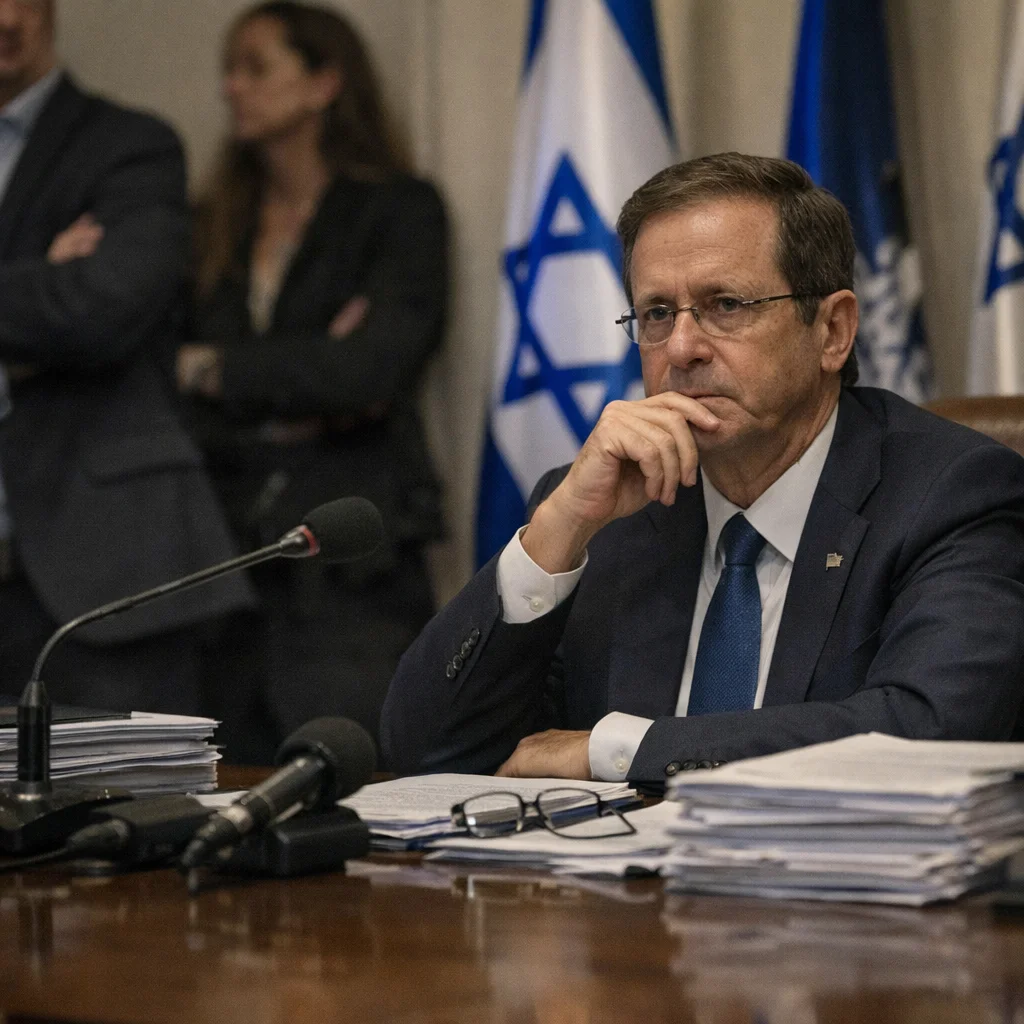
President Isaac Herzog was back in the role he knows best on Monday: the impeccably pressed conciliator standing in the doorway while everyone else decides whether to enter the room or keep brandishing their vetoes from the hallway. After another inconclusive vote, Herzog began the ritual calls to party leaders, inviting each camp into his office one by one to perform its little sermon on responsibility, followed by the same old refusal to do the actual work.
The stakes are not symbolic, even if Herzog’s office largely is. Under Israel’s system, the president recommends a lawmaker to form a government, then steps back while the factions try to assemble a majority without ripping their own clothes off in public. In practice, Herzog has become the state’s favored cushion: the polished intermediary everybody leans on, then blames when the room still smells like a collapsed arrangement.
By Monday, aides were already describing the choreography in the language of forced intimacy. One camp wants the president to press harder. Another wants him to remain dignified, quiet, and useful, which is usually what people say when they want someone else to absorb the friction and pretend it is statesmanship. Herzog, for his part, has spent years perfecting the ceremonial tone that lets rival blocs sit across from each other without admitting they would rather choke than share a cabinet table.
A veteran coalition aide, speaking on condition of anonymity because he had already briefed three camps and did not want any of them to know he still remembers shame, said Herzog’s value lies in his manners. “He can make everyone feel heard,” the aide said. “That is not the same as making them agree to anything.” The office, in other words, offers a polite stage on which politicians can keep refusing each other with better lighting.
That is the ugly center of the deadlock. Herzog can coax, delay, flatter, and translate defeat into the language of civic duty. What he cannot do is make the parties stop treating government formation like a bargaining session in which everyone wants the benefits of closeness without the inconvenience of commitment. The right demands loyalty while protecting its own escape routes. The center demands compromise as long as it costs nobody a seat. The left demands moral coherence in a system where moral coherence is usually just the first thing to be traded for a portfolio and a smirk.
Yair Levin, a senior figure on the right, said Herzog should remain “careful and above the fray,” which in parliamentary dialect means: keep smiling while we grind our heels into the upholstery. Merav Cohen of a centrist bloc said the president must “push harder,” though the push, naturally, should be tasteful, procedural, and unlikely to embarrass anyone who plans to deny it later.
Herzog’s office has offered no miracle, only consultations, discretion, and the exhausted national fantasy that one more round of respectable talking will produce a government instead of another elegant failure. If he succeeds, the same factions that made the process impossible will praise his restraint. If he fails, they will point at the president’s formal caution as if the deadlock were an unfortunate misunderstanding rather than a deliberate refusal to let anyone else have the upper hand.
The next deadline is already visible: more meetings, more leaks, more carefully worded noncommittal statements, and then the possibility that Israel goes back to the polls so the public can be courted again like a partner everyone wants to keep on the hook but nobody actually intends to satisfy.