How to Import an American Police Crisis into Berlin Without Even Owning a Gun
Step 1: add a federal vibe. Step 2: livestream the outrage. Step 3: argue about it for six weeks outside a Späti that doesn’t sell water.
Geopolitics & Hangover Correspondent
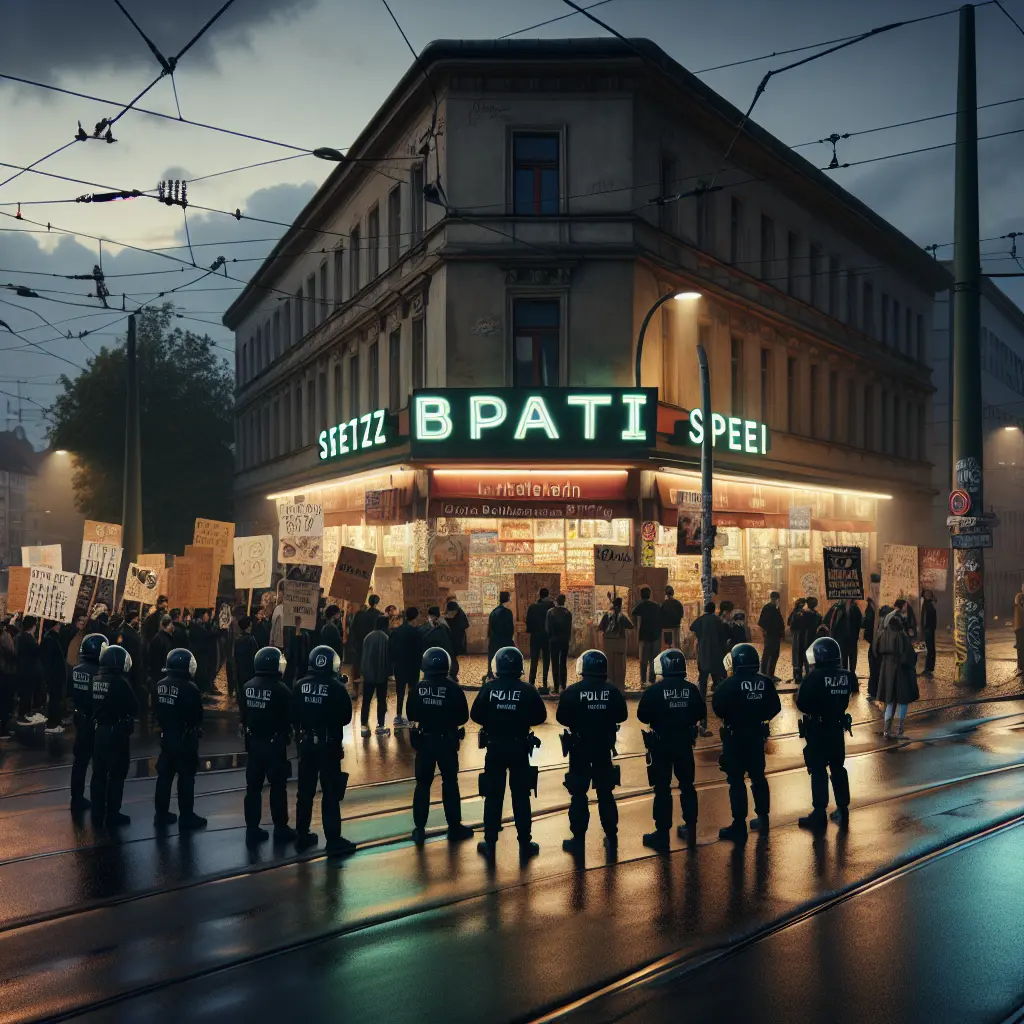
Berlin watched Minneapolis this week—where a federal agent shot a man and tense protests followed—and immediately did what Berlin does best: treat someone else’s tragedy like a lifestyle trend we can repackage into a weekend plan.
Not because Berlin wants violence. Berlin just has a deep, spiritual need to turn every global crisis into:
- a march with a font choice
- a fight about who’s “centering” whom
- a Telegram channel with 11 admins and zero facts
- an afterparty “to decompress” that somehow has a door policy
The federal agent: Berlin’s favorite villain, now available in artisanal format
America has “federal agents,” which is basically what Berlin imagines when it sees a person in a uniform who looks like they might actually be employed.
Here, our version is more minimalist: someone wearing a reflective vest, standing near a BVG escalator that’s been broken since the Cold War, telling you to keep moving while you absolutely do not keep moving.
Berlin doesn’t have the exact same federal militarized-policing aesthetic, so we improvise. We take one bored cop, one confused private security guard, and a guy from Ordnungsamt with the facial expression of a man who has never experienced joy—and we call it “an escalating security presence.”
Tense protests, Berlin edition: less tear gas, more performance art
Minneapolis got tense protests.
Berlin got tense protests too, except our tension is 40% righteous anger and 60% everyone being late, hungry, and emotionally dependent on their own opinion.
The classic Berlin protest timeline:
- Breaking news hits. Half the city posts “I’m shaking” while physically sitting down.
- A flyer appears. It’s designed like a club night because nobody here can process grief without a lineup.
- A megaphone finds its true purpose: turning nuance into a brick.
- Someone yells at someone else for not using the correct phrasing while a third person is trying to remember if they left their sourdough starter at home.
- Police form a line that looks intimidating until you realize nobody’s sure what they’re enforcing.
The expat contribution: activism as a social mixer
Berlin expats saw the Minneapolis story and immediately asked the key question: “Is there a protest, and is it near good coffee?”
Because nothing says solidarity like arriving with a tote bag that reads LISTENING AND LEARNING and then spending the entire rally explaining American politics to Germans who didn’t ask.
The average expat protest experience in Berlin includes:
- posting a black square, then posting a story about posting the black square
- asking if chanting is “mandatory”
- calling their mom afterward to clarify what a federal agent is
- leaving early because they have a reservation at a place that serves olives as a main course
Berlin’s real specialty: outsourcing responsibility
What makes the Minneapolis story land in Berlin isn’t just the shooting or the protests—it’s the familiar sensation of a state doing something messy, then everyone else doing interpretive dance around accountability.
Berlin loves accountability the way clubs love “community”: as a word that sounds great and means absolutely nothing when the lights come on.
We will debate structural violence for seven hours and then watch three dudes steal a bike in broad daylight and decide it’s “not our place to intervene.”
Wedding tries to help by doing what it always does: making it weird
In Wedding, the local response is already underway:
- A “healing circle for protest fatigue” that costs €35 and includes exactly one genuine human emotion, briefly, before the facilitator interrupts to upsell the advanced workshop.
- A mural proposal that will take nine months, get value-engineered into beige, and finally be installed behind scaffolding.
- A neighborhood meeting where residents demand “safety” but specify they mean “silence.”
Meanwhile, the most heavily armed presence in the area remains a man with a Bluetooth speaker and a deep commitment to playing the same song at maximum volume at 2 a.m.
What we learned from Minneapolis (and what Berlin will ignore)
Minneapolis reminds us that state power can turn lethal in an instant, and the aftermath can ignite a city.
Berlin will take that lesson and do what it always does with serious information: convert it into content, moral posture, and a long argument about whether the police line was “provocative.”
And by next week, the protest route will be blocked by construction anyway.
The American story is deadly. Berlin’s version is mostly theater. But the craving underneath—control, fear, rage, and the desperate need to feel like something is happening—travels just fine.
If you need me, I’ll be at Leopoldplatz watching two activists fight over a megaphone while a guy sells loose cigarettes like it’s the last functioning institution in Europe.