How Wedding’s 'Play‑Me' Pianos Were Tuned to Monetize Your Spontaneity
What looked like free, impromptu music for the neighbourhood turns out to be a metric‑manufacturing scheme—each painted piano is set a hair flat and carries a stamped sync code so someone can sell your applause.
By Lena Veneer
Gentrification & Cultural Displacement Correspondent
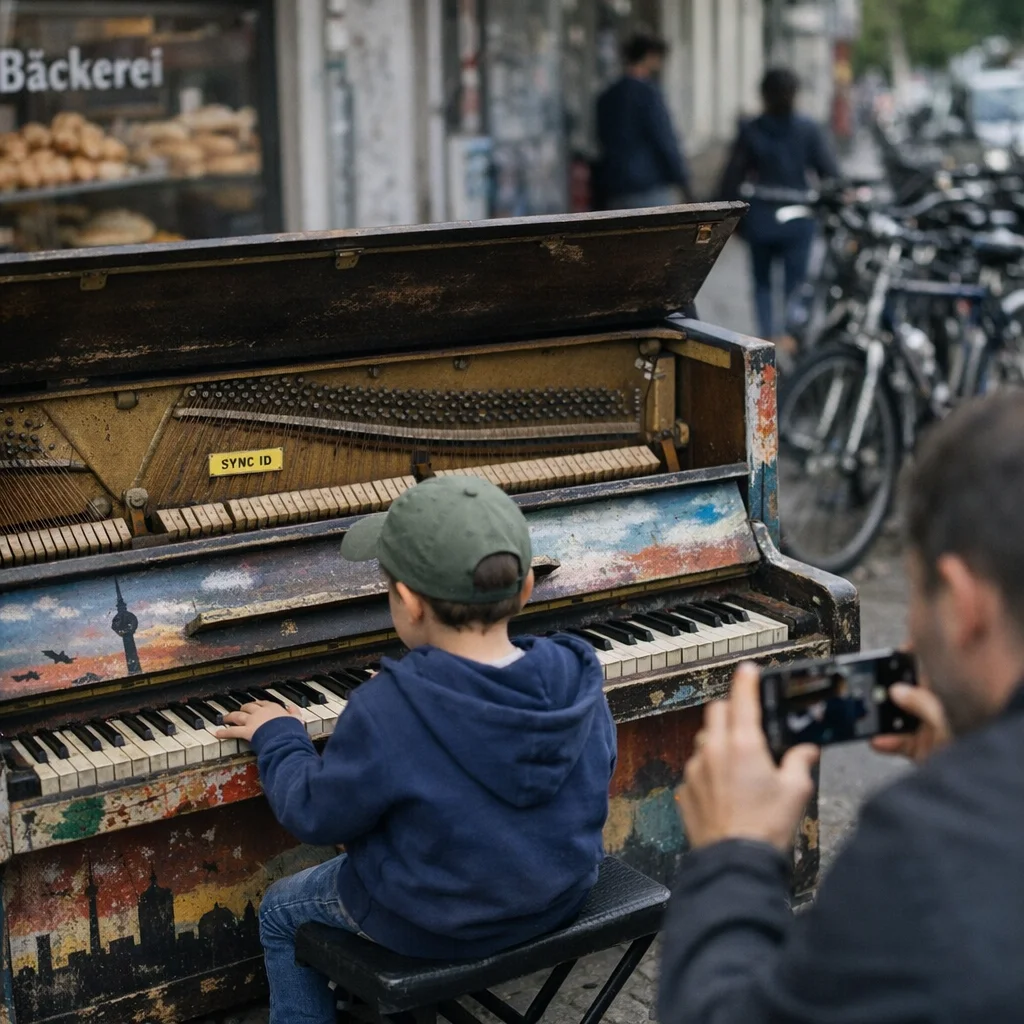
Wedding — The municipal "Play‑Me" piano project arrived like civic poetry: painted uprights on corners, children banging Bach on their way to Spätis, a PR line about "reclaiming public spontaneity." What actually happened, musicians and displaced Neukölln artists told us, is both quieter and more profitable.
First came the migration. For months last winter scores of painters, buskers and gig‑weary gallery kids packed up from Neukölln and showed up in Wedding with folding stools and optimistic rejection slips, chasing an audible crowd and Instagram content. "We were told the pianos were a stage," said Sofia Klein, a cellist who moved her practice from Neukölln's Sonnenallee. "It felt like a promise: real people, real applause."
Then someone with a flashlight and nothing left to lose peered under a lid. Every painted piano shared the same, nearly invisible calibration: every A is tuned to 435Hz—just a hair flat compared with concert standard—and under the soundboard a minute stamped label reading 'SYNC ID' had been glued in place.
That detail changes the story. A‑at‑435 shifts recordings off the expected pitch, creating tiny corrective artifacts when producers normalize the tracks. Those artifacts, paired with the SYNC ID, turn spontaneous busking into traceable microcontent: a purchasable, licensed "authentic" moment sold to streaming playlists, ad agencies or municipal tourism packages as if it were a curated folk performance. In short, what was pitched as free improv turned into a packaged commodity with a barcode.
"It feels like we've been rented for our exuberance," said Murat Yilmaz, who runs the bakery opposite three of the pianos. "They tuned the pride a little off‑key so it needs fixing, then sell the fix back to us."
A Kulturamt spokesperson defended the rollout, saying the calibration marks were "maintenance identifiers" and 435Hz was a standard used by some restorers. "The project is about accessibility and community," the spokesperson insisted. Wedding's district office confirmed a forthcoming audit into the supplier contracts.
Artists we spoke to described the effect: short bursts of attention that are filmed, clipped, uploaded, and bought back as "neighbourhood authenticity"—a culture‑industry loop Adorno would have spat at and Walter Benjamin might have photographed, if he hadn't been busy worrying about the aura. The result is that many former Neukölln creatives have left again, seeking places less tidy, less monetizable; others are angling to monetize their own indignation.
Next steps: a forensic acoustic analysis has been requested by a neighborhood collective and a petition to remove the SYNC IDs is circulating. Whether the pianos will be retuned to human ears or continue to hum as municipal mics remains unresolved—and the artists who followed a promise of spontaneity are left to wonder who exactly is getting fingered for their applause.