Hungry for a Stamp: Wedding’s Lunch Desk Takes Deposits
A municipal counter now asks every customer to prepay before ordering, then treats hesitation as a moral failure. Office workers say the clerks serve noodles like a leverage test and call it efficiency.
Administrative Grief Correspondent
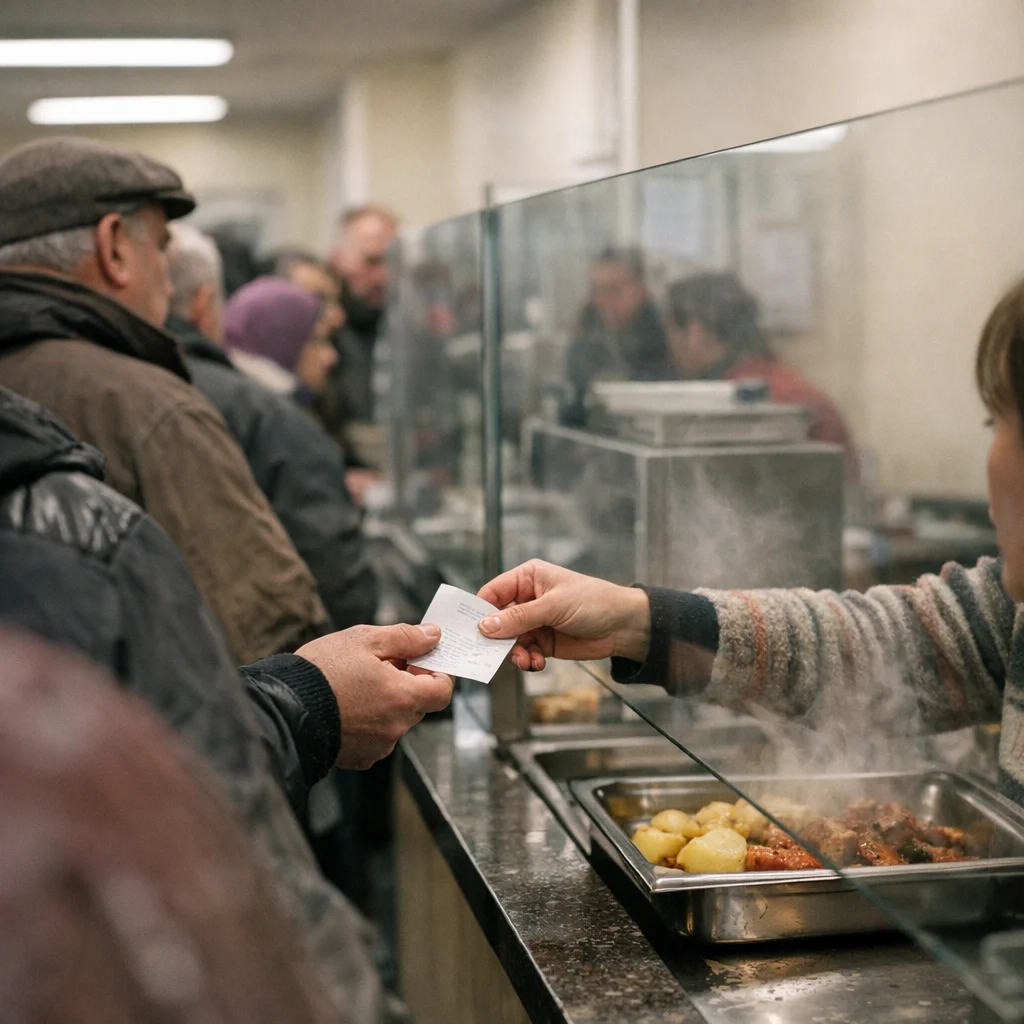
The lunch desk at the neighborhood service center in Wedding has begun taking deposits before it will hand over a hot meal, and the whole setup feels less like public service than a badly lit negotiation in which the counter already knows who will blink first. At noon, the clerk behind thick glass announced that anyone wanting soup, noodles, or meatballs had to prepay and collect a numbered receipt before approaching the serving hatch, as if lunch were something earned by submitting the proper opening move.
That first step changed the temperature of the room. People who came in hungry now had to stand there and prove they were the kind of customer worth touching. Some paid without complaint, the way workers do when they have already spent the morning being handled by employers, offices, and rent. Others asked whether the deposit was refundable, whether cash was accepted, and why a stamped slip was suddenly acting like a promise of consent. Every question seemed to make the counter colder.
By the time the queue reached the hatch, the mood had the intimacy of a strip search conducted by a municipality. The meal was still there, steaming and obedient, but access now ran through a ritual of surrender: pay first, wait for approval, then present yourself at the window like someone hoping to be chosen. The receipt mattered less as proof of payment than as proof that you had agreed to be managed. In Wedding, even lunch has started demanding a performance.
"They are serving food the way casino security serves shame," said Mehmet Yildiz, who had come in after a shift unloading crates near Leopoldplatz and left with only a receipt. "You stand there, you pay up front, and the person behind the glass watches to see whether you’ll flinch. If you do, they keep the bowl and the little stamp of mercy."
Inside the service center, staff have reportedly wrapped the whole operation in the usual language of care, efficiency, and responsibility — the holy trinity of administrative domination. One employee, speaking on condition of anonymity because she still lives above a bakery and knows what happens when customers recognize your voice, said the deposit system was meant to reduce waste and "encourage commitment." In practice, it seems to reward the people best at acting entitled and punish everyone else for arriving tired, cash-poor, or visibly human.
That hierarchy is not subtle. The well-dressed office worker from the co-working space nearby can argue about card charges, smile through the irritation, and still get fed; the man in a paint-splattered jacket from a construction site has to stand straighter, speak softer, and hope his face does not look too hungry. The system has the moral structure of a bad date arranged by the district office: those with leverage can be casual, those without it must be grateful for every touch of the stamp pad.
Regulars say the clerks have discovered a small and poisonous pleasure in this arrangement. They take deposits like they are taking advances, then make customers wait for the next instruction as if suspense itself were part of the meal. A receipt is handed over, a number is called, a tray appears, and the person behind the glass gets to decide whether the exchange feels generous or disciplinary. The food may be lunch, but the posture is submission.
The district office said the arrangement was under review and insisted the service center remained committed to "fair access." No one in the building would explain why access now arrives with a toll, a receipt, and a waiting period that seems designed to make the hungry feel slightly indebted before they have even been served. The policy has all the charm of a bureaucrat leaning too close and calling it efficiency.
For now, the queue still moves. The soup is hot. The stamp is wet. And in Wedding, the lunch desk has figured out what every small-power office eventually learns: once people are forced to pay before they’re fed, the real product is not the meal but obedience.