“I Can’t Watch TV Anymore,” Says Comedian as Wedding Residents Discover the Screen Was Never the Problem
Inspired by Hape Kerkeling’s ARD/ZDF fatigue, the neighborhood pioneers a radical alternative: not watching anything sober, and calling it media literacy.
Broadcast Detox & Street-Noise Features Reporter
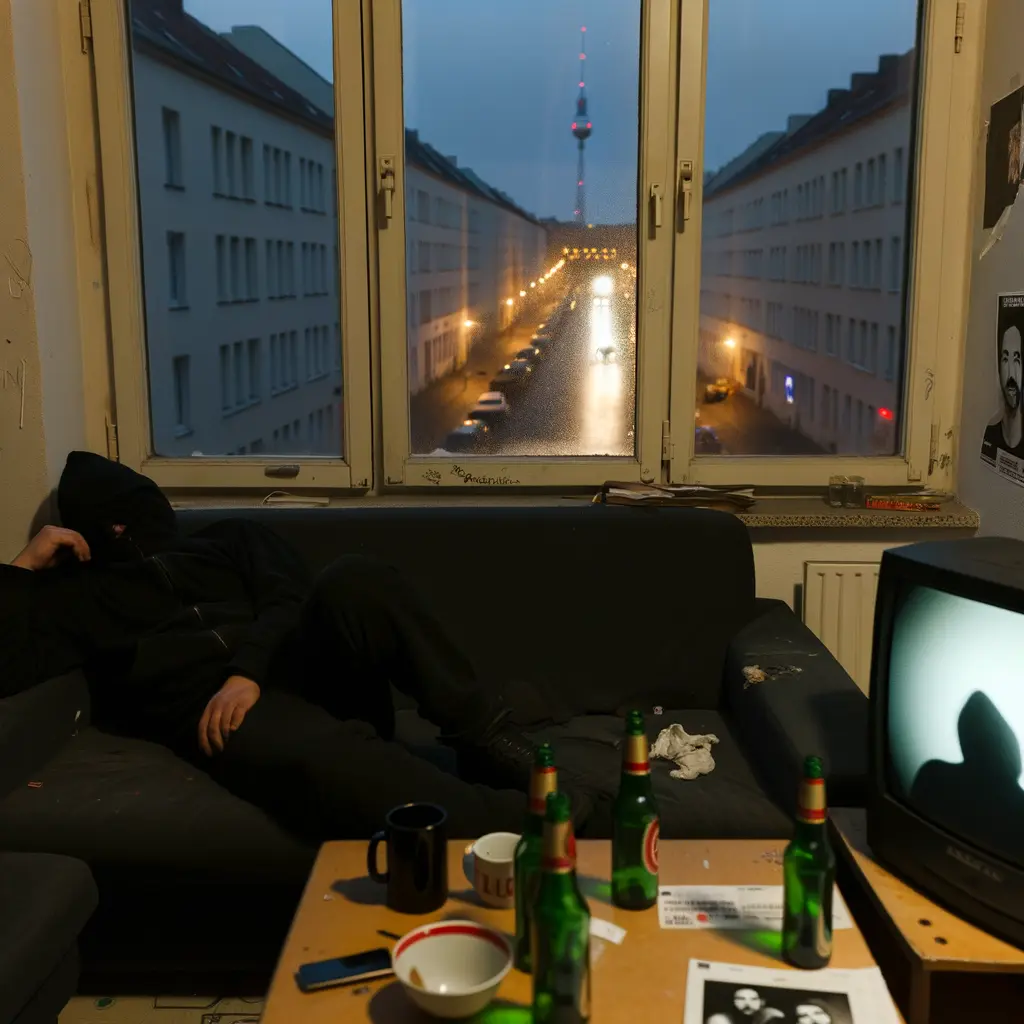
Hape Kerkeling says he can’t watch ARD and ZDF anymore. In Wedding, that’s not a complaint—it’s a minor personal milestone, like finding your third identical key on the ground or remembering where you left your dignity.
Public television used to be the national living room. Now it’s the national waiting room, where the decor is neutral, the lighting is punitive, and everybody is quietly convinced someone else is to blame for the damp smell.
Wedding Tries “Screen Abstinence,” Immediately Replaces It With Worse Screens
On paper, Wedding is the perfect place to quit television. We have culture. We have community. We have a mosque down the street, a Turkish bakery that sells pastry with the kind of flaky layers Derrida would call “undecidable,” and 14 cafés where a 29-year-old in black knitwear reads Adorno with the concentration of someone coming down from speed.
In reality, quitting ARD/ZDF just created a vacancy. And nature hates a vacuum—especially when it’s full of Wi‑Fi.
Within hours, residents replaced linear TV with:
- A WhatsApp building chat that provides 24/7 live coverage of “Unknown Man in Stairwell” and “Package Smell Dispute, Part III.”
- Instagram Reels of DJs explaining how pressing play is “a dialogue with silence.”
- A three-hour YouTube documentary on Berghain’s door policy, narrated by a man who sounds like he was born in the cigarette area.
- CCTV footage from someone’s Ring doorbell, treated like an auteur film—very Béla Tarr, but with more theft.
“Honestly, I prefer the new programming,” said Ayşe K., who runs a Turkish grocery near Gesundbrunnen. “On TV it’s the same politicians. In the building chat, at least the villains have faces and consistent motives: boredom and unemployment.”
ARD/ZDF Attempt Local Rebrand: “Public Broadcasting, But Make It A Kiez”
In an effort to win back viewers like Kerkeling, ARD reportedly tested a new format in Wedding: Tatort: Leopoldplatz (But Not Starting With That)—a grim crime episode filmed entirely in fluorescent light and unresolved feelings.
Pilot synopsis: A detective attempts to solve a mystery while navigating an even darker labyrinth—how the kiosk can sell beer 24/7 but nobody can replace a streetlight for six months.
Test audiences described the show as “Kafka with worse audio” and “the Situationists, if they were trapped in a focus group.”
ARD also tried adding techno ambience. The experiment ended when the soundtrack hit a 132 BPM kick drum and the network’s average viewer mistook it for cardiac arrest.
Wedding’s Real Channel Surfing Happens at 7 A.M. on Monday
The newsroom followed several Wedding residents performing the traditional Berlin Monday: the stride of pride home at 2 p.m., but emotionally arriving at 7 a.m. in a U8 seat that is inexplicably damp.
One man in all black—Berlin’s unofficial national costume, sponsored by insomnia—confessed he hasn’t watched TV in years.
“I watch my life instead,” he said, staring into his Späti coffee like it might explain what happened between Saturday and Tuesday. “Sometimes I black out and wake up to ARD in my head, like a residual moral lesson I didn’t consent to.”
At a nearby club bathroom (the city’s most efficient information desk), a different resident described watching ZDF as “hard to swallow” during the comedown.
“ZDF feels like it’s trying to penetrate my soul with ‘balanced perspectives,’” she added, “but my soul has a stiff resistance to anything that smells like a panel discussion.”
The Bouncer Economy of Attention
Kerkeling’s complaint isn’t that ARD/ZDF exist. It’s that watching them now feels like being stuck at the wrong after-party—people won’t stop talking, nothing changes, and someone keeps insisting this is ‘important.’
In Berlin, we understand gatekeepers. We have Sven Marquardt, living proof that German cultural policy can be expressed through cheekbones and silence.
So Wedding has created its own broadcasting bouncer system:
- If your content doesn’t look exhausted enough, it gets rejected.
- If your content tries too hard, it gets rejected.
- If your content feels sincere, it gets redirected to a therapy waitlist.
In short: ARD and ZDF can be improved. All they have to do is stop trying to be the conscience of the nation and start behaving like the nation actually behaves—sweaty, contradictory, and pretending it’s “temporary.”
A Proposal for Public TV That Matches Berlin Reality
Wedding’s residents—some locals, some expats, many a living sociology thesis—suggest three modest reforms:
- Replace evening news with a live Späti cam. The rotating cast will cover inflation, diplomacy, and the ethical implications of selling warm beer for €2.50.
- Introduce a “Görlitzer Park Forecast.” Not weather. Supply conditions. Dress accordingly.
- *A late-night cultural slot called *Walter Benjamin’s Arcades, But It’s Just the U8. **One critic narrates strangers with the tenderness of ruin.
Will any of this bring Kerkeling back to his TV? No. But it might make the rest of us admit the quiet part out loud: it’s not that television is unwatchable—Wedding just evolved past sitting down.
We prefer our narratives shaky, our cuts jumpy, and our endings unresolved. Like life. Like rent. Like that guy who “just needs one minute” in the club bathroom and has been there since Merkel.