“I Found the Key,” Says About Blank Photographer, Holding a Mysterious S-Bahn Bolt and Three MDMA Stickers
Inspired by a Spain crash mystery, Wedding’s night photo guys have pivoted to forensic transit theater: photographing stray train parts until reality confesses.
Video Evidence & Neighborhood Delusion Reporter
The Spain Part, the Berlin Ego
The international news cycle handed us a comforting premise: a photographer finds a train component that “could hold the key” to understanding a deadly crash in Spain. A crisp storyline. A tangible clue. A sane world where objects matter and facts assemble into meaning like IKEA.
In Wedding, we saw this and did what we always do with foreign tragedy: imported it as a lifestyle concept.
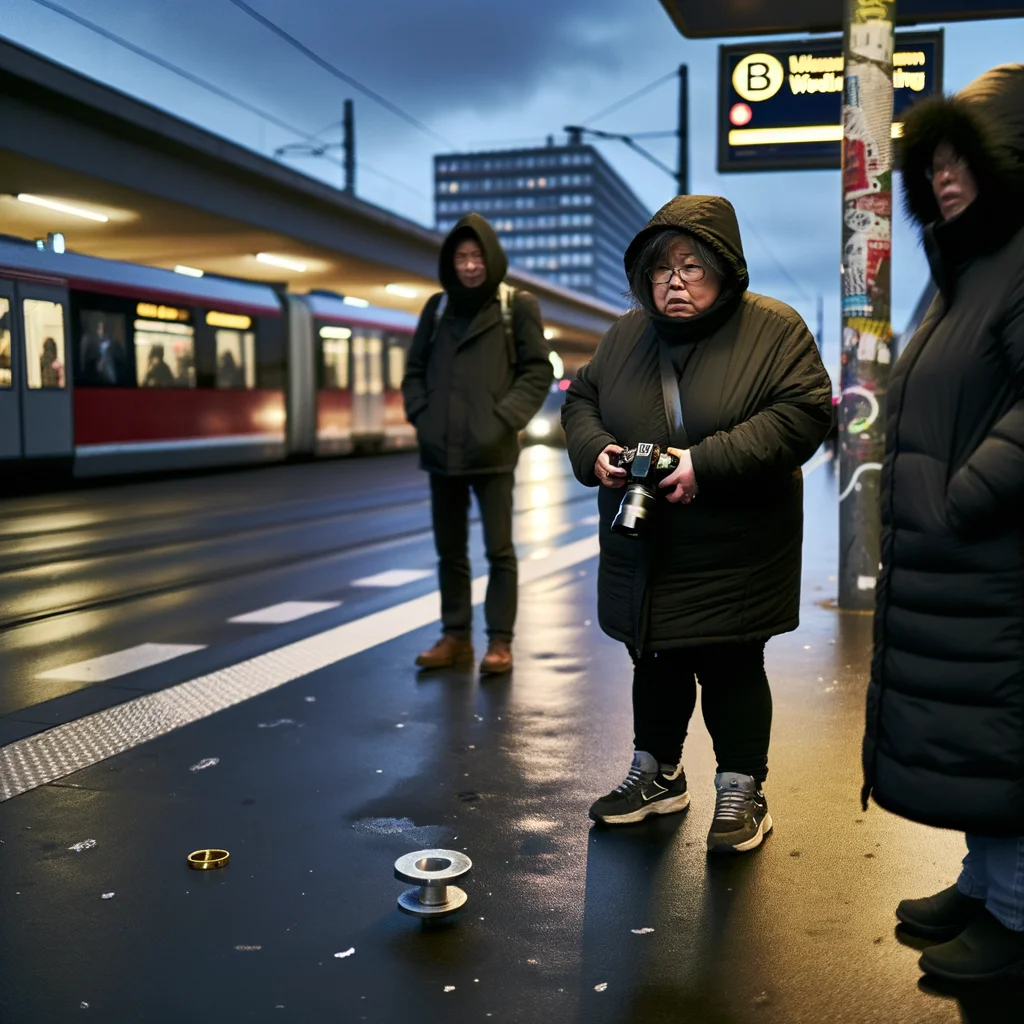
On Tuesday night, outside the Wedding S-Bahn station, a local photographer who only answers to “Marco (Analog)” announced he’d discovered “a crucial piece of the transport puzzle” wedged near a trash bin. The artifact: a dirty bolt, half a plastic ring, and what might be the emotional remains of a bike bell.
Marco cradled it like a relic—part saint bone, part backstage wristband—while a small crowd of art-students-turned-nonprofit-managers leaned in, as if truth has a good smell when you get close enough.
Forensics, But Make It Nightlife
Marco says he’s not “just documenting”—he’s “investigating.” This distinction is critical in Berlin, where the line between journalism and cosplay is as thin as your last clean shirt.
His theory goes like this:
- The part belongs to an S-Bahn.
- The S-Bahn belongs to “systems.”
- Systems produce trauma.
- Trauma produces nightlife.
- Nightlife produces bolts.
When questioned by an actual mechanic (the city’s most endangered species), Marco explained that “the material tells a story,” which is a phrase that sounds profound until you realize he says it about everything, including cigarettes, U-Bahn seats, and his ex.
To support his investigation, he presented a series of photographs: the bolt on concrete; the bolt on a palm; the bolt on a record sleeve; the bolt staged in soft morning light like it was about to release a memoir.
The visual language is pure Walter Benjamin: the aura of the found object, now sanctified through reproduction and Instagram compression. You don’t own the city—your feed owns you.
Wedding Joins the “Train Part Accountability” Movement
Within 48 hours, Wedding’s Turkish barbers, late-night bakeries, and corner cafés were looped into the hysteria.
At a bakery near the station, one regular swore the part was “definitely from a door.” Another said it looked “European.” A third person, openly coming down and spiritually brave, admitted: “What if it’s just trash.”
That last statement was treated as a hate crime against Narrative.
Soon, amateur sleuths started offering “found components” of their own: a spring, a rubber seal, a shiny thing that could be a screw or the future. People compared pieces like tarot, hoping the metal would say the quiet part out loud: Berlin runs on improvisation and stubborn delusion.
One organizer proposed an exhibition called “Disaster, But Minimal.” It’s currently seeking funding in the form of guilt.
The Door Policy Moves to the Platform
Once the movement reached nightlife people (a.k.a. people with authority in this town), it turned competitive.
Photographers started staging discovery moments in a way that felt less “public safety” and more “soft launch.” Outside About Blank, I watched two men argue over whether the bolt had been “properly found.”
A third person—a gatekeeper type without an actual job—judged them like a bouncer at the entrance to meaning:
- too eager
- wrong shoes
- energy doesn’t fit
He rejected the bolt. Not because it wasn’t real. Because it wanted it too badly.
BVG Responds With Ritual, Not Solutions
BVG representatives, historically allergic to clarity, held a brief statement consisting of:
1) a sigh, 2) a shrug, 3) the ancient promise that “an investigation is ongoing.”
Privately, an employee said the department has already received dozens of “train part tips,” mostly sent at 6:47 a.m. from people who sound like they’re typing with one hand and clinging to spirituality with the other.
In a bizarre show of solidarity with Berlin culture, several staff reportedly asked if they could place stickers over their phone cameras “just to feel safe,” mimicking the ritual at the door of places where no photos are allowed and no one remembers anything anyway.
Truth is like consent here: everybody claims to care, but nobody wants it documented.
A Hard-to-Swallow Conclusion
Berlin watched a real tragedy abroad and learned the wrong lesson: that the key is always a physical object waiting for the right artist to stare at it. But the deeper diagnosis isn’t hidden in a bolt.
It’s in the city’s favorite belief: if you perform concern with enough style, you’ve penetrated the mystery.
Marco (Analog) has now placed the part in a plastic bag “to preserve the evidence.” He says he’ll bring it to a lab. Which lab? He wouldn’t say. He just smiled and added that the lab has “a darkroom.”
In Berlin, everything eventually ends up in a darkroom—photographic, philosophical, or otherwise. Some things even get developed.