„I knew the prejudices about the East,“ says Leipzig musician Nils Keppel — Wedding bookers made a quiz out of it
Keppel braced for bias; instead he was handed a five‑item 'Ost‑Kulturpass' that trades Trabi keychains and childhood cassette titles for better billing, extra stage time and a complimentary bottle of Spreewald pickles.
Nightlife Contradictions Reporter
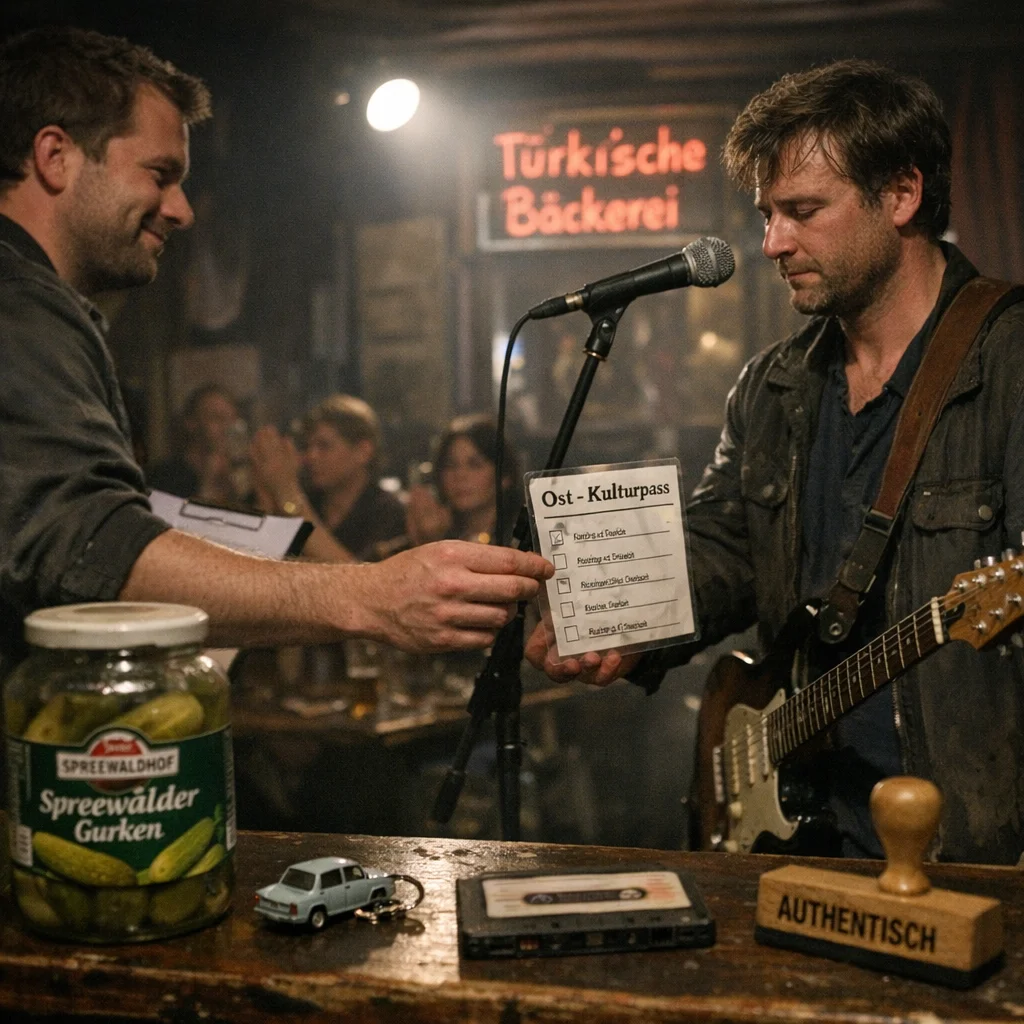
Leipzig musician Nils Keppel arrived in Wedding expecting the usual: a polite shrug, a skeptical handshake, a conversation about where he “really” comes from. Instead, on arrival at Club Kiezraum he was handed a laminated five‑item quiz labeled “Ost‑Kulturpass” and a complimentary jar of Spreewald pickles.
What people tell you this is about: prejudice against artists from the former East. What actually happens on Müllerstraße on a Tuesday night is more performative — promoters now package suspicion into a checklist that doubles as a booking rubric. “Do you own a Bakelite radio?” read item one. Item two asked for the canonical childhood cassette: Keppel checked the box for “Pet Shop Boys, taped from cousin.” Item five offered immediate benefits: “Show upgrade, extra 20 minutes, 1x pickle.”
Keppel laughed, then performed the necessary sorrow. “I knew the prejudices about the East,” he told us after the set, voice still coated in last night’s cigarette smoke. “I didn’t expect to be given a quiz about my childhood toys — then be placed higher on the bill for remembering them correctly.”
The sequence was ritualized. Booking manager Miriam Köhler explained how it works: “We curate authenticity signals. If an artist can demonstrate an East‑German ontological breadcrumb — a Trabant keychain, a cassette title, a sweet‑shop memory — we reward them with stage time and marketing. It’s good for PR and the crowd likes a narrative.” Köhler refused to call it exploitation; she called it “contextual billing.”
The district Kulturamt offered a bland administrative line: “We encourage cultural programs that reflect varied biographies.” A spokesperson, Leonie Schubert, added that the Ost‑Kulturpass was “a grassroots initiative,” then asked us not to photograph the laminated cards. It remains unclear whether the cards require official stamping, but several bar owners now keep a rubber stamp marked AUTHENTISCH behind the counter.
The tiny procedural fact that unravels the whole righteous story is this: suspicion has been outsourced and monetized. Instead of confronting bias, bookers commodified it — turning lived history into a checklist, nostalgia into bargaining chips, and genuine unease into a backstage perk system. Brecht would have suggested a curtain‑pull; Adorno would have sold out a box.
Keppel played anyway. He accepted the pickle, handed over a photo of his childhood cassette shelf, and finished with an encore no one asked for: a song about a broken Bakelite radio and a Turkish bakery on the corner that still keeps credit for the first time he tasted proper sesame. Club owners applauded; a nearby Späti reported an uptick in sales of Trabant keychains.
District officials say they will "look into" the practice. Artists in Wedding say they will bring props. The Ost‑Kulturpass is now live on three booking spreadsheets — and the next meeting to define "authenticity" has already been scheduled. Expect questions, rubber stamps, and a long, awkward admissions process before anyone gets on top of the billing.