ICE 653 Achieves New High by Being 96% Late—Wedding Ravers Call It “Classic After-Hours Techno Timing”
After Deutsche Bahn admitted the train is basically never on time, Wedding residents embrace the delay as a public art project, a drug policy, and a spiritual practice.
By Jax Delayski
Transit Meltdown & After-Hours Logistics Reporter
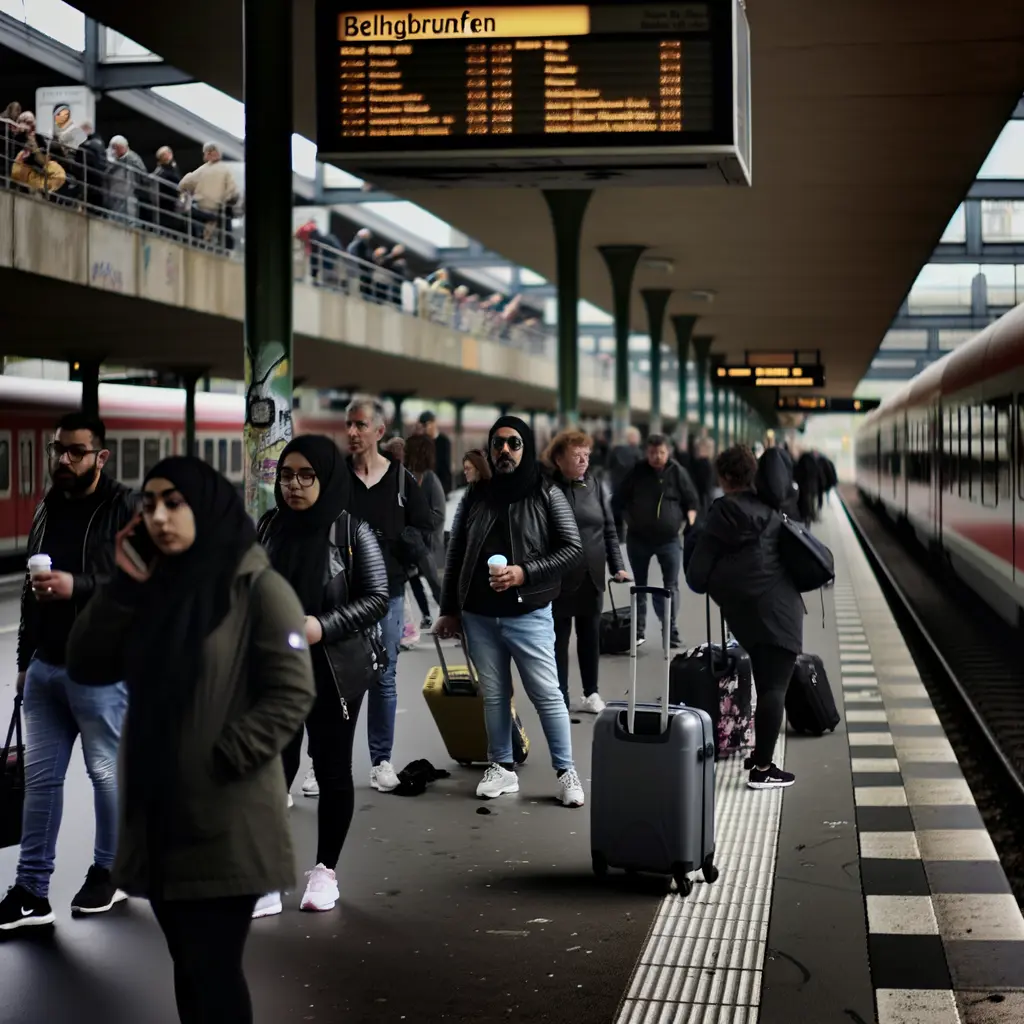
A record so bad it accidentally became Berlin culture
Germany woke up to fresh terror: ICE 653 to Berlin is reportedly punctual in only four percent of trips. In normal countries, that number would trigger resignations, hearings, and a somber violin solo in front of the parliament.
In Wedding, it triggered something else entirely: branding.
“Four percent punctual? That’s not a statistic, that’s a vibe,” said a man at Nettelbeckplatz wearing all black and the facial expression of someone still hearing hi-hats from Sunday. “It’s basically an after-hours timetable. Like: the train comes when you stop wanting it, which is how love works, too. Or ketamine.”
Deutsche Bahn debuts ‘Harm Reduction Scheduling’
DB officials continue to describe chronic delay as a “challenge,” which is bureaucratese for “this situation has won and we now live inside it.” Wedding residents, meanwhile, have created an unofficial coping framework known as Harm Reduction Scheduling:
- If the display says “+15,” emotionally prepare for +80.
- If the display says “on time,” assume the board is lying for personal growth reasons.
- If your friend texts “I’m arriving,” interpret it like a novel by Proust: lengthy, internal, and only loosely attached to clock time.
A Turkish bakery owner near Müllerstraße has reportedly started offering “ICE Specials”: a strong tea, a sweet pastry, and the honest sentence you weren’t expecting to hear from a German system: “Just sit down, my friend. It could be a while.”
Wedding adapts: commuters bring nightlife logistics to rail travel
Because Berlin can’t experience any institutional failure without turning it into nightlife logistics, ICE 653’s delay has been fully absorbed into the local ecosystem.
On Monday morning at Gesundbrunnen, travelers could be seen applying Berghain survival skills to long-distance transport:
- Sunglasses indoors (protecting both privacy and shame)
- Electrolyte drinks purchased like they’re a moral decision
- Group chats labeled “ICE 653, don’t get attached”
- A single calm person with chewing gum functioning as the unofficial “trip sitter” for a car full of managers
“DB is just replicating the Sven Marquardt door policy,” explained a resident with pupils the size of bicycle reflectors. “They don’t reject you. They just delay your entry until you accept that you don’t deserve it. It’s a character-building exercise. It’s very Kantian—duty, suffering, and absolutely no joy.”
Station platforms reclassified as social spaces (again)
In Berlin, no infrastructure stays neutral. If the ICE doesn’t arrive, the platform becomes:
1) a nightclub foyer 2) a therapy waiting room 3) a light Darwinism exhibit titled “Civil Society Under Fluorescent Tubes”
One Wedding resident attempted a “deep dive into the matter,” cornering a DB employee for answers and receiving the traditional German response: a facial expression.
Another passenger was seen “penetrating the bureaucracy” by calling customer service, only to meet stiff resistance from a prerecorded voice that sounded like Beckett wrote it during a comedown.
“Waiting for ICE 653 is like reading Camus in a wind tunnel,” said a philosophy student. “The absurd becomes the schedule, and then the schedule cancels itself.”
DB insists this is fine; Berlin insists it’s material
Critics have accused Deutsche Bahn of achieving a rare synthesis of public service and conceptual art: performance failure as policy. It’s almost touching, in the way Goya is touching—dark, messy, and not ideal for children.
In response, Wedding’s cultural scene has tried to curate the chaos. An unsolicited collective proposed exhibiting ICE 653 delays as a live Situationist dérive: you try to travel, you drift, you learn something about your ego, you smoke near a “no smoking” sign and feel briefly real.
As one DJ put it, “It’s pure Berlin: the line between Saturday and Tuesday disappears, time stops meaning anything, and you start bonding with strangers you will never see again, except maybe in a club bathroom.”
Forecast: continued delays, higher self-importance
DB maintains the situation will improve “through measures,” which—if you listen closely—means “through hope,” the city’s least successful drug.
Until then, Wedding residents recommend passengers treat ICE 653 the way you treat any serious Berlin institution: don’t romanticize it, don’t trust it, and if it finally shows up, try not to look too eager.
After all, a train that arrives on time in Berlin would feel almost obscene—like sincerity, sobriety, or rent going down.