‘ID Ready?’ Says the Elektronische Schlange
The district keeps selling digitization as efficiency, but the real action is the little corridor of shame where clerks make people prove they booked the right slot, on the right site, with the right browser,.
Connectivity Panic & Neighborhood Hypocrisy Reporter
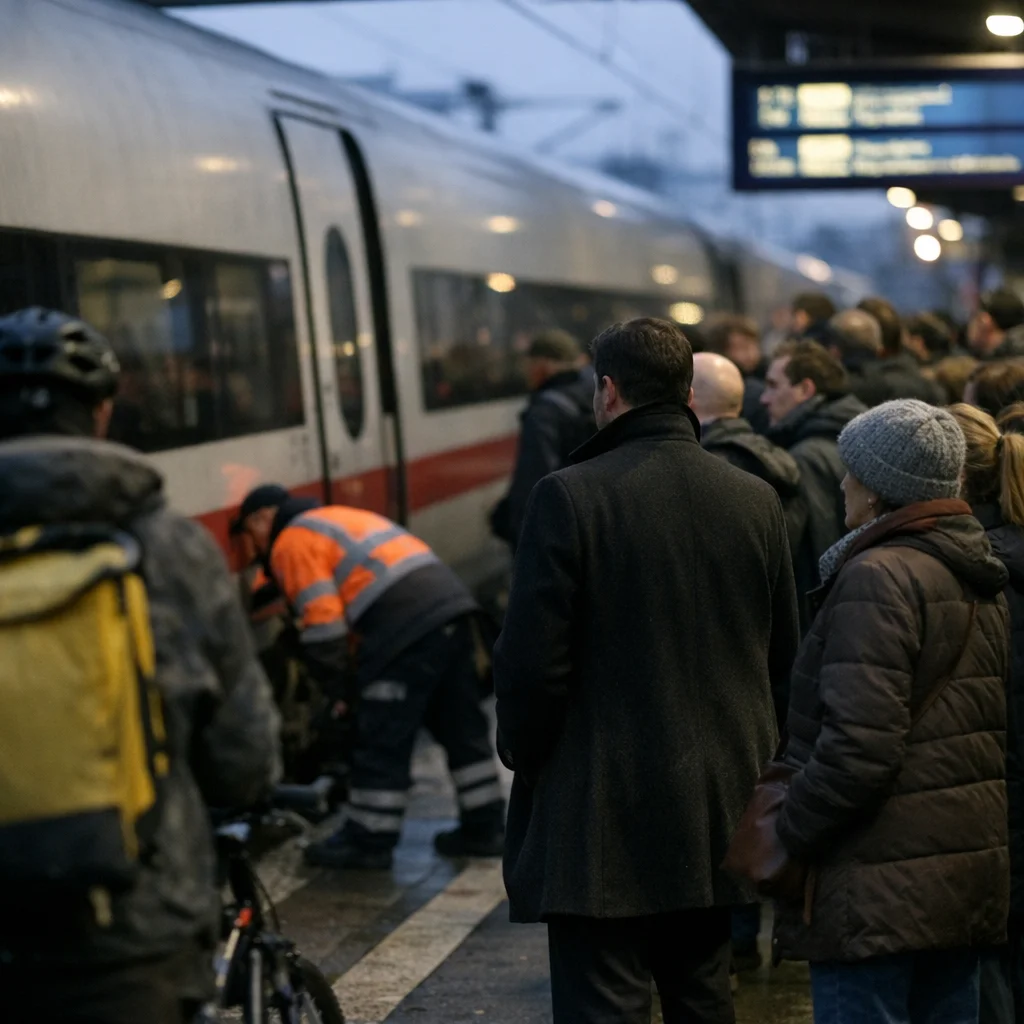
ICE trains, those stainless-steel sermons to German competence, spent the week collapsing with the poise of a systems consultant who has never carried a child, a crate, or shame. One died at the edge of Wedding, where the platform fills with office ghosts from Mitte and Prenzlauer Berg, all black coats, sour coffee breath, and the faint perfume of people who say “infrastructure” as if they personally invented it. Another sat there in the evening cold, doors shut, lights on, while passengers performed the national ballet of staring at a screen and pretending not to be personally humiliated.
The official language is always the same: technical issues, maintenance, weather, signal problems, that soft bureaucratic murmur meant to sedate the public before it notices the public has been robbed of an hour, a shift, a handoff, a medication run, a school pickup. But the delay is not a defect in the machine. It is the machine’s favorite policy instrument. It separates the flexible from the trapped, the salaried from the hourly, the people who can treat lateness as a vibe from the people who get punished for it in rent, custody, and lost wages. The timetable does not transport anyone so much as sort them by who can afford to be bent over and who cannot.
On the platform, a man in a camel coat explained to his companion that the mess was “actually very Berlin,” which is the kind of sentence only a person with a warm apartment and no immediate consequences can say with a straight face. A Turkish grandmother from Wedding, carrying groceries and a bag that looked heavier than the rail ministry’s conscience, gave him the look reserved for men who confuse inconvenience with philosophy. Nearby, two startup types in immaculate sneakers discussed whether the delay was “a systems issue” or “a user experience problem,” which is what cowards say when reality reaches over and rubs their face in the floor.
The neighborhood made the contrast uglier in the useful way. Wedding does not do the glossy delay-tourism beloved by Berlin’s managerial class, the people who can stand around for forty minutes because they are not being paid by the hour and their lives are not held together by a daycare pickup window. Here the platform is full of delivery riders, cleaners, care workers, pensioners, students, and men in reflective jackets who already know that “unexpected disruption” is just the city’s etiquette for making poor people bleed quietly.
“I booked this connection because the app told me to trust the process,” said Miriam K., 41, who was headed to Hamburg and requested anonymity because her boss thinks punctuality is a moral virtue and not just a spreadsheet fetish. “Now I’m in a queue with men debating resilience like they’re flirting with the collapse.”
Deutsche Bahn said in a statement that it was working to stabilize operations and thanked passengers for their patience, which is the corporate version of patting someone on the hip while you pick their pocket. The managers who write those lines always sound as if the rail network were a cultured lover they’ve disappointed, not a public utility they have starved, outsourced, and wrapped in a PowerPoint ribbon. One conductor, speaking anonymously because he is tired of being treated like a priest, a therapist, and a vending machine with a whistle, said the worst part is not the breakdowns but the performance around them.
“Everyone wants to be the tragic hero,” he said. “Nobody wants to be the person who has to tell a mother her handover is gone, or a cleaner she can kiss her overtime goodbye.”
By early evening, the repair crew had arrived, the platform crowd had thickened, and the departure board kept changing like a politician caught with his trousers around the lie. Some passengers left. Others stayed, trapped by sunk cost and German manners, the two most expensive narcotics in Europe. A consultant near the escalator kept saying the situation was “unfortunate,” which is a beautiful word for a man who will still get home, still get paid, and still call this city resilient while everyone else is left standing there with a numb ass and a dead phone.
The next ICE was listed as “expected shortly,” which in railway language means: keep your coat on, keep your mouth shut, and let the professionals finish fingering the public before they announce the delay again.