In Wedding, DJs Are Now Loaning You Sleep — Nightclubs Turn REM Into Currency
Neural headbands harvest clubgoers' naps and tokenise slow‑wave sleep, letting ravers pay for drinks, encore minutes and curated dream-sets with their own unconscious.
By Lina Paypass
Night Economy & Digital Vice Reporter
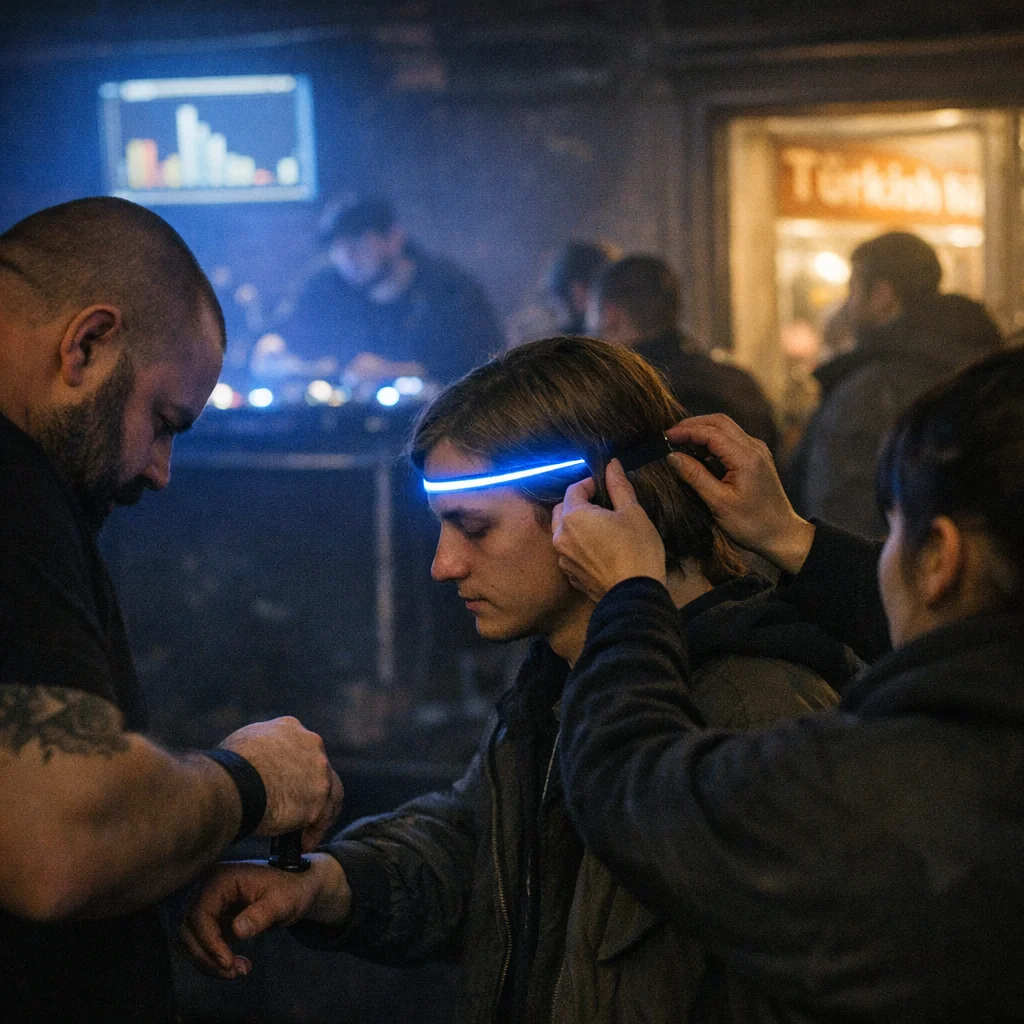
Three clubs in Wedding are fitting patrons with neural headbands at the door and auctioning their slow‑wave sleep on a nightly "dream exchange," industry insiders confirmed. What began as a premium after‑hour novelty has become a mini economy: DJs bid for narrative arcs, ad startups buy pre‑sleep micro‑targets and landlords count the proceeds as passive income.
The devices, marketed as "REMBands," read deep sleep signatures and compress them into sellable loops. At the first venue to test the system, a warehouse near Seestraße, staff slipped ink stamps on wrists, then a soft elastic band over a ravers' forehead before the coat check. "You give us an hour of REM and we give you two free drinks and thirty more minutes on the floor," said club co‑owner Meryem Acar. "It's consensual, documented — and profitable."
That profit is literal. Each REM segment is tokenised and auctioned overnight on a private exchange. DJs pay to stitch winning loops into "curated dream‑sets" that play back as ambient themes for sunrise slots. A tech rep who asked to remain anonymous described a $3,000 bid for a particularly lucid 22‑minute delta cycle. "The nights are longer, the margins higher," he said.
Not everyone loves the mattress‑market. Fatma Yilmaz, who runs a Turkish bakery two blocks away, watched clubgoers shuffle past in pajamas at dawn. "They used to buy simit here at opening. Now they hand over their dreams and leave," she said. "It feels like the soul has become rentable."
Health authorities echoed that sentiment. A spokesperson for the Bezirksamt Mitte's health office called the scheme "exploitative" and announced an immediate review of consent protocols and physiological risks. "We are investigating whether these devices meet medical device regulations," the spokesperson said. Data protection officials are also reportedly examining the auction platform for illegal profiling.
Pitch decks for REMBand ventures gush about «neuro‑monetisation» and cite neuroscience papers; Freud would have loved the irony, while Deleuze might call it a capitalist deterritorialization of the unconscious. Critics point out the moral contradiction: the same crowd that lectures on dignity will happily auction their deepest privacy for drink vouchers and curated bragging rights.
Clubs insist the trade is voluntary. Regulators insist on paperwork. Meanwhile, lawyers say a class‑action is plausible and landlords are drawing up expansion plans. For now the dream exchange runs nightly, orders fill, and Wedding's sleep market has gone from fringe novelty to an unsettled revenue stream — with a district office review and a possible ban looming on the horizon.