In Wedding, Investors Are Suddenly Allergic to Cars
Stellantis' €22bn write-down and dividend cut reaches Berlin like a bad group chat — mobility founders pivot to candle subscriptions and breathwork while landlords polish their spreadsheets.
Startup Wake Correspondent
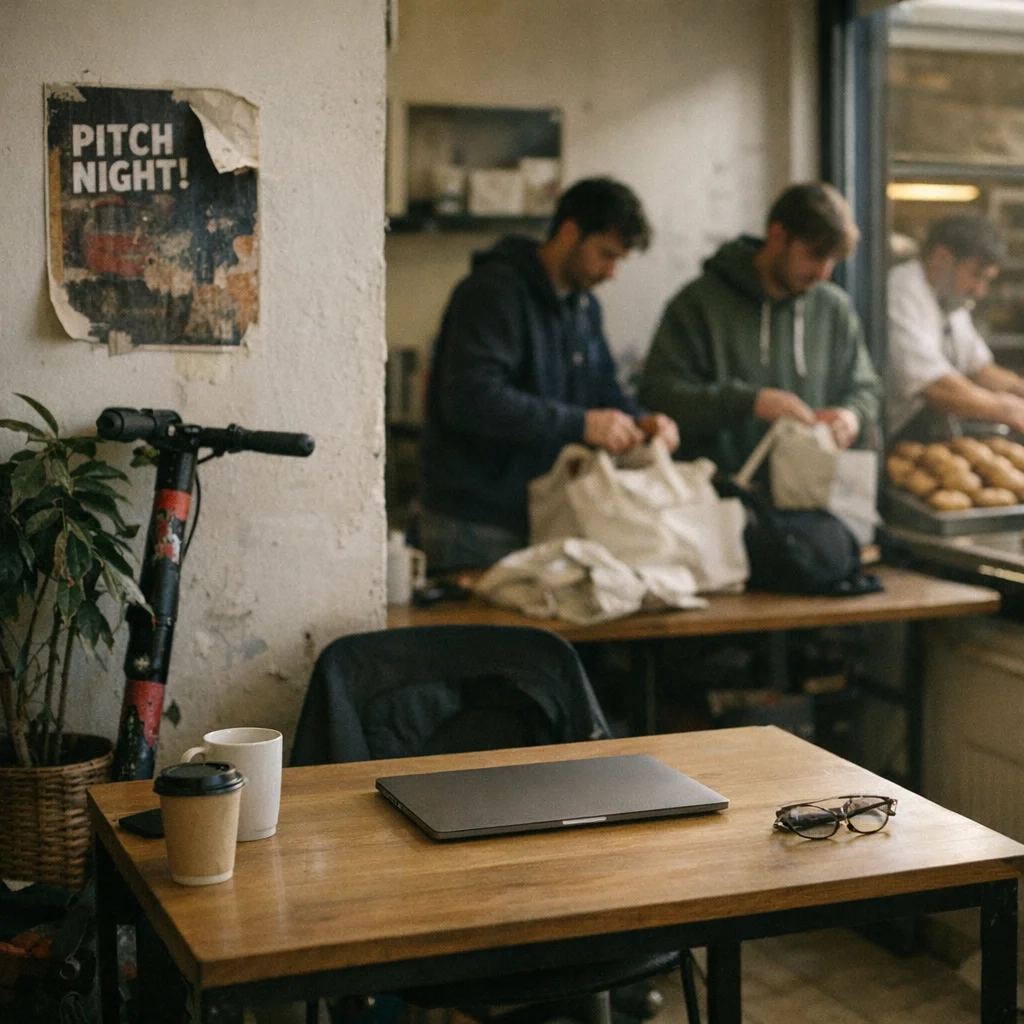
When Stellantis announced a €22 billion write-down and axed its dividend, most people in Berlin reused the news as content for a passive-aggressive Instagram story. In Wedding, where futures were sold in two-hour pitch nights and oat-milk cappuccinos, it landed like a radiator failing in winter: noisy, inconvenient, and impossible to ignore.
The immediate fallout
- Coworking lounges that recently acquired tasteful murals of compact SUVs started offering “resilience workshops.”
- A micro-mobility startup on Seestraße (one founder insists the name sounds “transcendentally mobile”) scheduled an urgent all-hands and quietly renamed its pitch deck "Wellness on Wheels." The scooters were moved to a storage unit that smells faintly of burnt optimism.
- Local landlords, who had been riding the crest of mobility-partnership promises, discovered their spreadsheets had developed a new kind of liquidity problem: nothing that fills seats, and everything that demands explanation.
This is not just a financial hiccup. It's a cultural pivot: a once-eager investor now performs a ritual withdrawal, physically and emotionally — no longer interested in penetrating the market, only in testing the softness of artisanal soap subscriptions.
How Wedding rebrands a corporate haircut
Startups here have perfected the pivot the way a chef perfects an emergency garnish. When the checks stop coming, you don't fold; you reframe.
- "Mobility as a Service" becomes "Mobility as a Feeling" — weekend breathwork for commuters, €45.
- An office that sold an API to delivery drones now moonlights as a candle company, selling "urban scent narratives" with a token QR code for a founder story.
- Two founders were seen debating whether to convert e-bikes into boutique plant stands or artisanal shelving. Both outcomes were later described as "a sustainable exit."
Longtime residents watch this with the indifference of people who have paid rent every month since before the first investor showed up. A bakery on Leopoldplatz keeps selling sesame rolls at the same price while three people in matching jackets argue about convertible notes outside the window. That contrast is the new local art installation: persistence versus convertible debt.
The performance of austerity
Berlin imagines its crises as political theater. Stellantis' numbers give the city a new script: austerity with espresso. Panels are booked, each promising a deep dive into resilience (the phrase appears in the program like a promise and a prayer). There's a mandatory startup comedy night where founders tell jokes about their burn rates; laughter is nervous and pitched slightly too high.
An academic stopped by one coworking space and quoted Debord: "The spectacle consumes even its own surplus." The founders nodded politely and asked whether that quote could go on their homepage.
What actually changes on the street
- Fewer demo days. Fewer people turning up in the same hoodie as their funding round.
- More second-jobs: a former head of growth was spotted hosting a pottery class titled "Scaling Clay for Humans." Attendance: three confusion-filled executives and a woman who wanted to make a bowl.
- Investment newsletters shift tone from "unicorn" to "durable household goods." The lexicon gets harder to swallow.
Brutal honesty, Wedding style
The elegant cruelty of urban reinvention is that it doesn't eradicate need; it repackages it. Where a mobility startup promised convenience, what arrives is often a subscription for self-improvement. Landlords update their brochures: now with less guaranteed payroll and more tasteful exposed brick.
Meanwhile, families who've kept small shops running through everything watch their street become a testing ground for ideas that sometimes look like progress and sometimes like a very expensive bandage. A baker joked that if founders wanted to pivot, they could start selling filled rolls called "seed-round simit." The joke landed and then got trademarked by accident.
Finals thoughts (and a small consolation prize)
Stellantis wrote down billions; Wedding writes down illusions daily. The difference is the scale, and the human price is measured in eviction notices rather than balance sheets. Still, Wedding will adapt — not because of a glossy strategy deck, but because people here have always had to. Maybe the spectacle recedes for a breath. Maybe landlords breathe out. Either way, the scooters will sit in storage, the candles will smell faintly of investor tears, and the bakery will keep selling rolls.
As someone once misread Kafka in a subway — "You must leave the city to understand its silence" — Wedding understands the silence well: it's the sound of venture capital taking a long, considerate pause. Expect a few more breathwork studios, a handful of artisanal exits, and the city to keep finding ways to charge for hope.