In Wedding, Super Bowl Ads Are the New Currency of Authenticity
A boutique bar streams the NYT-ranked commercials, landlords steal the tempo, and a Turkish bakery learns what 'brand storytelling' costs.
Ad Skeptic & Gentrification Critic
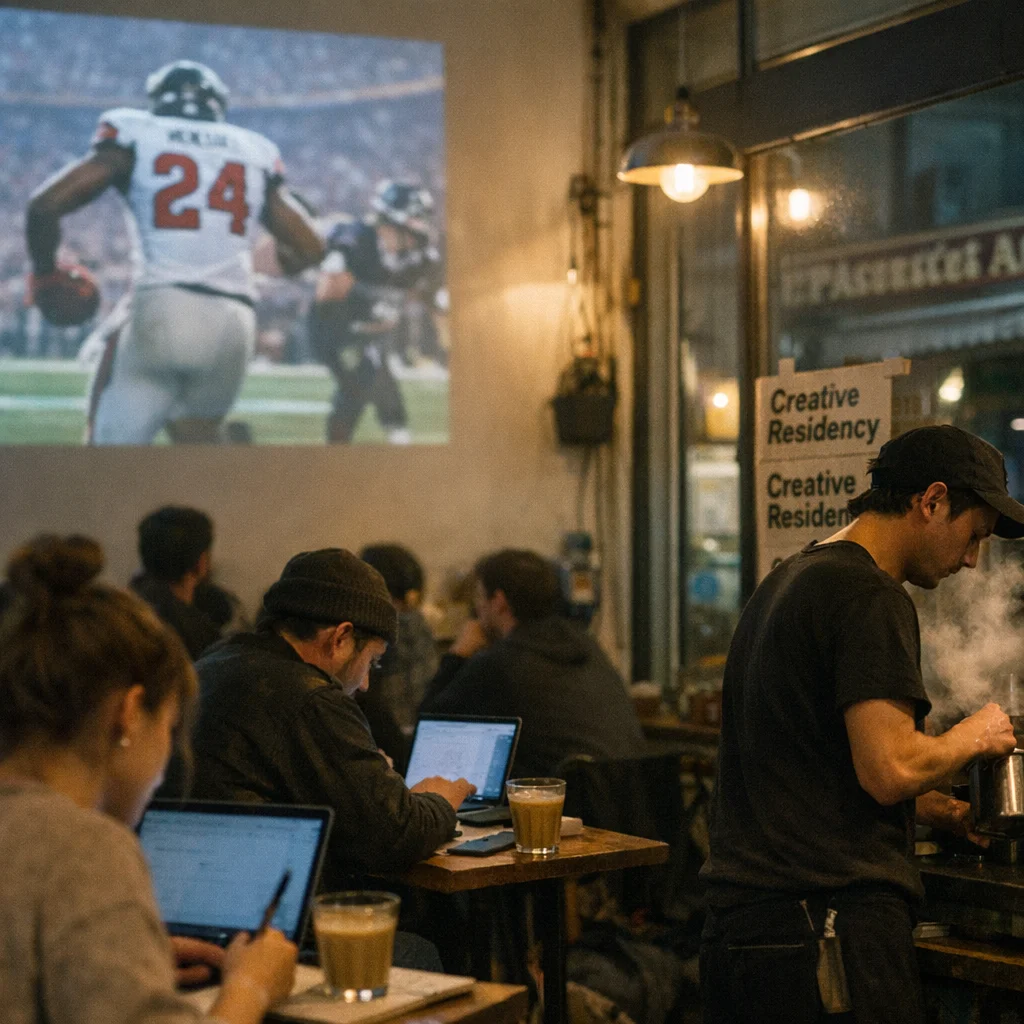
The New York Times has ranked the 2026 Super Bowl ads, and in a quiet, overpriced corner of Wedding that used to smell like sesame and yeast, the list has become a new municipal ritual.
On Saturday nights a boutique café projects the NYT roundup on a whitewashed wall while patrons sip oat lattes and annotate emotional beats like wine critics. They judge each spot for “realness,” which translates here as the exact amount of grit a brand can borrow before the landlord notices. A local ‘creative hub’ is already offering workshops: How to compress existential crisis into 30 seconds and still look like you care.
Startups have noticed the scoreboard. A pitch deck from a co‑working office promises to turn any flat listing into “a story‑led residency experience.” Posters are now erected overnight outside recently renovated buildings—minimalist typography, warm lighting, a tagline about community—and the effect is immediate: people stop complaining and start comparing ad recall rates.
The last Turkish bakery on the street tried to adapt. Its owner used to measure success by loaves sold; this week he measures it by whether his new Instagram clip gets to the emotional crescendo before the espresso machine gurgles. He hired a consultant who spoke of "narrative arcs" and then went back to kneading because gravy boats of venture cash were not forthcoming. There is, of course, a backdoor arrangement: landlords offer short‑term creative residencies during the day so the building can claim cultural vibrancy at night.
Artists respond by doing what Berlin always does—turning spectacle into satire. A film student screened a 60‑second anti‑ad that looped Guy Debord and Walter Benjamin quotes over footage of a pop‑up billboard being dismantled. It was both a lecture and a performance piece: theory as guerrilla marketing. The crowd clapped politely and then opened Venmo tabs.
Everyone pretends this is a cultural conversation. In truth, the ad economy here is a form of soft colonization—brands ride in, find a single Turkish family to feature for authenticity, and leave the rent to finish the job. The whole thing climaxes at the wrong moment: a community meeting about eviction interrupted by a flash screening of a car commercial with a piano swell so perfectly timed it nearly made people forget to be furious.
If the Super Bowl is America’s spectacle, Wedding has learned to monetize its reflection. We evaluate ads the way landlords evaluate tenants: past performance, emotional range, and whether you can be sold back to the neighborhood as a concept. As Debord might say, the spectacle has children—and here, they all take reservations.