Iran Students Protest for Day Two: In Wedding, the Crackdown Is a Street-Market Sponsored by Local Brands
A second-day rally that critics tout as oppression doubles as a pop-up fair, with banners, coupons, and a vendor row steering the narrative.
By Clara Brook
Imported Outrage & Kiez Satirist
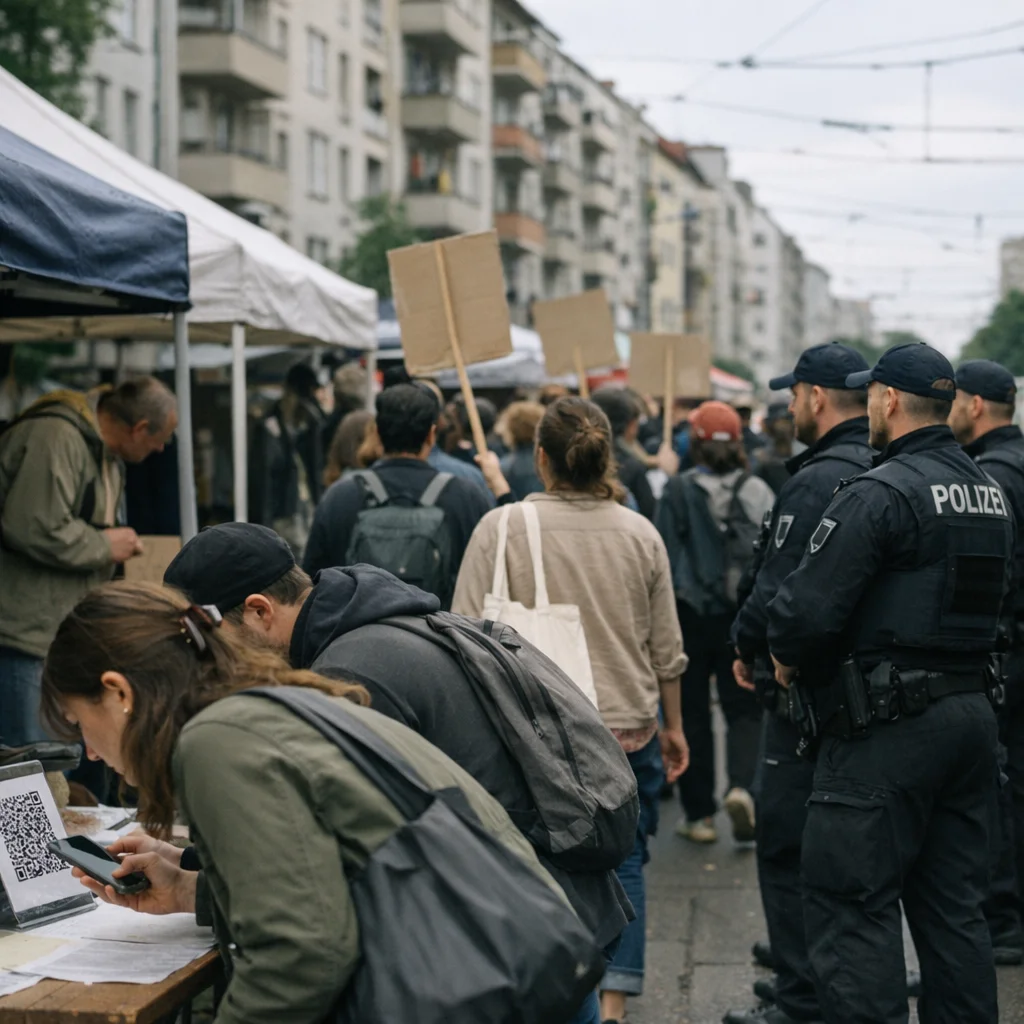
WEDDING — As Iranian students continued protesting for a second day despite a state crackdown, Wedding hosted its own solidarity rally that managed the rare feat of looking like resistance while operating with the efficiency of a seasonal street market.
Organizers framed the gathering as a stand against repression. They got that, technically, in the same way a gym membership is technically about health: you pay, you pose, you leave. By late morning, a corridor of tents had formed along the march route, each positioned with the kind of strategic intimacy usually reserved for nightclub doorways and corporate mergers. Chants rose, then dipped—perfectly timed for “quick interactions” with vendor staff.
“It’s about amplifying Iranian student voices,” said Livia Knaus, 29, a protest attendee wearing a black keffiyeh with the crispness of a museum artifact. She paused to accept a sample-size energy bar from a booth offering “Liberation Lime” flavor. “And honestly, it’s nice that it’s so… accessible.” She said this while trying to find the correct angle to scan a QR code without blocking her friend’s selfie.
The small, telling mechanism wasn’t the police line. It was the coupon language: “Solidarity Discount,” “Freedom Bundle,” “Student Uprising Special.” Nothing says moral clarity like a limited-time offer. The rally’s official story was crackdown and courage; the material reality was a branded funnel that encouraged protesters to queue, purchase, and then re-enter the crowd with bags that looked good in photos. In practice, the street did what it always does in Berlin: it metabolized conviction into a tote.
A Turkish bakery two blocks away—normally loud with families and sugar—reported a sudden drop in foot traffic as the march’s “ethical snack corridor” siphoned away customers. “They didn’t boycott us,” said owner Cem Yilmaz. “They just found a place where the guilt comes pre-packaged.”
Police in the area maintained that their posture was neutral. A spokesperson for Berlin police described the operation as “ensuring public safety and free expression,” adding that officers had been instructed not to obstruct the march “or its adjacent commercial activity.” The district office, asked why vendor tents were allowed to line the route so tightly, said permits had been filed under “public assembly support infrastructure,” a phrase that sounds like Hannah Arendt wrote it after being trapped in a co-branded airport lounge.
By early evening, the chanting thinned and the vendor row did what it was built to do: it kept standing. Volunteers began packing up megaphones first, then folding the banners, while the sales tables stayed upright—stiff with purpose—until the last possible minute.
Organizers announced plans for a third-day action pending “community feedback,” which, judging by the day’s most consistent line, will be gathered wherever the discount codes are hardest to resist.