"It’s a Game of Time," Says Man at Rathaus Schalter While Promising Trump-Style Results in "Two Weeks"
Inspired by Zelensky’s time-buying promises toward Trump, Berliners unveil a new diplomacy: saying whatever keeps the conversation alive until the printer jams.
Geopolitics & Hangover Correspondent
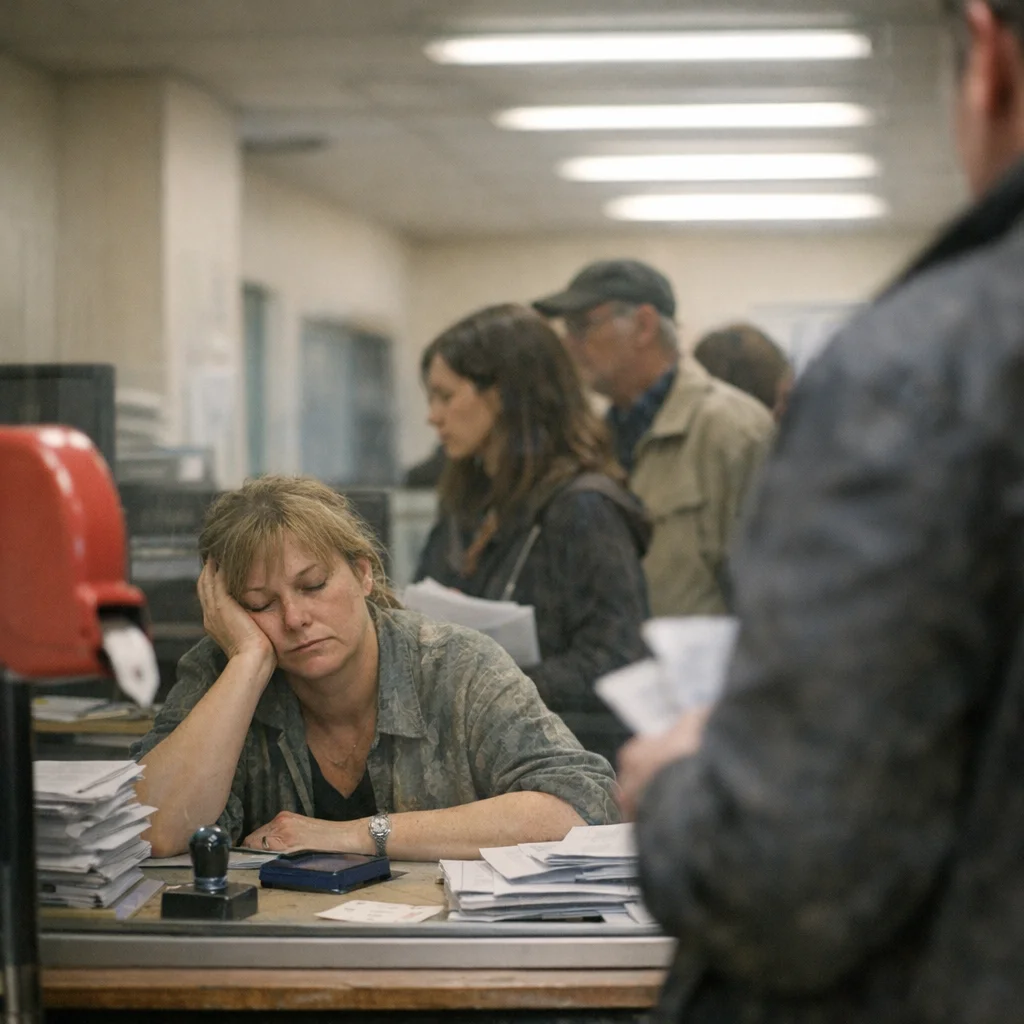
Berlin watched the latest international headline—Zelensky making election-flavored promises toward Trump in what analysts call a “game of time”—and nodded like a city that invented procrastination, then monetized it.
Because if there’s one thing Berlin respects, it’s not power. It’s delay. Delay is the only institution that’s never had budget cuts.
The New Local Foreign Policy: Keep Them Talking
At a service counter in Rathaus Mitte, a clerk demonstrated what diplomats would call “strategic ambiguity” and what Berliners call “Tuesday.” Asked when a document might be ready, the clerk reportedly offered a warm, noncommittal timeline: “Soon-ish,” delivered with the confidence of a man who knows the calendar is just a suggestion.
It’s the same move Zelensky is accused of using with Trump: promise enough to keep the other guy’s attention, without ever fully committing to anything that might produce consequences. Berliners understand this technique instinctively. The city’s entire governance model is basically: maintain eye contact, offer a vague future, and never, ever climax in the wrong moment by providing a final answer.
Wedding Learns It From the Stairwell
Out in Wedding—where every building has a shared staircase and a shared grudge—people have practiced this diplomacy for generations.
Longtime Turkish shopkeepers have mastered it with grace: “Tomorrow, my friend,” meaning tomorrow in the philosophical sense, like Kierkegaard’s leap of faith but with better pastries.
Newcomers have adapted the tradition with worse manners: “I’m totally down, let’s circle back,” which is the same sentence but with a LinkedIn smell. They’ll tell you they’re “in the process” of learning German, “in the process” of joining a local club, “in the process” of being a person—while maintaining a firm grip on the one thing that matters: plausible deniability.
Everyone’s Waiting for Godot, But With Forms
At this point Berlin isn’t a city; it’s a Beckett production with nicer sneakers. You queue, you hope, you get a number, the number means nothing, and somehow you blame yourself for wanting closure.
Even the Späti diplomacy follows the same doctrine: “Card machine is maybe working,” a statement that buys time, saves face, and keeps the relationship open—like geopolitical foreplay, but with energy drinks.
The moral of the story is bleakly simple: Zelensky plays for time with Trump; Berlin plays for time with everyone. Here, the future is always promised—just never delivered.