“It’s Plant-Based, Not Paycheck-Based,” Says New Vegan Bistro While Charging Like It’s Aging Beef
In Wedding, a wave of minimalist vegan dining has discovered the ultimate renewable resource: guilt with a price tag.
Gentrification Symptoms & Pretend-Creative Economy Reporter
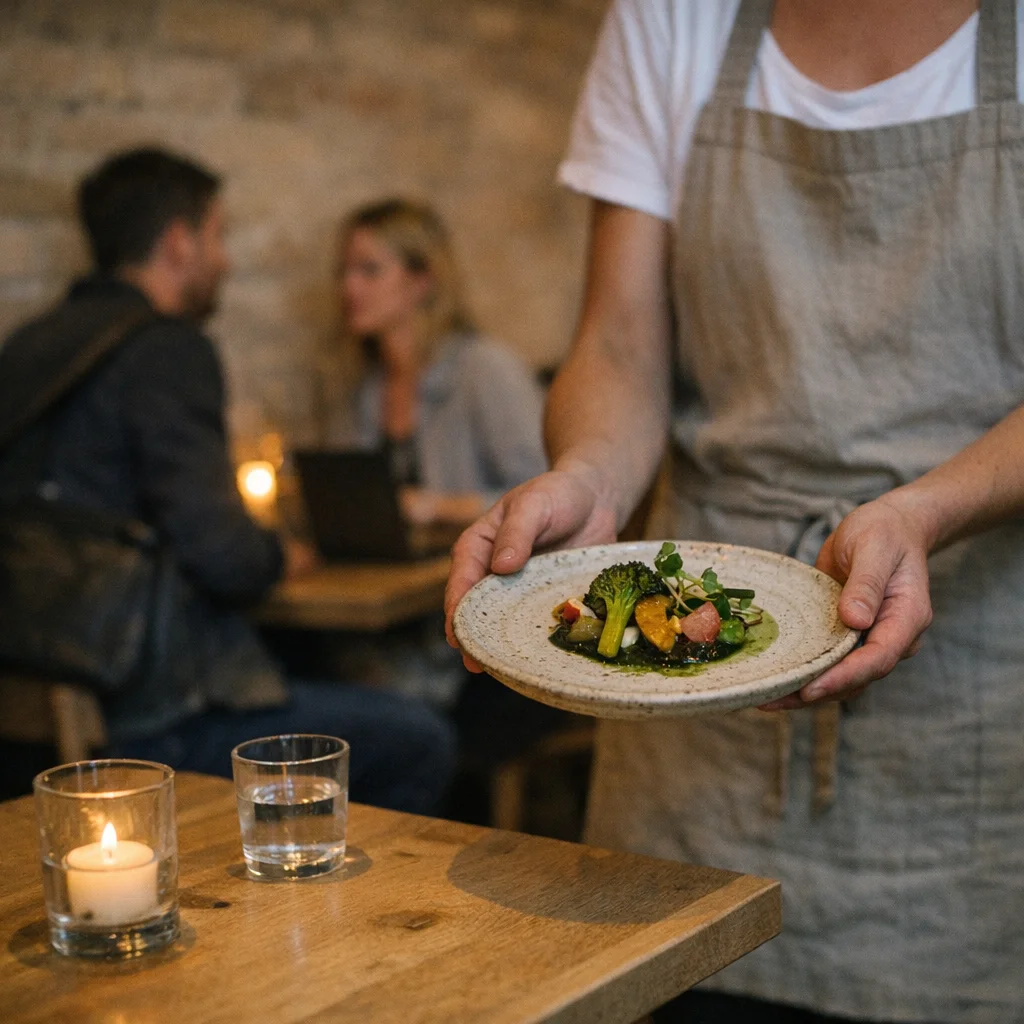
Around early evening in Wedding, the newest vegan bistro on a side street near Uferstraße performed its most reliable trick: turning a carrot into a luxury item by describing it for a full minute.
The menu reads like a manifesto written by someone who’s never carried groceries up four flights. “Charred cauliflower narrative,” “fermented feelings,” “foraged intention.” Each dish arrives the size of an apology, set on handmade ceramic that looks like it came from a gallery show called My Landlord Is the Curator.
What shocks longtime locals isn’t the absence of animal products—it’s the presence of steakhouse pricing with none of the steakhouse dignity. At a place where you can hear the basil being judged, dinner for two can climb past what a classic grill house charges to give you something substantial and mildly shameful.
A Turkish bakery down the block still sells a sesame ring that understands its job: be bread, not a TED Talk. But the new bistro’s customers—startup employees in clean sneakers and moral confidence—treat eating like a confessional booth with table service. They whisper about “impact,” then slide a corporate card into the reader with a firm, practiced touch.
The restaurant’s one surreal flourish is small but revealing: the tiny water glasses keep refilling themselves, exactly one measured sip at a time. Staff call it “hydration minimalism.” Diners call it “a journey.” Nobody calls it what it is: controlled scarcity with ambience.
In a corner, a founder type explains that high prices are “necessary to honor the supply chain.” This is said while ignoring the person doing the actual chain-honoring work: a line cook sweating behind a curtain, turning chickpeas into something that can survive a photo.
It’s hard to swallow, but Wedding’s new cuisine isn’t about food. It’s about being seen consuming the correct ethics—like Nietzsche with a reservation: God is dead, but the tasting menu lives, and it’s mounting pressure on everyone else to pretend this is normal.
Meanwhile, the steakhouse down the road continues its radical business model: feeding people until they stop talking.