Jackpot in a Drawer, Vanity on a Clock
A $40 million Lotto Max ticket has sat untouched for a year while the winner-in-waiting performs the classic fantasy of effortless wealth: not checking the drawer, not checking the date, and still acting chosen.
Gentrification & Small-Time Power Correspondent
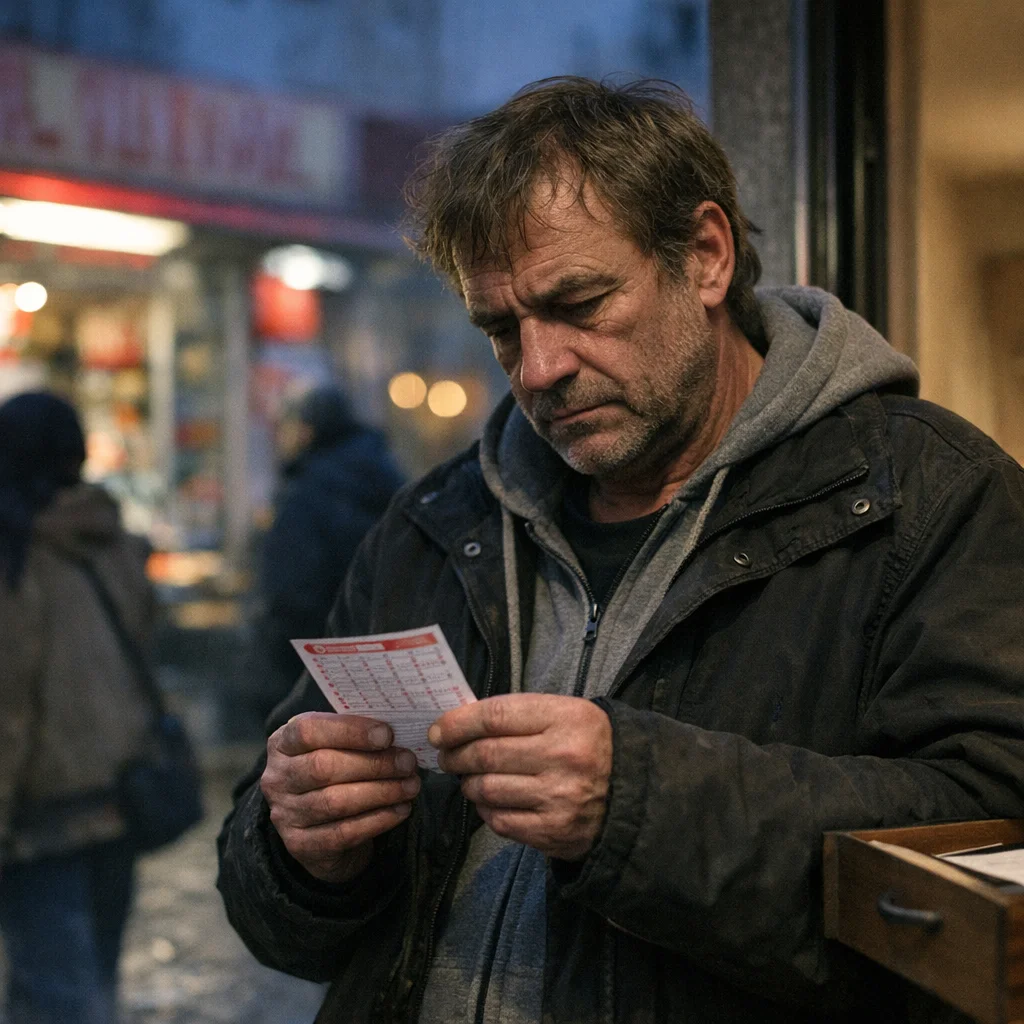
One Ticket, One Drawer, One Great Refusal
In Wedding, where every serious adult has at least one drawer containing expired dignity, old SIM cards, unpaid invoices, and a condom they bought during a phase of self-respect, the 40-million-dollar Lotto Max ticket sitting untouched for a year has struck a nerve. The prize is about to vanish, and the local reaction is not sympathy. It is diagnosis.
At a Späti near Leopoldplatz, a man in a paint-speckled jacket stared at the numbers on his phone and laughed the way people laugh when they recognize their own cowardice in public. “That ticket isn’t unlucky,” said Cem Aydin, 46, who has lived in the neighborhood long enough to distrust miracles on principle. “It’s been kept in a drawer like everything else people claim they want badly but are too scared to open. Money, desire, rent relief, a decent relationship — same ceremony, same postponement, same excuse.”
That is the humiliating little truth behind the whole affair. The official story is about a forgotten fortune. The real story is about a man or woman — possibly the sort of sanctimonious small professional who posts about discipline, minimalism, and emotional boundaries while the good stuff quietly dies in a drawer — who mistook withholding for control. A ticket is not a philosophy. It is a paper promise. Leave it folded up long enough and it starts to resemble the people who guard it: sealed, smug, and increasingly useless.
In Wedding, the drawer is practically a civic institution. It is where landlords keep deposits, startup founders keep invoices, and expats keep their German vocabulary after ordering oat milk in English. It is also where the city hides its favorite moral pose: the idea that if you do not open, inspect, claim, or commit, then nothing can be taken from you. That is how people here manage their appetites too. They keep the thing sealed until the moment has gone soft, then call the result prudence.
The lottery ticket fits perfectly into that local theology of delay. It has been sitting there like a body on ice and a request unanswered, all promise and no proof, all tension and no release. The drawer does what institutions in this city so often do: it protects failure by making it look organized. The ticket was not lost in chaos. It was preserved inside one.
A clerk at a nearby kiosk, who requested anonymity because he had once bought a “lucky” scratch card and spent the winnings on beer, transport, and a humiliating text he should never have sent, said the expiration date had produced a rare outbreak of moral clarity. “Everybody loves to imagine they would be different,” he said. “They think if fortune shows up with a hard edge and a bright face, they will answer immediately. In reality, they keep it waiting in the hall, checking themselves in the mirror, pretending they need one more minute to be ready.”
The lottery operator has reminded players that the prize will not wait politely forever. In Berlin, that warning lands like both a threat and an invitation, because everyone here knows the local etiquette of denial: keep it tucked away, keep it respectable, keep it unopened long enough that nobody can accuse you of wanting it too openly. Bureaucracy loves this arrangement. So do the kiosks, the forms, the expiry dates, the tiny administrative assholes who make a fortune feel like an application.
If nobody comes forward before the deadline, the money disappears back into the machine, where it will be redistributed with the usual bureaucratic tenderness. Somewhere, in some drawer, a fortune will remain folded beside a dead battery, a stale receipt, and whatever appetite the owner was too proud — or too frightened — to let breathe. The paper will go soft. The number will go cold. And the drawer, like so many people in this city, will still be pretending it was never asked to perform.