Joggers Off, World On: Karl Lagerfeld’s Secret Exit Rule
In Wedding, changing into sweatpants marks the real start of the evening, while anyone still dressed for ambition is treated like they have not surrendered properly.
Civic Hypocrisy & Neighborhood Compliance Reporter
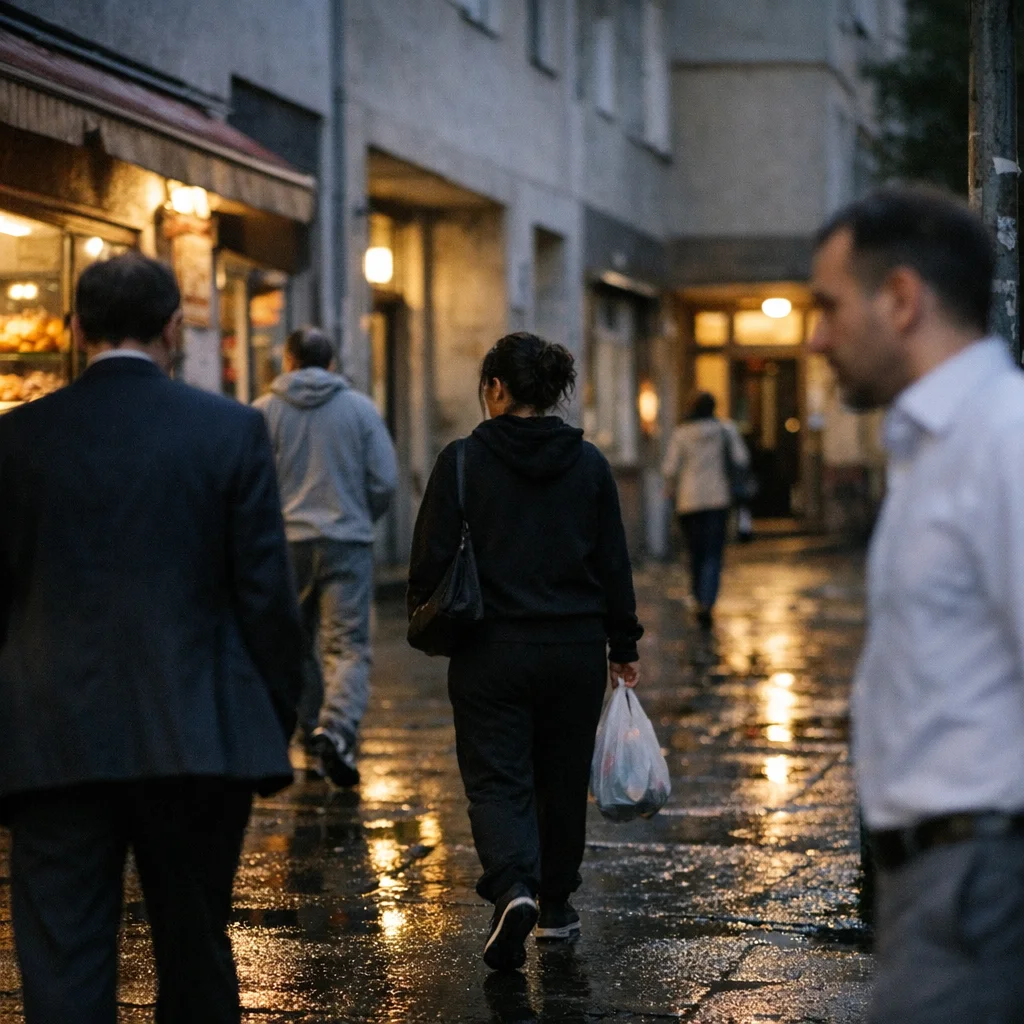
On a damp evening in Wedding, the neighborhood’s most reliable signal is not the tram bell, the bakery queue, or the man outside the Späti pretending he is not waiting for a text. It is the moment office clothes disappear and the sweatpants come out. In the stairwell, in the kitchen, sometimes even halfway down Müllerstraße, the change happens with the seriousness of a private undressing: blazer off, belt loosened, waistband claimed, and the evening finally allowed to get its hands on you.
Near Leopoldplatz, nobody confuses this with laziness. It is an exit, and a fairly intimate one. The people still trapped in trousers with a crease are the ones expected to keep performing: for bosses, for clients, for district-office menus written in enemy language, for startup men who call coercion “alignment.” The rest of the neighborhood puts on sweatpants the way a tired adult shuts a door and says, without diplomacy, that the game is over and the body is not available for further inspection.
At a Turkish bakery on Müllerstraße, a line of customers in work shirts and office blouses stood beside trays of sesame rings and pistachio pastries with the defeated patience of people waiting to be released from a bad date. One man in a wool coat kept checking his phone with the stiff, hungry concentration of someone trying to remain desirable to a calendar. Across the street, two consultants in black jackets discussed “resilience” while staring at the windows of an apartment block like men who wanted entry but could only afford vocabulary.
“I change the second I’m home,” said Mehmet Yildiz, who has lived in Wedding long enough to understand that the body knows the truth before the résumé does. “If I stay in office clothes after work, people think I’m still open for business. I’m not. I’ve already taken my tie off, and that is as close to consent as the district gets.”
A district office employee who asked not to be named because she had already spent the day being handled by forms said the ritual worked like a border post for desire. “Office clothes are for superiors, clients, and the men who think a calendar invite is foreplay,” she said. “Sweatpants are the opposite. They say no more access, no more performance, no more pretending this body belongs to the company after six.”
That is where Karl Lagerfeld enters, still dead, still immaculate, still somehow hovering over the room like a nicotine-stained conscience in a silk scarf. In Wedding, he has become the patron saint of controlled undressing: the man who understood that clothing is never only clothing, that power is a cut, a silhouette, a hand deciding what gets opened and what stays shut. His ghost is useful here because it makes the whole thing sound elegant when it is really just refusal with a waistband.
The neighborhood’s small bourgeoisie, such as it is, hates this clarity. The property managers want people to stay presentable so the building still feels monetizable. The consultants want everyone to dress like a future they can invoice. The wellness people want “softness” only if it can be sold in a glass bottle. But in Wedding, the evening has other ideas. The minute the zipper comes down and the sweatpants go on, the body stops being an asset and becomes a locked door.
That is why the ritual irritates the ambitious. They can tolerate poverty, noise, damp stairwells, Turkish bakeries, and trams wheezing past Leopoldplatz like old men with grudges. What they cannot forgive is a local code that refuses to flirt back. The sweatpants do not seduce; they dismiss. They say the meeting is finished, the room is closed, and whatever was being negotiated can go find another host.
By late evening, the staircases were full of shoes kicked off with private fury, laundry baskets dragged like evidence, and neighbors in gray joggers carrying bread, cigarettes, and one last bottle of cheap wine with the exhausted confidence of people who had already undressed from work and from the day’s little humiliations. Wedding did not offer transcendence. It offered something ruder: a clean exit, a softer waistband, and the cold satisfaction of no longer being on display.