Jordan Returns to Berlin, Hertha Pays the Humiliation Tax
The former Union striker comes back with the same dangerous talent and a city-sized grudge, while Hertha fans brace for another evening of being reminded that their rivals still know how to score in their face.
By Gus Pothole
Sports Cynicism & Civic Collapse Reporter
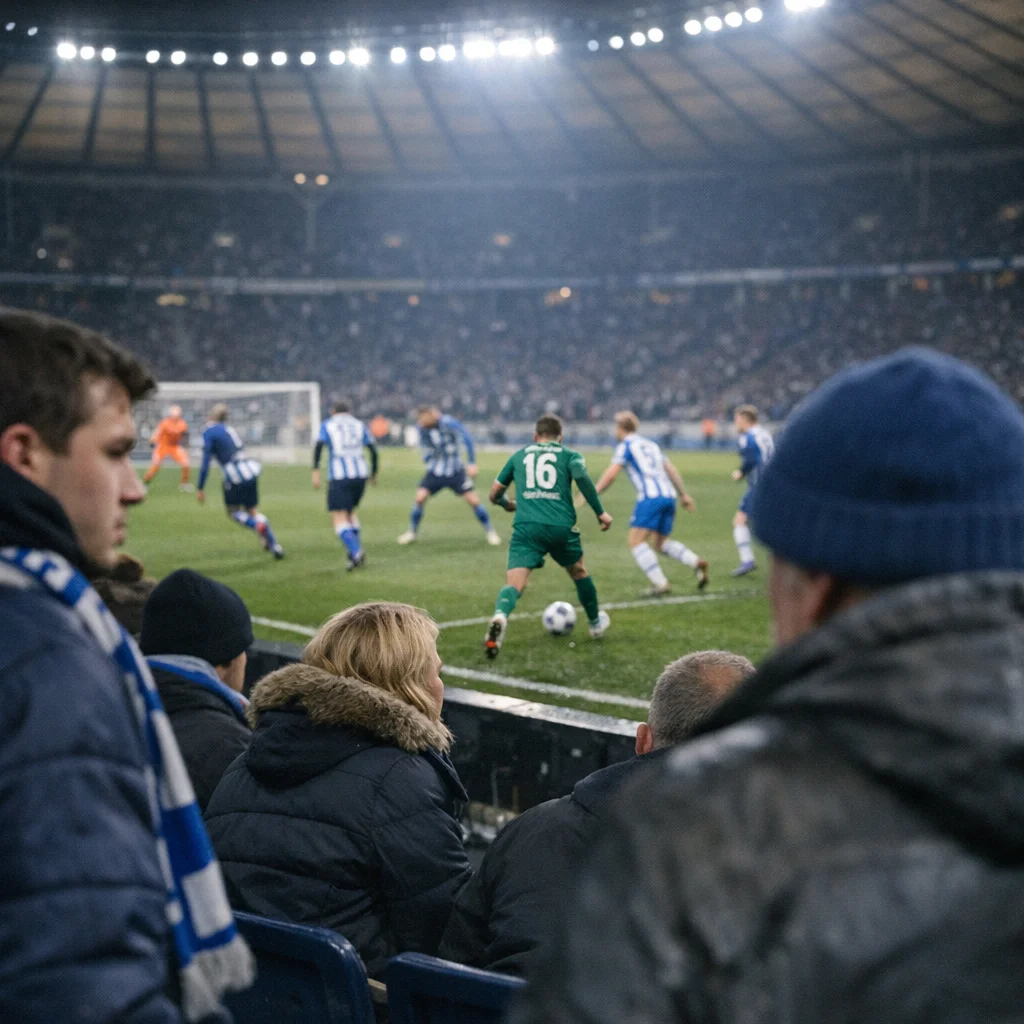
Jordan Returns to Berlin, Hertha Pays the Humiliation Tax
Jordan Siebatcheu is back in Berlin on Sunday, and Hertha BSC is once again volunteering to be the city’s unpaid demonstration of what happens when a defense opens its legs for a cleaner brand image. The former Union striker is expected to lead Greuther Fürth’s attack at the Olympiastadion, where Hertha supporters will watch a man they already know move through the back line with the easy entitlement of someone who has been told the room is his and the club’s only job is to stay still and take the instruction.
Hertha keeps calling this a normal fixture, which is how institutions speak when they are trying to hide consent behind procedure. The club’s matchday language is all discipline, spacing, and “respect for the opponent,” the same vocabulary used by men who are already sweating through their shirt while insisting the situation is under control. Every Hertha release reads like a safety brochure written by somebody being dragged into the elevator anyway: keep your arms inside the railings, do not panic, and please ignore the sound from the other side of the door.
Berlin remembers Jordan less as a player than as a recurring penetration test for local self-respect. Union fans remember the calm with which he turned derbies into private appointments. Hertha remembers him as the type of forward who does not just score; he arrives, asks no permission, and leaves the back line feeling inspected, corrected, and slightly humiliated for having the audacity to stand there in matching socks. That is why this match has the grim charge of a civic cavity check: the city already knows where the weakness is, and Jordan keeps showing up with the gloves on.
The target here is not just Hertha’s defense, but the club’s entire management class of beige professionals who mistake passivity for dignity. They have spent years selling restraint as strategy while the neighborhood around the Olympiastadion fills up with people who can spot fake composure from a tram window. In Charlottenburg, the executive tone remains calm and expensive; in the stands, the body language is cheaper and more honest. One boardroom can still pretend a narrow defeat is a respectable outcome. The other knows it is a soft public undressing, paid for in season tickets and self-deception.
Inside the week’s preparations, the language got even more clinical. Shape. Compactness. Transition control. All the usual euphemisms for a side trying not to get opened up in front of its own clients. A club employee, speaking with the sort of caution normally reserved for divorce hearings and procurement fraud, described the mood as “professionally tense,” which is football’s way of saying everyone can feel the zipper coming down. Hertha’s analysts reportedly spent time on Jordan’s movement between the lines, though the problem is more basic than movement: he knows exactly where the gap is, and the club keeps furnishing it like a concierge service.
Greuther Fürth, meanwhile, has the useful indifference of a team happy to profit from somebody else’s domestic crisis. Their coach can talk about structure all he wants; in practice, structure in German football often just means arranging enough bodies so the embarrassment happens in an orderly queue. If Jordan starts finding those little seams again, Hertha will not merely be beaten. It will be handled. That is the uglier part: the humiliation will look administrative, as if the club has been signed off for unsatisfactory posture by a man with a clipboard.
Around Wedding and deeper into the city, the usual spectators are already doing their tax planning. A barber near Leopoldplatz said the match had the familiar Berlin rhythm of “one side getting serviced by reality, the other side acting like it came for the invoice.” On Müllerstraße, a cashier laughed and said Hertha’s real problem was not losing, but losing with such visible neediness: “They always look like they want the opponent to be gentle with them, and football is not a gentle business. It’s a room with bad lighting and a locked door.”
If Jordan scores, the stadium will do what Berlin always does when its own pretensions are exposed: boo, smirk, and then watch in silence while the wound is reopened in public. If he does not, the club still has to explain why the same weakness keeps inviting the same man back into the same space. Either way, Hertha is not hosting a match so much as another controlled breach. The kickoff arrives Sunday, and the city is already bracing for the familiar sensation of being examined where it would rather not be touched.