Kaan Demir Plays Epstein 'Bill Clinton Caused 2008' Tape at Wedding Co‑Working — Kiez Does the Blame Shuffle
After an unpublished Epstein interview landed online, a local founder tried to outsource responsibility for a failed fundraise to history—and nearly outsourced his tenancy too.
Imported Outrage & Kiez Satirist
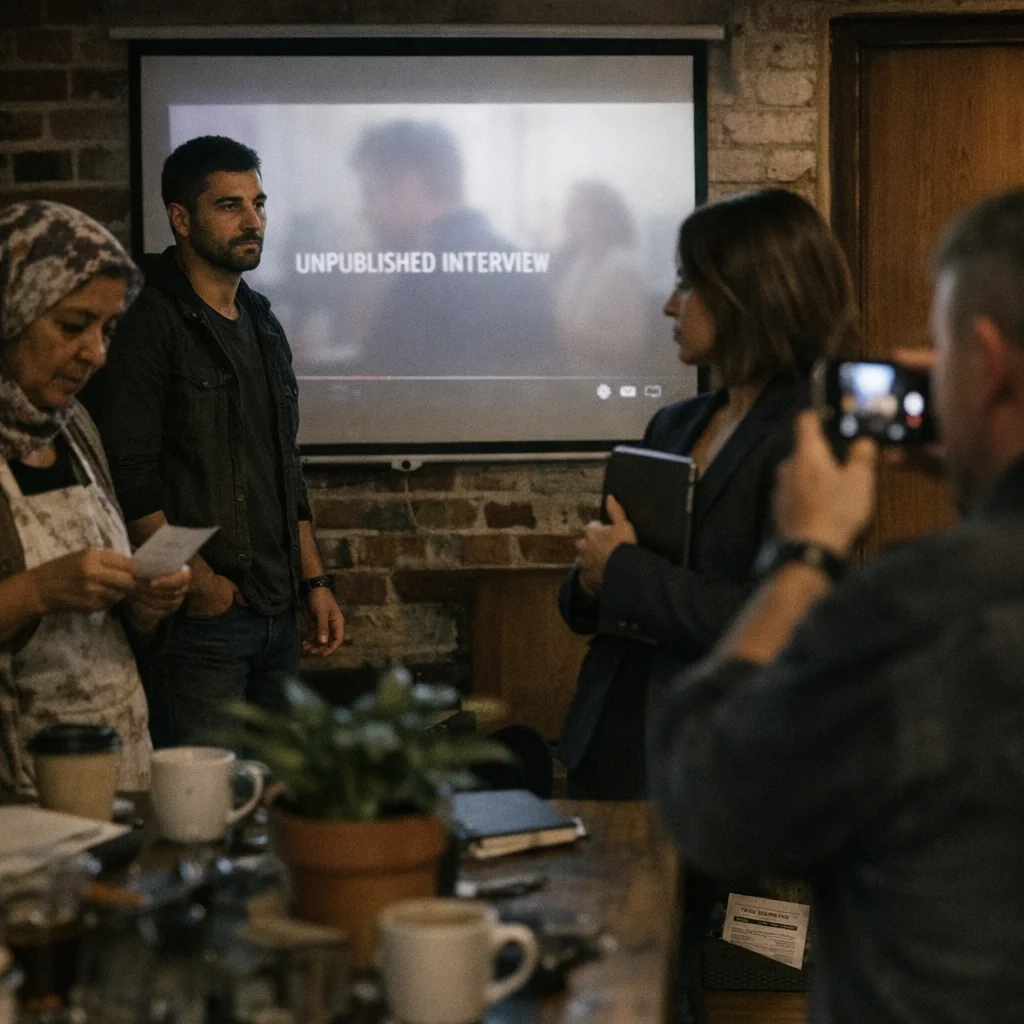
On Monday morning, after an unpublished interview surfaced claiming Jeffrey Epstein blamed Bill Clinton for the 2008 financial crisis, Kaan Demir booked a projector at Commune & Co, the exposed‑brick co‑working on Müllerstraße, and called it a "context night." He wanted narrative cover.
Kaan, 33, founder of KiezCapital (an app that promises to aggregate artisanal hummus subscriptions), opened the evening by saying he was "not an economist, just a victim of history." He wanted money. He risked his reputation, two unpaid invoices, and the flat above Leyla Öztürk’s bakery where he sublets a single room.
Later that afternoon, he played the leaked clip to a half‑sober room of investors, interns, and three neighbors. Leyla, who has run Simit & Seed for 22 years, was there because the projector faced her storefront. "We had a crisis in 2008 and my rent is the crisis now," she said. "You cannot play a tape and expect us to dance to your excuses." Her quote landed like a cold sesame bagel.
By evening the salon escalated into a public argument. Anna Weiss, a developer from Nomad Nook Real Estate (who always calls every acquisition a 'restorative project'), hovered with a tablet and a smile calibrated for press photos. "This is about context and community synergy," she told a reporter while calculating how many square meters she could carve out for flexible desks.
Turning point: a neighbor named Cem, a former sound engineer, streamed the original recording from a different source. The unedited audio contained an aside Kaan had cleverly clipped out—himself asserting that "creative financing" was a necessary lubricant for startups. The room noticed.
"You were trying to penetrate the bureaucracy with a story instead of numbers," said Tomika Alvarez, an angel who'd been two coffees away from signing a term sheet. "When your alibi needs editing, the product is the lie." Investors folded. Anna sent a polite calendar invite titled "site visit."
The next day, Kaan found a printed notice under his door: an informal suggestion from the landlord to "reconsider living arrangements"—translated: bring rent or leave. Kaan posted on social channels that the tape proved the world is complicated; Leyla posted a photo of her ledger.
Wedding watched the small melodrama like a civic experiment: performative victims performatively outraged, a developer ready to slide in, and a founder who thought a foreign conspiracy would buy him a little time. Adorno would have loved the stage, Baudrillard would have sold tickets.
"I was trying to buy empathy," Kaan admitted to one remaining investor. "Instead I got audited sympathy and a termination clause." He is now negotiating a backdoor arrangement with a midwestern investor whose email is suspiciously concise. Whether the lease survives, or the neighborhood finishes him off, remains unsettled.