Kafka’s After-Hours Trim at Wedding
A neighborhood barbershop says it offers “consultation,” but the real service is letting men rehearse obedience, flirtation, and shame before the mirror while everyone pretends it is grooming.
By Omar Felton
Kiez Features Reporter
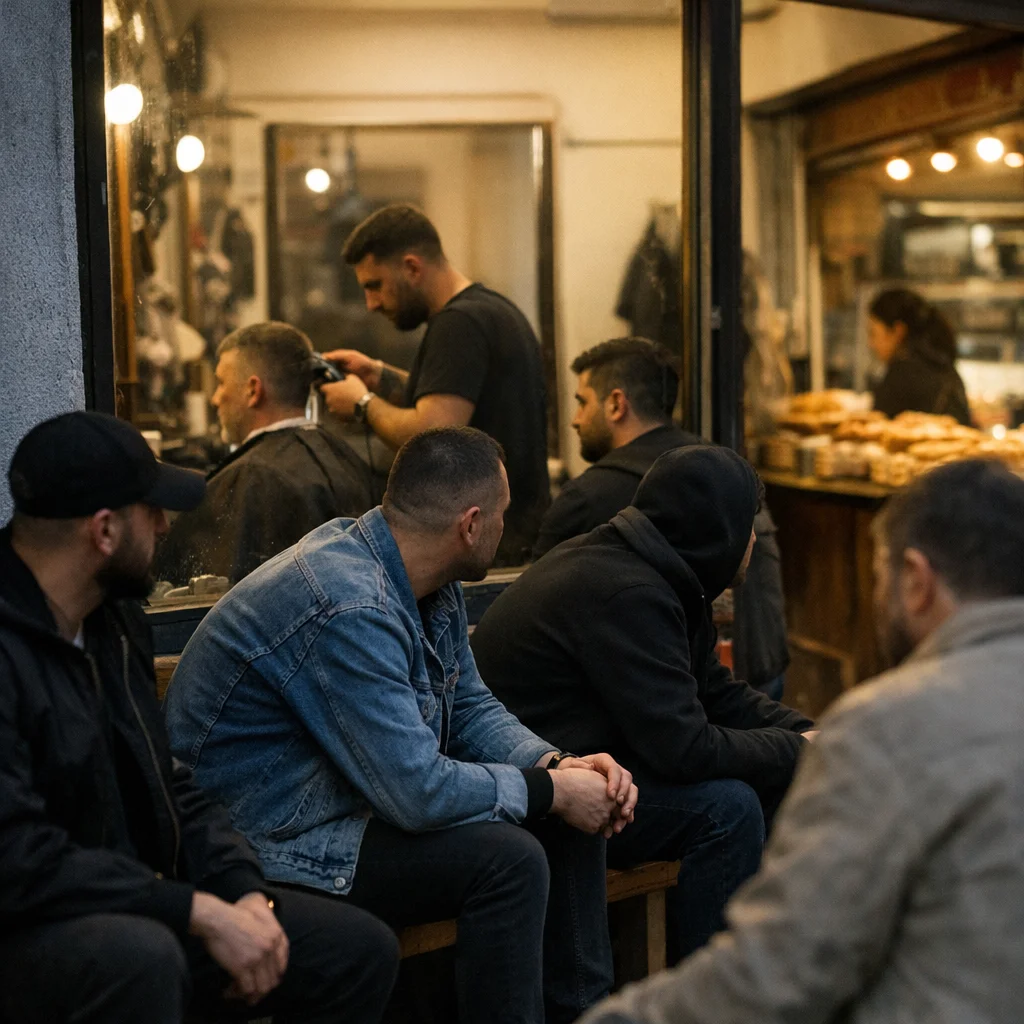
The men began arriving before sunset, not because the scissors opened early, but because the booking page had made the whole place behave like a private club that only admits people after they have been properly softened up. On a narrow stretch in Wedding, the barbershop with the velvet-rope calendar has turned the front bench into a waiting room for appetite, vanity, and the kind of civic obedience that passes for taste when the rent goes up.
The rule is simple and demeaning in the way modern services prefer: no walk-ins, no immediate relief, no pretending you are in control. You book a slot, then you wait long enough to start negotiating with your reflection. By the time your name is called, the haircut has already done the first cut. The staff calls this order. The regulars call it premium treatment. What it actually produces is a room full of men learning how to sit still while they are evaluated.
“It is not a haircut, it is a soft audition,” said Mehmet Yilmaz, who runs the shop with the calm of a man who knows that boutique masculinity is just rentier anxiety with beard oil. “They come in asking for a trim, then they spend twenty minutes trying not to look needy. That is when they are easiest to handle.”
The room has its own little economy of submission. The startup man with the perfect tote bag and the crumb of a mustache checks the barber’s face for approval after every sentence, as if the clippers might also grade his personality. The Turkish grandfather from the bakery next door folds his coat and waits with the patience of someone who has watched enough landlords, mayors, and freelance consultants to understand that the person with time owns the room. The expat with the immaculate beard and the hollow eyes asks for “low-maintenance” while adjusting his jaw in the mirror like a man trying to look available without looking desperate. Everyone arrives pretending they want grooming. What they want is to be selected without having to admit they are applying.
That is where the consultation comes in. The booking page calls the delay “consultation,” as if the shop were offering a dignified civic conversation instead of a slow, lubricated inspection of who can afford to wait. In practice it works like foreplay with a booking fee: not enough touch to be called touchy, just enough anticipation to make people compliant. The bench becomes a sorting device. Men who say they reject hierarchy spend twenty minutes proving they deserve a better fade than the guy beside them. Men who brag that they do not care start caring the second they notice someone else’s name has been called sooner.
The barber chair, meanwhile, does the rest. Once a customer is finally inside, he is draped, tilted, and asked to hold still while a stranger circles his neck with metal and certainty. It is impossible not to notice how quickly the language of service becomes the language of handling. A trim here is not only a trim. It is being positioned, lined up, made presentable for a room that has already decided which men are worth looking at.
A district office spokesman, reached by phone and sounding as though he had been interrupted during a very expensive lunch, said the neighborhood had “no immediate regulatory concerns,” which is the phrase officials use when they recognize extraction but prefer to call it lifestyle until someone drafts a permit.
By early evening, the line outside had grown enough to block the doorway of the adjoining bakery, where one woman laughed and said the barbershop had solved what dating apps only manage to monetize: making people wait for attention they are not sure they deserve. Inside, the mirror kept doing its job. Outside, the booking page kept promising consultation. The next opening was already full, which in Wedding is about as close as anyone gets to a guarantee.