Kaiser-Otto Bridge Needs Fixing Already
Saxony-Anhalt officials who rushed the grand opening now face urgent repairs on the million-euro project while nearby communities foot the bill for endless traffic detours.
Civic Hypocrisy & Neighborhood Compliance Reporter
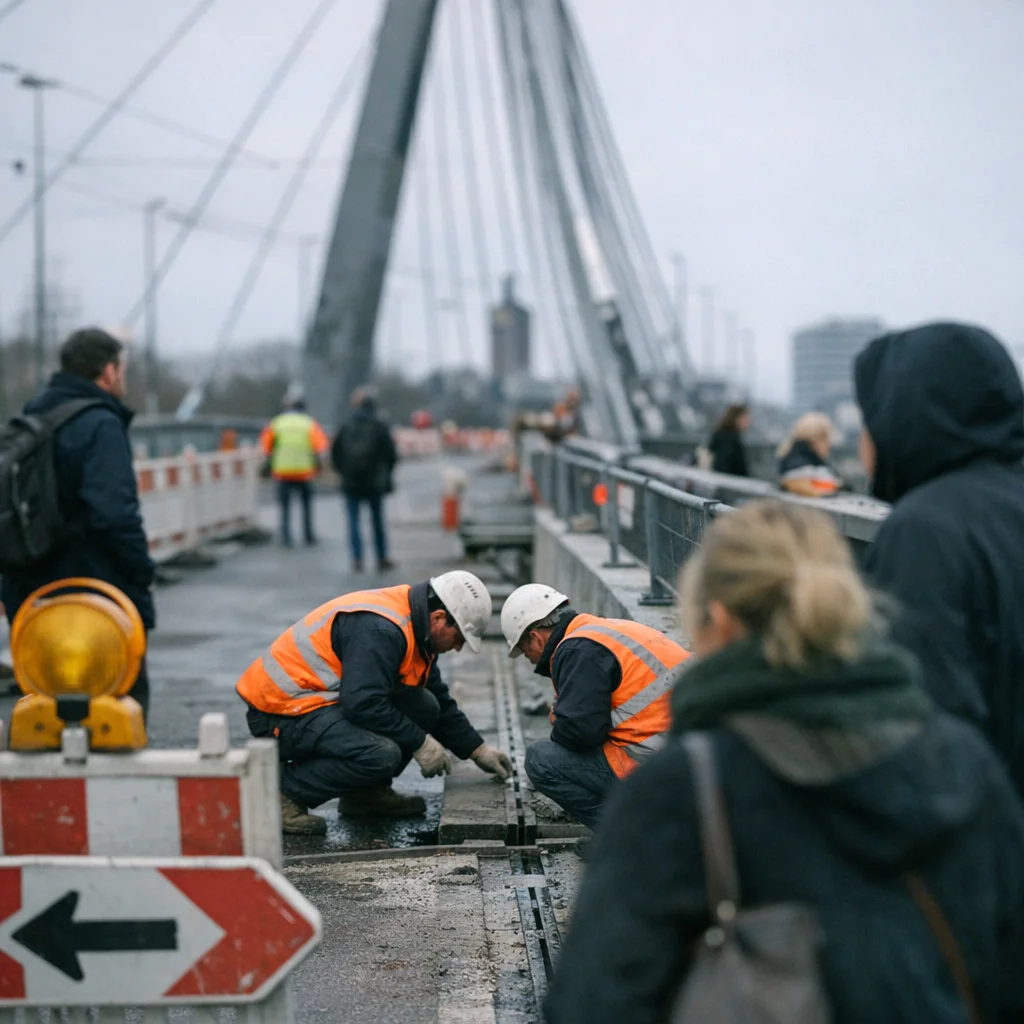
Magdeburg’s Bridge Finds Berlin’s Favorite Hobby: Breaking Early
In Magdeburg, the Kaiser-Otto Bridge is already back on the repair list just two and a half years after opening, and Wedding residents recognize the pattern immediately: grand public promises, glossy speeches, and then the first serious invoice arriving like a creditor with good posture. The million-euro bridge was sold as the sort of civic achievement that makes officials stand straighter. It is now being treated like a bad idea with better concrete, the kind that gets handled, admired, and then left to sag under the weight of everyone who was told to trust it.
The repair scramble matters far beyond Saxony-Anhalt. In Berlin, people know exactly what happens when a structure is rushed, celebrated, and then discovered to be held together by optimism and procurement language. First comes the ribbon-cutting, then the handshakes, then the usual warm administrative grip on the public purse while commuters are left with barriers, detours, and the little thrill of being used as a planning surface. The only durable thing is the bill.
Around Leopoldplatz, one taxi driver said the bridge sounded like “something built to be leaned on by people who never have to stand under it when it fails.” A café worker in a pressed coat called the official enthusiasm “the sort of confidence you get from a man who has never had to explain a cracked seam after the money’s gone.” Nearby, a retiree watching the traffic reroutes said the project had the usual public-sector rhythm: “They open it with their ties straight, then leave it for the rest of us to carry the strain.”
District officials in Magdeburg have said the repairs cannot wait because winter is closing in, which is the municipal equivalent of discovering your suit is splitting at the seam during your own engagement party. The urgency has also revived the old question of who benefits when a public project starts failing before the paint is fully ashamed of itself. Contractors have already collected their praise. Consultants collected their fees. Residents and commuters now get the detours, the noise, and the familiar civic aphrodisiac of being told to be patient while someone else keeps getting paid to put hands on the same problem.
A spokesperson for the transport authority said the bridge remains safe while fixes are planned, a sentence that in Germany usually means someone has already begun practicing for a hearing. Local critics are less calm. One city council member complained that officials treated the opening like a photo opportunity instead of a maintenance commitment, as if infrastructure were a one-night liaison with public money: flattering in the moment, expensive in the morning, and somehow still somebody else’s mess to wash out.
The bridge is still standing, which is more than can be said for the credibility surrounding it. Repair work is expected to begin under a tight winter schedule, and commuters are bracing for the usual outcome: the public will pay twice, the planners will speak softly, and the officials who rushed the opening will keep their hands clean while everyone else is left holding the strain, the detour ticket, and the bill for the next round of repairs.