Kater Blau and Coke: Why Wedding Treats Club Stamps Like Blue-Chip Shares
Wrist marks, paper stamps, and fabric bands are being hoarded, taped, and insured—because in this market, proof of entry is proof of status.
Night‑Economy Correspondent
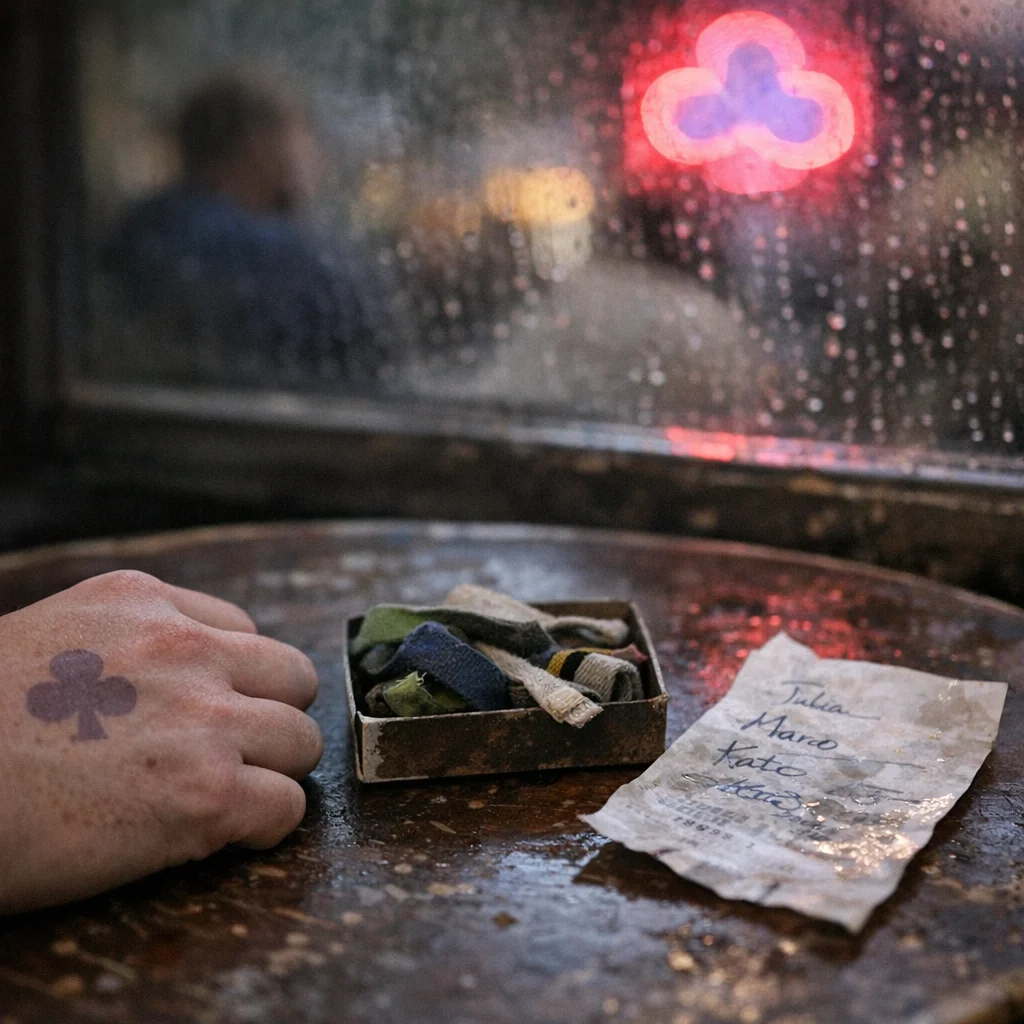
There’s a ritual in Wedding that looks like superstition and behaves like asset management: people protecting club stamps.
A bouncer’s rubber mark on the back of your hand—sometimes a smear, sometimes a tiny logo—is no longer just proof you got past a velvet rope. It’s a credential, a brag, and increasingly, a portable balance-sheet. People balm them, tape them, photograph them in flattering light and lock the originals in cigarette boxes as if they were stock certificates. I once watched a man slide his wristband into a matchbox and whisper to it like a small, embarrassed parent.
Why the paranoia? Scarcity and social signalling. Entry is limited, doors are selective, and the only transferable commodity left in a city where rents climb like fever is access. A stamp says you were let in when others weren’t. It’s social capital in its purest, slightly sweaty form—Bourdieu would have loved the margins.
Add in chemical economies—Kater Blau’s after-hours market runs on both goodwill and, let’s be honest, supply from Görlitzer Park—and suddenly stamps do real work: re-entry, after-party discounts, and backstage introductions. A well-protected wristband can buy you a second life that the city’s housing market denies. People treat stamps like physical NFTs: unique, verifiable, and absurdly desirable.
The rituals are elaborate. Some coat their marks in Vaseline to keep the ink from fading. Others photograph them obsessively, then print the pictures and store them with the same care as a passport. A few venture into counterfeit: a small cottage industry of fake stamps that smells faintly of desperation and eau de glue. Spätis sell emergency clear tape like it’s liquidity management.
There’s comedy and cruelty in this. Newcomers cry about being excluded while clutching a latte with an English menu; lifelong residents watch their neighborhood be monetized and say nothing that would cost them the band. It’s the same hypocrisy you see when people buy “authentic” poverty in a gallery and still swipe a card.
If this sounds tragically modern, it’s because it is: proof of entry has become proof of belonging, and belonging has a price. As Walter Benjamin might have observed, the aura has migrated to the back of your hand. Keep a firm grip on it; getting into tight spaces often requires a little show-and-tell.