Ketamine Retreats Sell 'Nagasaki Calm' After Japan Stops Chinese Boat — Berghain Crowd Signs Up to Forget Diplomacy
As Tokyo and Beijing argue over a fishing incident off Nagasaki, Berlin’s wellness industry converts geopolitics into a two-night package: a K‑infused 'sea of calm' followed by a guided surrender to silence.
Wellness-to-Wealth Investigations Reporter
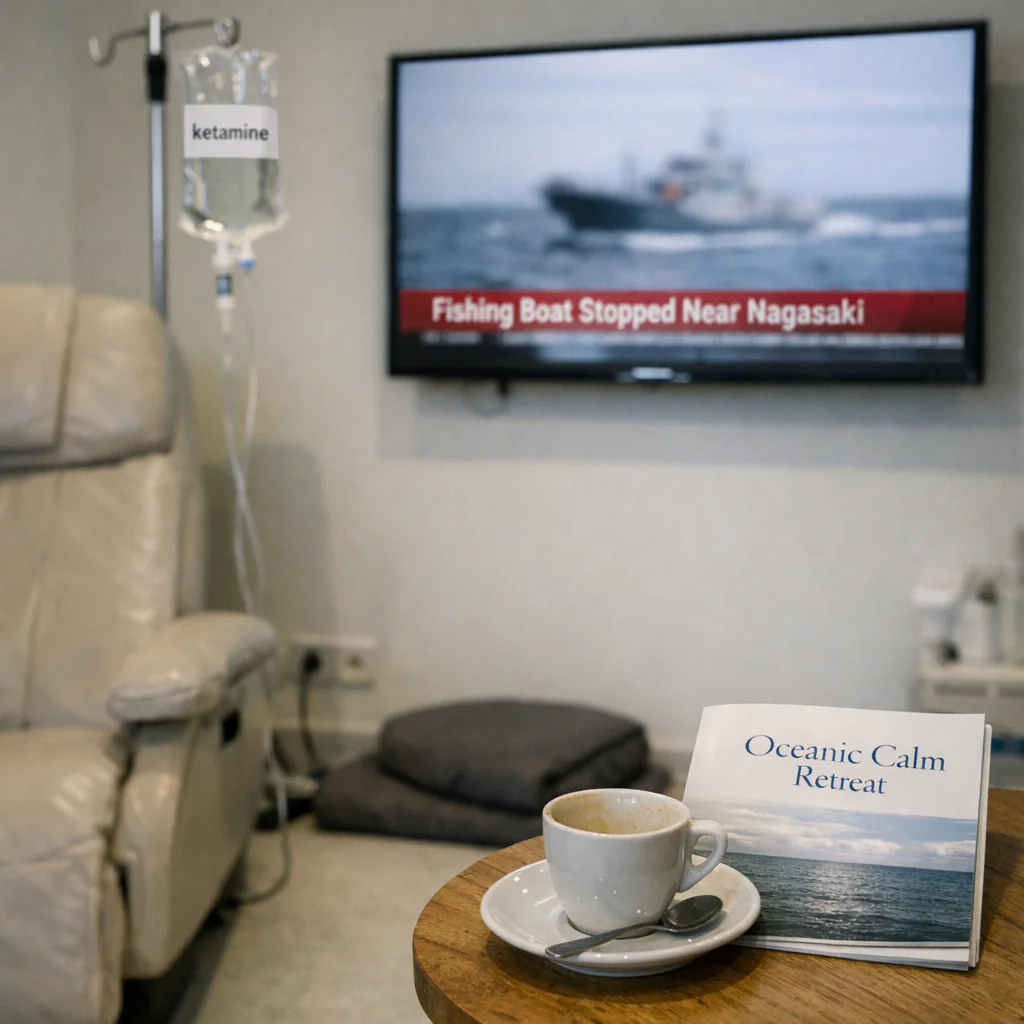
Japan’s interception of a Chinese fishing boat off Nagasaki — and the resulting diplomatic teeth‑gnashing — landed in Berlin not as foreign policy but as product. Within days, pop‑up ketamine clinics and a chain of boutique 'marine mindfulness' retreats were advertising a curated way to feel less about geopolitics: two IV drips, a drum circle, and a consent form that reads like a travel waiver.
The framing is surgical: headlines about territorial waters become copy about "oceanic calm," border patrol photos are reduced to blue palette inspiration for a meditation room, and a Berghain‑adjacent promoter quietly schedules an "empathic closure" set for Sunday morning. The pitch: if the world won’t stop fighting over fish, you can pay €120 to be slightly out of it.
Clinic managers borrow diplomatic language. "We facilitate safe de‑escalation," said one, which is to say they will guide you into a K‑hole while Spotify cues somber strings. PR teams call it responsible; practitioners call it a business model; users call it a deep dive. Everyone gets the outcome they wanted: a marketable feeling and an invoice.
There’s shame in the transaction, but it’s tasteful shame — served with single‑origin cacao and a pledge to replant a mangrove. Left‑leaning Instagram accounts praise the retreat as solidarity practice; influencers call it "processing geopolitics." Meanwhile, actual fishermen and diplomats remain inconveniently present in the news cycle.
This pipeline from headline to IV bag reveals a structural truth: Berlin’s spiritual marketplace doesn’t cure anxiety, it rebrands it. Byung‑Chul Han would have a field day cataloging the burnout of empathy turned into content. Camus would note the absurdity: our revolt against meaning now has a booking form.
The funniest cruelty is the performative aftercare: a guided breathing session that insists you "stay with the feeling" while staff swipe your card. Some guests report clarity; others report a strange, quiet hunger for real solutions left untouched. For now, diplomacy is a distant tug of war and the cure is a dim room, a gentle push, and the comforting lie that forgetting is an ethically packaged service.
If nothing else, the trend proves one thing: international incidents are excellent PR material. They’re marketable, photogenic, and, most importantly, wallet‑opening. Customers come to submit and leave with a receipt for inner peace — or at least a postcard that reads, in tasteful serif: "I witnessed conflict and bought serenity."