Ketwurst, Baby, and the Loyalty Swap Meet
At Ostpro, DDR snacks and Christmas stollen are sold as heritage, while vendors and shoppers perform devotion to the old East only long enough to cash in on nostalgia.
Neighborhood Commerce & Low-Grade Dread Reporter
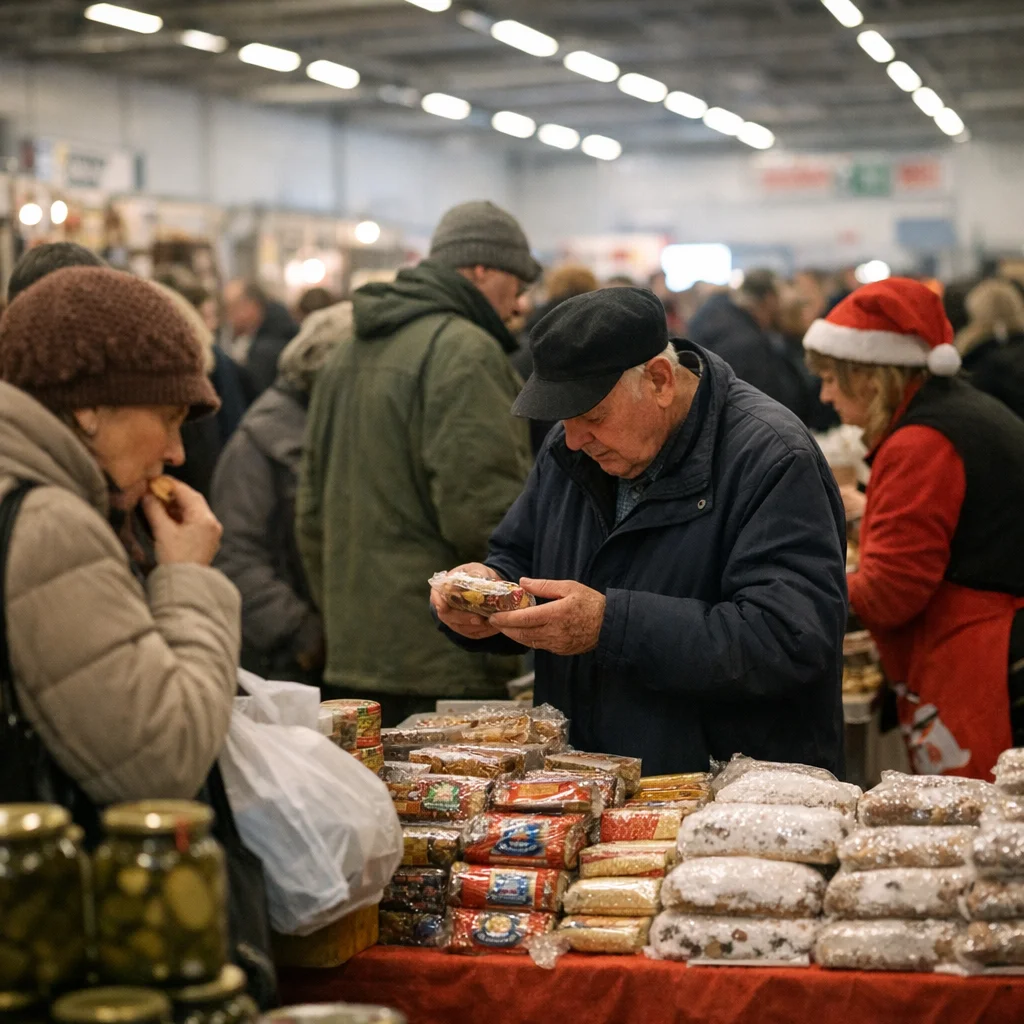
Ostpro’s annual migration of DDR nostalgia to Berlin opened this week with the usual parade of memory merchants, but this year the mood felt less like heritage and more like a municipal kink scene with a receipt printer. In the exhibition hall, vendors from across the East laid out Ketwurst, jars of pickles, old-brand chocolates, and the first Christmas stollen of the season, each one arranged like a body on display and priced like a consent form nobody intended to read.
By late morning, shoppers were already working the aisles the way certain men work a room: hands lingering, eyes measuring, all appetite and excuses. A man in a corduroy jacket said he only came for mustard and left with three bags of sweets “for the family,” which is what people say when they want their desire to sound domesticated. At the next stall, a woman from Köpenick studied a box of classics as if sorting through lovers who all owed her money: the one she trusted, the one who disappeared, and the new one who knows how to invoice without blushing.
“I came for the memories, not the marketing,” said Anke H., who has visited the fair for years and requested anonymity because her husband works in sales and would recognize the particular look she gets around stollen. She said the problem is not that people still love the old products. It is that they want the old East to stay available, pliable, and grateful while they pretend they are not the ones doing the buying. “Everybody says they stayed loyal to the East,” she said, “then they go home with the cheapest souvenir and the loudest story. They want the whole thing open on the table, but only until they’ve had their fill.”
That is the real business model: keep the old body of the East on display, let everyone paw at it, and call the whole arrangement preservation. The fair’s public charm depends on this performance of fidelity, and the public sector happily lubricates it. District offices, permits, fire rules, food inspections, branding partnerships — the administrative machinery shows up like a discreet accomplice, smoothing the bedsheets and pretending not to hear the rustling. The vendors know the score. They smile the way a pimp smiles at a client who insists this is romance and not a transaction with cheaper lighting.
One booth nearby had a stack of holiday sweets out early enough to make December look like an appointment calendar. The sign above it promised “Tradition in Advance,” which is how the whole hall works: everything is preheated, prepackaged, pre-spent. Sentiment arrives before the season because the season is just the window when people feel licensed to touch what they otherwise ignore. The stollen disappears first, then the story around it, then the story about the story, each layer peeled off and sold as if nostalgia were a private vice instead of a public utility.
Organizers defended the timing and the mix of products as a practical response to demand. “Visitors want the familiar, but they also want to be surprised,” said one fair spokesman, who declined to give his full name because his desk was decorated with a plastic train from 1987 and he did not want relatives asking whether he had always been this committed to keeping old habits alive in public. District officials said they had no objections as long as sales complied with food rules and fire safety, which is the modern state’s favorite way to bless emotional fraud: regulate the wrappers, ignore the arrangement, and call it cultural support.
Outside the hall, the line kept moving. Inside, loyalty was being sampled, licked, priced, and handed back in a paper bag. The country’s favorite kind of devotion was on offer by the slice: nostalgic, self-serving, and only as permanent as the next receipt.