Laage Airport Sells Its Runway to the Highest Appetite
With costs mounting and Hendrik Holt fading from the script, operators are betting on solar panels, pilot training, and the Bundeswehr to keep the place fed.
Civic Hypocrisy & Neighborhood Compliance Reporter
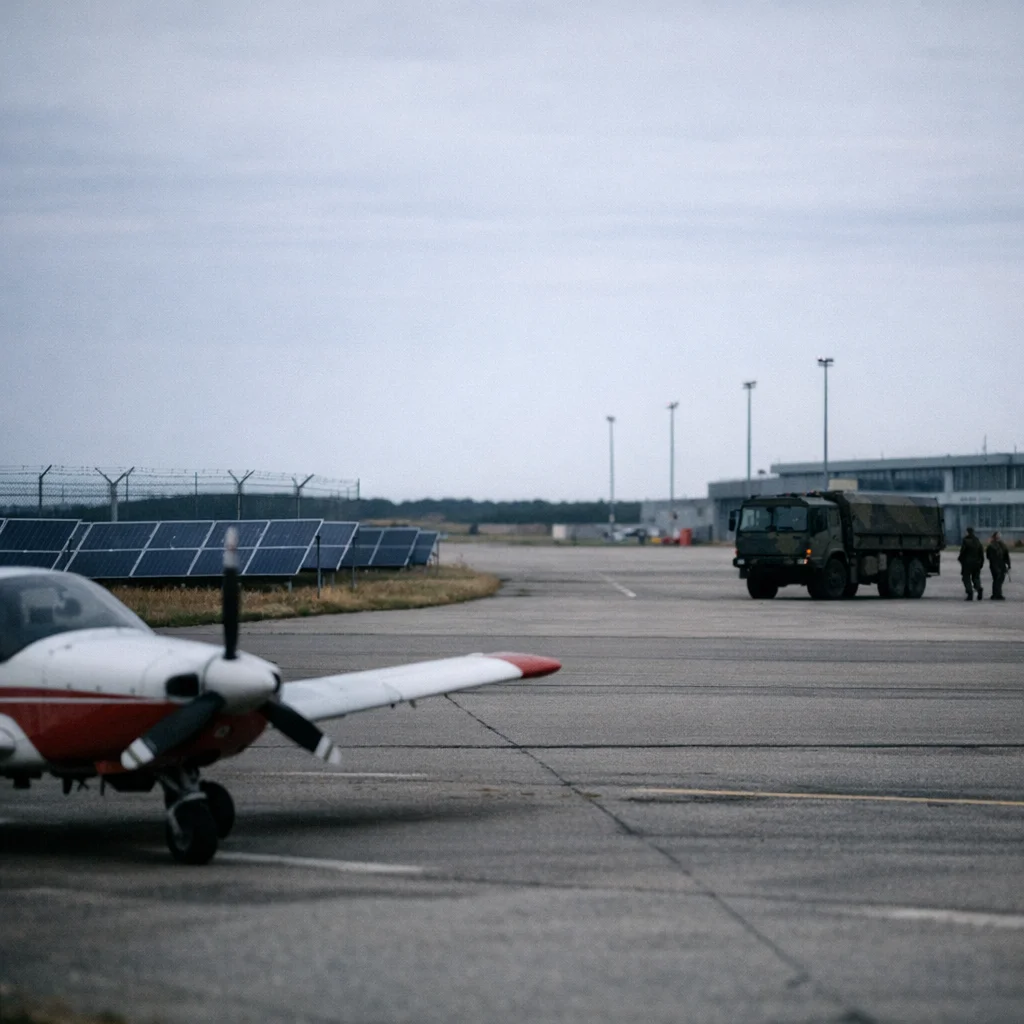
At Rostock-Laage, the airport’s future is being negotiated like a bad arrangement with a man who insists he is generous while reaching for your wallet. The bill keeps rising, the runway keeps lying there with its legs open, and every rescue plan arrives speaking softly about “development” while angling for a hand on the public purse. Solar panels, pilot training, and the Bundeswehr are the current bidders in this little courtship, each promising to keep the place alive without admitting they mainly want access to a long, expensive body they can use for their own purposes.
The mechanics are familiar. First comes the glossy proposal, then the flattering talk about regional importance, then the carefully staged photo of someone in a blazer pretending to be in control of a facility that is already being leaned on from every side. At Laage, that role falls to the usual cast of operators, consultants, and public officials who speak in the serene tones of people counting other people’s money. They do not call it dependency. They call it a concept.
The solar plan is the cleanest seduction because it offers a green blouse over the same old hunger. Panels can be installed, leased, financed, and ceremonially admired while the underlying question remains unchanged: who is paying to keep this stretch of asphalt available for other people’s ambitions? The answer, as always, is the taxpayer, drafted into the role of the patient partner who funds the dinner, tips the waiter, and is then told not to be difficult about what happens next.
Pilot training gives the place a more disciplined costume, though the fantasy is the same. A half-empty runway becomes a classroom for uniforms, checklists, and the old German dream that competence can be minted by putting young men near machinery and calling it readiness. It is not exactly romance, but it has the same posture: a public asset being positioned as if it exists to be mounted by institutions that want the authority of use without the embarrassment of ownership.
Then there is the Bundeswehr, the only participant in this arrangement with enough self-control to admit it wants the runway for practical reasons. That honesty is almost obscene in a landscape where everyone else is pretending to be noble while shopping for leverage. The military wants space, silence, and a surface it can use without having to smile for the regional economy. In other words: a clean, blunt customer in a market full of performative suitors.
The shadow of Hendrik Holt hangs over the whole transaction like a stain that has already been laundered too many times. Nobody wants to say his name too loudly, but the money remembers. The scandal has become the kind of cautionary tale that public institutions tell after the drinks arrive and the door is closed: yes, there was a mess, yes, someone overpromised, yes, someone else looked away, and now everyone is pretending the next financing structure will arrive with better manners. It won’t. It will arrive with a spreadsheet and the same greedy hands.
Berlin knows this choreography by heart. The city can sniff out a runway, depot, lot, yard, or warehouse and immediately begin dressing it up as civic virtue, innovation, or resilience, which is just another way of saying someone wants to keep the site available for rent while pretending to have discovered a future. The city’s favorite pose is the one where it calls exploitation “activation” and then wonders why the concrete still feels cold. Wedding is full of these little arrangements: old shells put back on display, half-dressed and overworked, with someone in a policy jacket insisting the building is “being brought to life” while the boiler wheezes and the invoice thickens.
So the question at Laage is not whether the airport has a future. It is whether it has enough appetite left to keep being serviced by people who insist they are saving it. The answer may depend on whether the next bidder wants the runway to fly, to train, or simply to lie there obediently while the public keeps paying for the privilege of being used.