Landlords Demand Gratitude, Deliver Mold
Wedding’s rental market has discovered a new moral language: tenants are expected to behave like guests, then thank their hosts for the damp walls, fake repairs, and six-figure “modernization” threats.
Moral Contradictions & Night-After Reporting
The Mold Has Better Manners Than Your Landlord
I live in Wedding, where the landlord class speaks about itself with the grave tenderness of men admiring their own reflection in a shovel. The species varies — glossy Berlin investor in a puffer coat, family-run slumlord with a WhatsApp smile, renovation-flipping GmbH with a fake conscience and a real spreadsheet — but the theology is identical. They call themselves “responsible,” “engaged,” and “solution-oriented,” which is landlord language for: please applaud while we invoice you for the damp.
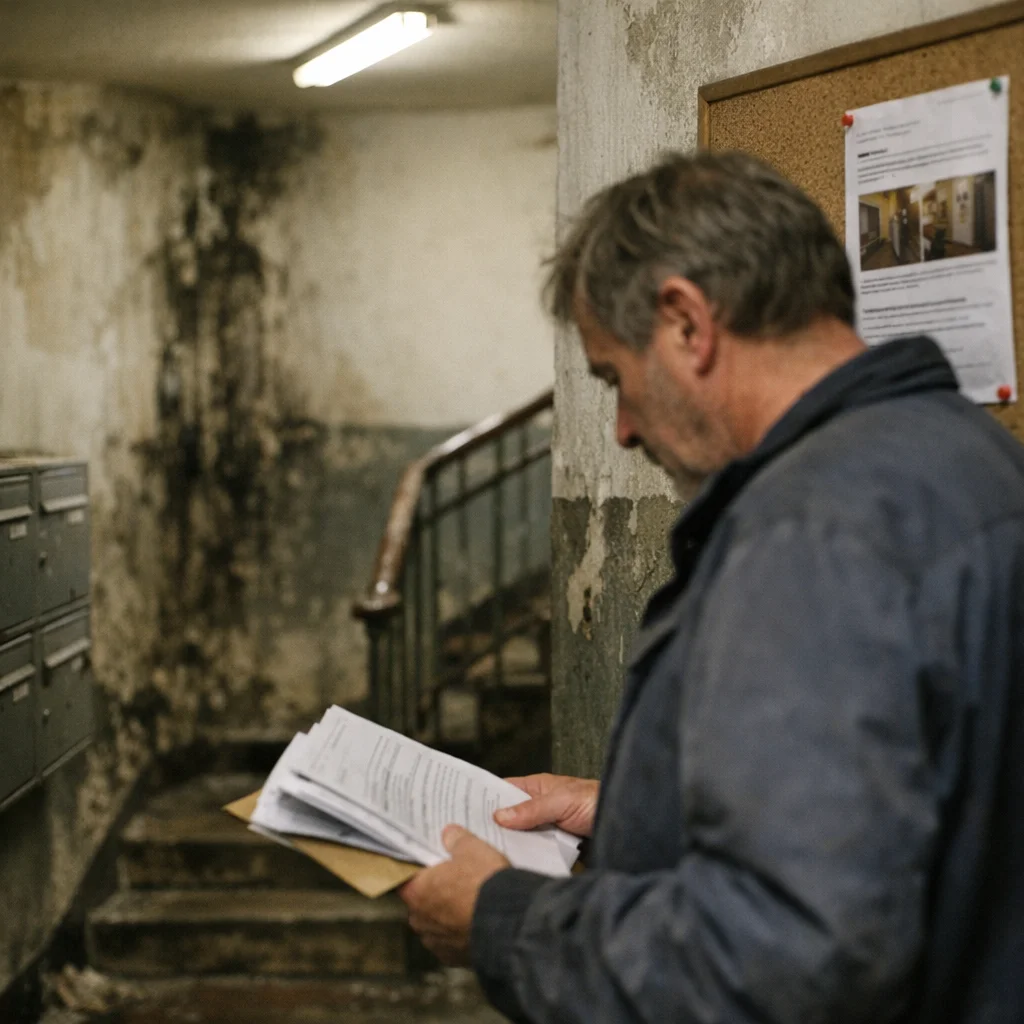
On Müllerstraße, that grand boulevard of budget humiliation, the stairwell tells the truth before the management ever does. Paint peels in long, damp curls. The noticeboard is a cemetery of passive-aggressive German. The courtyard trash collects like a civic sculpture. Somewhere above, a window is forever half-open because the official advice for mold is still the old Berlin miracle: ventilate harder, pay more, and pretend the fungus is a lifestyle issue.
The ritual begins with a cheerful email subject line like “Update on Modernization Measures.” Translation: your rent is about to be mugged by PowerPoint. Then comes the site visit, usually performed by a man in clean shoes who points at the ceiling stain as if he personally discovered civilization. He nods at the black bloom in the bedroom corner — a tiny, obscene ecosystem thriving where the plaster has given up — and assures you that “we take these matters seriously.” This is landlord confidence in its purest form: the calm, erect posture of someone who has never had to sleep under a leak.
A tenant in a Wedding Altbau near the U-Bahn described her building manager’s favorite trick: the “mutual respect” letter. “They sent it after I complained about the damp in the children’s room,” she said. “The ceiling was sweating, the radiator sounded like it was being strangled, and they wrote back like I’d insulted their family silver. They talk about us like we’re temporary guests in their little income palace.” She laughed the way people do when they have been forced into literacy by neglect.
That is the local masterpiece: turning deprivation into etiquette. Your landlord does not merely want your money. He wants your deference. He wants you to perform gratitude while you drag laundry around the apartment like a hostage with socks. He wants to modernize the hallway, install surveillance in the courtyard, and then speak about “community” as if the community had not spent the last six months filing complaints, photographing fungus, and inhaling the architectural perfume of rot.
The ideological range here is wonderfully grim. The glossy investor talks like a diversity panel and behaves like a colonial tax collector with a lease template. The family slumlord is more intimate, which is to say more vulgar: he knows your name, your boiler’s last tantrum, and exactly how much humiliation you can tolerate before you move. The right-wing rent predator boasts about “hard work” and “property rights” while treating tenants like damp meat. The left-wing renovation flirt smiles about “neighborhood development” and “good energy” while shoving out old tenants with the bureaucratic intimacy of a man unbuttoning his shirt in an elevator.
Then the district office enters the scene, that familiar Berlin church of forms, queues, and well-practiced helplessness. File this. Photograph that. Wait three to six eternities. Keep records. Send another email. Consider mediation, as if mold were a relationship conflict and not a landlord’s hobby. The bureaucracy has the same emotional temperature as a wet receipt. It exists to create the impression of motion while the building quietly rots around the tenants like cheap teeth.
What makes Wedding especially insulting is the scale of the con. This is not a luxury district dressing itself in decay as a style choice. This is ordinary people living in stairwells that smell like old towels, under facades that flake under a fingernail, next to courtyards where every sound from the U8 seems to travel straight through the wall and into your skull. The landlord still arrives with the posture of a benefactor, as if he has personally spared you from the wilderness by letting you rent a room with a bad patch in the corner and a radiator that wheezes like a smoker with secrets.
And yet the whole performance depends on a remarkable hope: that tenants will remain polite enough to be milked. That we will continue to say “thank you” to the man who sends a modernization notice with the moral tone of a ransom note. That we will accept the little sexual humiliation of housing — the forced intimacy, the inspection, the access, the implied ownership of our breathing space — and call it normal city life. The landlord wants to be desired without being touched, obeyed without being judged, paid without being seen.
He should not be so lucky.
If the Wedding property class wants gratitude, it can start by stopping the fetish for damp as a business model. Until then, tenants should keep their thanks sealed in the same plastic as the mold: ugly, airtight, and destined for the landlord’s own throat.